




Genocide and the Car That Has Left the Garage
https://doi.org/10.71609/iheid-ga9x-f085When adopted in 1948, the Genocide Convention quickly joined the ranks of treaties long on promise but short on practice — a text that, like the British lawyer Ian Brownlie once said of jus cogens (the category of peremptory norms in international law), seemed a car that would not leave the garage.
That began to change in the 1990s. The atrocities in Rwanda and Bosnia forced the world to confront genocide again, this time with international courts at hand. The International Criminal Tribunal for Rwanda delivered the first conviction for genocide in Akayesu; the International Criminal Tribunal for the Former Yugoslavia (ICTY) recognised genocide in Srebrenica in Krstić. The “car” had left the garage.
Since then, the Convention has travelled into the courtrooms of The Hague and beyond. The International Court of Justice (ICJ) has been seized of several genocide cases. In Bosnia v. Serbia, it did not hold Serbia directly responsible for genocide but did find it responsible for failing to prevent and punish the genocide committed by the Bosnian Serbs. In Croatia v. Serbia, the ICJ again declined to establish state responsibility. Today, two high-profile cases are pending: South Africa v. Israel, concerning allegations of genocide by Israel in the Occupied Palestinian Territory, and The Gambia v. Myanmar, concerning the allegations of genocide for the atrocity crimes committed by the Burmese military against the Rohingya. Rwanda itself has prosecuted thousands of genocide suspects domestically, and national courts have tried cases on genocide charges under universal jurisdiction. The International Criminal Court has gone as far as indicting a sitting head of state, Sudan’s Omar Al Bashir, on charges of genocide in Darfur. Most recently, on 16 September 2025, the UN Independent International Commission of Inquiry on the Occupied Palestinian Territory concluded, after two years of investigation, that Israel has committed and is committing genocide against Palestinians in Gaza. The Commission called on Israel and on all states to comply with their obligations to stop the genocide and hold perpetrators accountable.
However, the Convention’s application reveals its deficiencies. The definition of genocide enshrined in Article II is narrowly formulated. Drafted in the shadow of the Holocaust, it reflects not only the horror of the Holocaust but also the political calculations of states eager to shield their own practices of mass violence. Racial segregation in the United States, Stalinist purges in the Soviet Union, and colonial violence in Africa and Asia were supposed not to fall within its scope.
The mainstream legal interpretation has reinforced this narrowness. Genocide is usually equated with the intent to physically or biologically annihilate a group, through one of the five acts listed in the Convention: killing members, causing serious harm, inflicting life conditions leading to destruction, preventing births, or transferring children to another group. But this interpretation is flawed in two respects. First, groups are social entities, not biological bodies. They can be destroyed without bloodshed. The forcible transfer of children, for instance, may erase the group’s future existence as a community even if no one is killed. Second, the Convention does not require the group to be actually destroyed. What matters is the intent to destroy, in whole or in part, no matter if the intent is achieved. Genocide is a preventive crime: it can be recognised even before destruction is complete. Genocide is a preventive crime: it can be recognised even before destruction is complete.
Courts have occasionally broadened the scope. In Srebrenica, the ICTY held that the killing of men, coupled with the forced displacement of women and children, sufficed to find genocidal intent, because these actions clearly threatened the survival of the Muslim community in Eastern Bosnia. Social scientists and victim groups go further, insisting that the destruction of culture, forced displacement, or erasure of social cohesion can all constitute genocide. The destruction of culture, forced displacement, or erasure of social cohesion can all constitute genocide. The history of residential schools in Canada, where Indigenous children were removed from their families and cultures, exemplifies how assimilation policies can be genocidal. Yet, our collective imagination remains tied to the Holocaust model: industrialised killing of defenceless people. This historical collective imagination continues “unconsciously” to shape the legal debate.
War complicates everything further. International humanitarian law tolerates collateral damage (a neutral term to describe harm and death on innocent civilians and destruction of civilian objects) in military operations. In Croatia v. Serbia, the ICJ ruled that killing of civilians as collateral damage during military operations did not amount to killings under the definition of genocide. The result is troubling, to say the least: belligerent violence that kills civilians may not qualify as genocide unless one demonstrates that the military attack was unlawful. This is hard to prove, because of the impossibility to get official information from the military on the conduct of their operations.
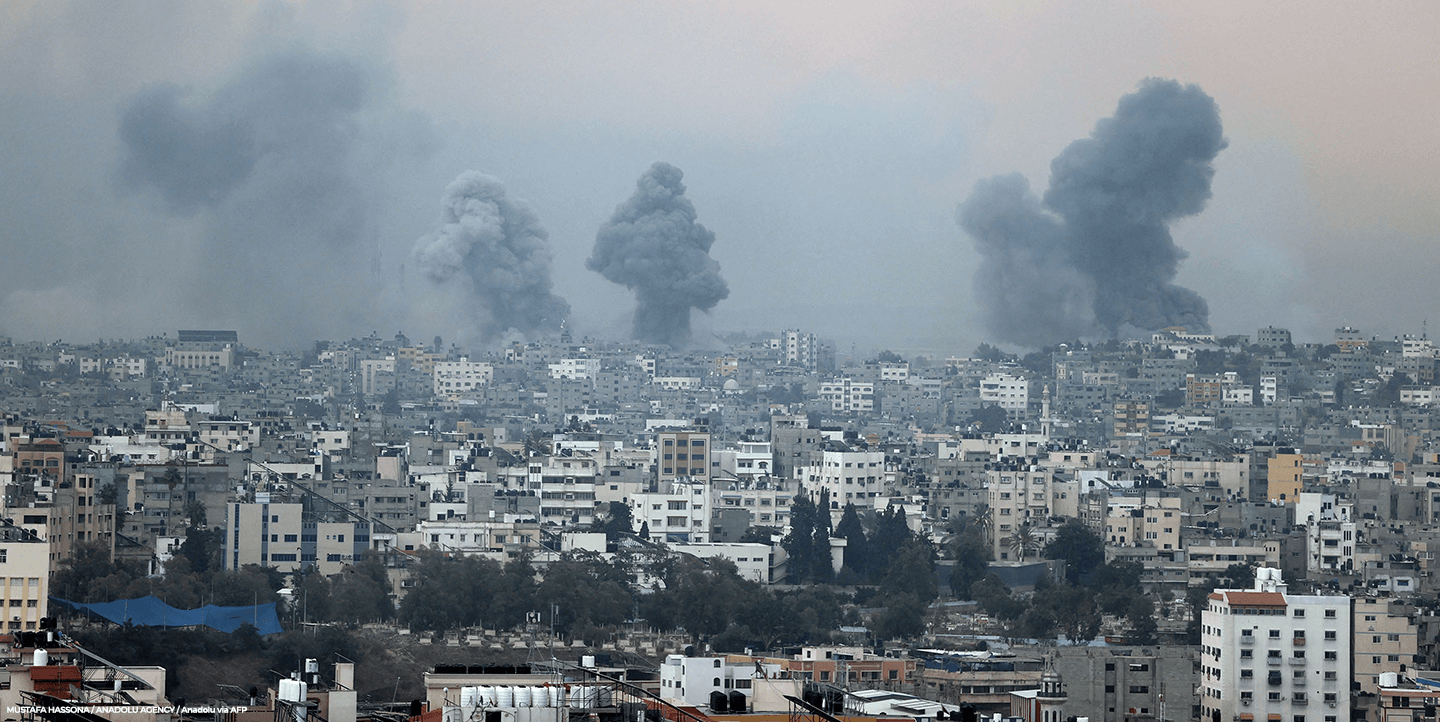
The conflict in Gaza has made this debate painfully concrete. Some UN experts, NGOs, and states argue that Israel’s actions in the context of the conflict in Gaza amount to genocide; others insist that using the term is premature because one shall first have to verify that the killing of civilians is unlawful under international humanitarian law. Moreover, Israel denies genocidal intent, and asserts that its only intent behind the conflict was to destroy Hamas and guarantee the security of its population. As for Western governments, they remain split. The ICJ has already ordered provisional measures against Israel, finding that the allegations of genocide by South Africa against Israel are plausible, but a final judgment may take years. Meanwhile, the word itself is a political weapon: to pronounce it or to avoid it is to take a side.
Eighty years ago, Raphael Lemkin gave a name to a crime without a name: genocide. Today, that word is no longer just a legal term — it is a battlefield of law, politics, and memory. The Convention’s “car” has indeed left the garage, but it is travelling on uneven roads. Its definition, anchored in 1948, is too narrow to capture the many ways groups can be destroyed and too powerful to be invoked lightly. The challenge for the future is to preserve genocide’s special standing — sometimes, together with aggression, labelled the “crime of crimes” — while recognising its many possible manifestations. From colonial policies of forced assimilation to the devastation of Gaza through military means, genocide is not only about bodies. It is about denying human groups the possibility to exist as such. Bridging the rigidity of the Convention with the evolving realities of war and oppression will decide whether the car can keep moving forward.
Electronic reference
Gaeta, Paola. “Genocide and the Car That Has Left the Garage.” Global Challenges, no. 18, December 2025. URL: https://globalchallenges.ch/issue/18/genocide-and-the-car-that-has-left-the-garage. DOI: https://doi.org/10.71609/iheid-ga9x-f085.Dossier produced by the Geneva Graduate Institute’s Research Office.
BOX 1 | Definition of the Concept of Genocide
The concept of genocide was defined legally for the first time in the Convention on the Prevention and Punishment of the Crime of Genocide, adopted by the United Nations General Assembly on 9 December 1948. According to Article II of this Convention, genocide means
“any of the following acts committed with intent to destroy, in whole or in part, a national, ethnic, racial or religious group, as such:
a) Killing members of the group;
b) Causing serious bodily or mental harm to members of the group;
c) Deliberately inflicting on the group conditions of life calculated to bring about its physical destruction in whole or in part;
d) Imposing measures intended to prevent births within the group;
e) Forcibly transferring children of the group to another group.
To be noted: “Measures intended to prevent births’”, such as forced sterilisation, can therefore be legally considered an act constituting genocide — provided that the deliberate intention to destroy a targeted group can be proven. It is this dimension of genocidal intent that makes it difficult to legally recognise forced sterilisation as genocide, even if it technically meets the criteria defined by the Convention (Case Matrix Network)
Source: United Nations, Convention on the Prevention and Punishment of the Crime of Genocide.
GRAND ENTRETIEN | Genocide, with Paola Gaeta
Research Office, Geneva Graduate Institute
PODCAST | Past, Present and Future of Genocide. Annyssa Bellal
Research Office, Geneva Graduate Institute
PODCAST | Logiques néocoloniales, responsabilité française et génocide rwandais. J.-F. Bayart
Research Office, Geneva Graduate Institute
PODCAST | Israel’s Weaponisation of Water in Gaza
BOX 2 | Genocides: UN Recognition and Historical Consensus
- The Holocaust (Shoah) (1941–1945), recognised via UN General Assembly Resolution 96 (I) in 1946, which led to the 1948 Genocide Convention
- Genocide against the Tutsi (Rwanda, 1994), recognised by UN Security Council Resolutions 955 and 978 (1994); International Criminal Tribunal for Rwanda (ICTR) established
- Srebrenica Genocide (Bosnia, 1995), recognised by the International Criminal Tribunal for the former Yugoslavia (ICTY) and the International Court of Justice (2007 ruling)
- Herero and Nama Genocide (German Southwest Africa, 1904–1908), recognised by Germany (2021)
- Assyrian and Pontic Greek Genocides (1914–1923), recognised by some national parliaments
- Armenian Genocide (1915–1917), recognised by many national parliaments (France, Germany, Canada, etc.)
- Holodomor (Ukraine famine) (1932–1933), recognised by Ukraine and several other countries
- Cambodian Genocide (1975–1979), recognised by the Extraordinary Chambers in the Courts of Cambodia (ECCC)
- Anfal Campaign against Kurds (Iraq, 1988), recognised by several national courts
- Darfur Genocide (Sudan, 2003–present), prosecuted by the International Criminal Court; UN uses “crimes against humanity”
- Destruction of Indigenous Peoples of the Americas (16th–20th centuries), considered genocidal by many historians
- Cultural genocide of Indigenous Peoples (Canada, Australia, etc.), recognised as “cultural genocide” or “systemic assimilation”, not as genocide in the UN’s legal sense
- Massacre of the Aché People (Paraguay, 1960s–1970s), documented by NGOs and historians
- Gaza / Occupied Palestinian Territories, UN experts describe acts as “genocidal”
- Rohingya in Myanmar, UN Independent Investigative Mechanism; case before the International Court of Justice
- Tigray (Ethiopia), joint UN–Ethiopian Human Rights Commission investigations
- Ukraine, UN Commission of Inquiry examining possible incitement to genocide
- Uyghurs in China (Xinjiang), ongoing UN human rights investigations
Sources: Marc Galvin, Wikipedia, ChapGPT, CoPilot, UN (United Nations General Assembly, Resolution 96 (I), “The Crime of Genocide”, 11 December 1946, https://digitallibrary.un.org/record/209873; Resolution A/RES/60/7, “Holocaust Remembrance”, 21 November 2005, https://docs.un.org/a/res/60/7; Resolution A/RES/78/282, “International Day of Reflection and Commemoration of the 1995 Genocide in Srebrenica”, 23 May 2024, https://docs.un.org/A/Res/78/282; “UN Resolutions Relevant to Genocide Prevention”, https://www.un.org/en/genocide-prevention/SA-prevention-genocide/UN-resolutions; “UN General Assembly Adopts Resolution on Srebrenica Genocide, Designating International Day of Reflection, Commemoration”, press release, 23 May 2024, https://press.un.org/en/2024/ga12601.doc.htm).
BOX 3 | Complaints for Genocide, War Crimes and Crimes against Humanity
Genocide, war crimes and crimes against humanity are among the most serious international crimes, as defined by the Convention on the Prevention and Punishment of the Crime of Genocide (1948), the Geneva Conventions (1949) and their Protocols, and the Rome Statute (1998), which established the International Criminal Court (ICC). They are considered non-prescriptible: complaints can be filed even decades later.
Where can complaints be filed?
– Before the International Criminal Court (ICC)
The ICC can try cases of genocide, war crimes, crimes against humanity and crimes of aggression. Cases can be referred to it in three ways: by a state party to the Rome Statute (123 states today), by the ICC Prosecutor, who can take up a case on his own initiative after authorisation by the judges, or by the UN Security Council (even for non-member states, e.g. Darfur, Libya).
Can an individual file a complaint? Yes, but in the form of a communication to the Office of the Prosecutor (OTP). The ICC is not a direct complaint jurisdiction like a national court: an individual can submit a case, but only the Prosecutor decides whether to open an investigation.
There are significant limitations to the ICC. It only tries individuals, not states. It only has jurisdiction if the crime took place on the territory of a state party, if the perpetrator is a national of a state party, or if the Security Council refers the case. Finally, some geopolitically important states do not recognise the ICC (the United States, Russia, China, Israel, etc.).
– Before a national court
Many states now allow complaints for genocide, crimes against humanity and war crimes, even if the crimes were committed abroad and by foreigners. This is known as universal jurisdiction. Examples of countries that regularly use it include France, Germany, Belgium, the Netherlands, Sweden, Canada (partially) and Spain (more limited since 2014). The specific conditions vary from country to country, but generally require the presence of the suspect on the territory, a complaint from victims or NGOs, and national prosecutors who open investigations themselves. This mechanism is being used increasingly frequently (trials of Syrian torturers, Rwandan soldiers, etc.).
– Before the International Court of Justice (ICJ)
The ICJ does not judge individuals, but can be called upon in disputes between states, particularly for accusations of genocide (e.g. Gambia v. Myanmar; South Africa v. Israel), violations of the Geneva Conventions, and disputes over the interpretation of international treaties. It is important to note that private individuals cannot bring cases before the ICJ. Only states can do so.
The courts for Rwanda and Kosovo
Complaints cannot be brought before these courts by individuals. They are ad hoc international criminal tribunals with jurisdiction to try individuals responsible for serious crimes (genocide, crimes against humanity, war crimes).
The International Criminal Tribunal for Rwanda (ICTR) was established in 1994 by the UN Security Council to try those responsible for the genocide of the Tutsis and crimes against humanity committed in Rwanda.
The Special Tribunal for Kosovo (Kosovo Specialist Chambers) was established in 2015, based in The Hague, to try crimes committed by the Kosovo Liberation Army (KLA) between 1998 and 2000.
There may be indirect interactions with the ICJ, for example when the ICJ examines the responsibility of a state for acts that also constitute crimes tried by a criminal tribunal (e.g. the Bosnia v. Serbia case on the Srebrenica genocide).
Sources: Marc Galvin, Wikipedia, ChapGPT, CoPilot, UN.
BOX 4 | The Obligation to Act in the Face of Genocide
The 1948 United Nations Genocide Convention imposes a legal obligation on all signatory states to prevent and punish genocide. This obligation is known as erga omnes, which means that it is owed to the entire international community and not only to the state where the crime is taking place. Thus, even a country not directly involved must intervene to the extent of its capabilities, in particular through diplomatic, economic, legal or humanitarian means. In concrete terms, this may take the form of economic sanctions, diplomatic pressure, suspension of arms sales, humanitarian aid, cooperation with the courts, or speaking out at the UN.
This obligation applies to all states parties (153 today), regardless of their geography or political interests. It does not depend on the filing of a complaint with the International Court of Justice (ICJ): the complaint is simply one legal mechanism among others, but the obligation to act exists outside of any proceedings.
Finally, it is an obligation of means, not of results: powerful states must do more, while less influential states may limit themselves to actions proportionate to their capabilities.
NB. A State may only intervene militarily to stop genocide if it has authorisation from the Security Council or a recognised collective mandate. No State may invoke genocide to justify a military attack on its own. For example, Russia attempted to justify its invasion of Ukraine in 2022 by invoking the prevention of genocide, but the ICJ rejected this argument.
Sources: Marc Galvin, Wikipedia, ChatGPT, CoPilot, UN.
BOX 5 | Is the Holodomor Recognised as a Genocide?
The legal status of the Holodomor — the Ukrainian famine of 1932–33 — as a genocide remains a matter of international debate. According to the 1948 United Nations Genocide Convention, genocide refers to acts committed “with intent to destroy, in whole or in part, a national, ethnical, racial or religious group, as such”.
Scholars and the Ukrainian state argue that the famine fits this definition, citing Soviet policies that intentionally targeted the Ukrainian peasantry, culture, and political autonomy. Evidence includes:
- Forced grain requisitions far beyond subsistence levels
- Border closures preventing peasants from fleeing famine zones
- Suppression of Ukrainian language, institutions, and elites
- A disproportionate death toll among Ukrainians compared to other Soviet republics
As of 2025, more than 30 countries — including Canada, Ukraine, Poland, the Baltic states, and recently Germany — officially recognise the Holodomor as a genocide. However, neither the United Nations nor the International Criminal Court has issued a binding legal ruling on the matter, and Russia maintains that the famine was a broader Soviet tragedy, not a targeted ethnic crime.
Sources: Marc Galvin, Wikipedia, ChapGPT, CoPilot, UN.