


Genocide in Gaza: The End of Innocence
https://doi.org/10.71609/iheid-y03j-rb37The word genocide once belonged to history — a term of horror reserved for humanity’s darkest chapters: Rwanda, Srebrenica, the Holocaust. And yet, today, it resurfaces, not in textbooks, but in real time, from the shattered ruins of Gaza.
More than 65,000 Palestinians have been killed, the vast majority women and children. Over 169,000 have been wounded. Entire neighbourhoods have been wiped from the map. Still, the world hesitates to call it by its name.
Why this reluctance? What does it reveal about us? And what lessons can we draw from our silence?
The fear of naming the crime
To accuse Israel of genocide feels unbearable to many in the West. The very idea that the state created as a refuge after the Holocaust could now be accused of such a crime seems too heavy to confront. The symbolic inversion — the victims of one genocide accused of committing another — threatens our certainties. Moral confusion is exacerbated by a mix of caution, historical guilt, and the fear of being accused of antisemitism.
Western hesitation to name the crime unfolding in Gaza is not only psychological. It is also geopolitical. Since its creation, Israel is a strategic ally and a mirror of Western democracy in the Middle East. To question Israel’s actions would mean questioning the self-representation of the West, but also decades of alignment and, for some, confronting their own complicity.
In public opinion, accusations of genocide are countered by allegations of antisemitism, in a confrontation that is both Manichean and sterile.accusations of genocide are countered by allegations of antisemitism, in a confrontation that is both Manichean and sterile The toxic polarisation between pro-Israel and pro-Palestine replaces moral clarity with tribal allegiance and becomes, in turn, the seed of inaction. Far from awakening consciences, the emotional weight attached to the notion of genocide paralyses political leaders, who fear taking sides.
Most Western governments long remain mute, trapped between guilt and realpolitik. Diplomatic prudence becomes just an excuse. After almost two years of carnage, the last-minute recognition of Palestine by some Western countries is important but mainly symbolic. This shall not become an easy way to show compassion without assuming our responsibility. Lengthy discussions whether the massacre is a genocide or not further paralyse any urgent action and turn into an obscene exercise as if legal qualification is more decisive than human sufferings. Meanwhile, lengthy discussions whether the massacre is a genocide or not further paralyse any urgent action and turn into an obscene exercise as if legal qualification is more decisive than human sufferings.
Recognising genocide when it happens
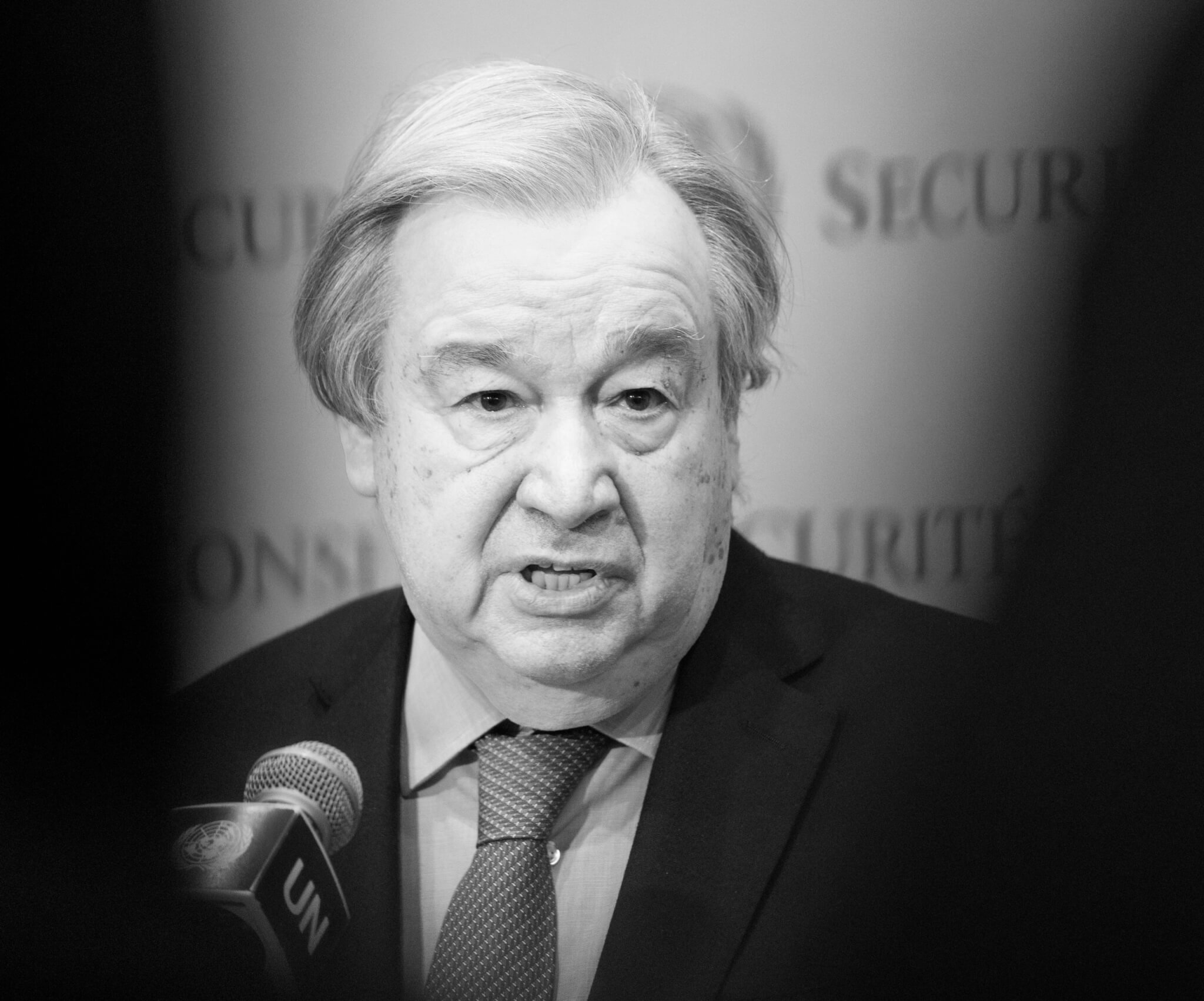
And yet, international law is not ambiguous. “International humanitarian law is not an à la carte menu”, UN Secretary-General António Guterres reminded the world. The right to self-defence does not grant license to starve or bomb an entire population. Reciprocally, the apocalyptic situation in Gaza does not erase the horror of 7 October 2023, the largest massacre of Jews in a single day since the Holocaust. Hamas’s crimes were monstrous and indefensible. But atrocity perpetrated by one side never justifies slaughter by the other. To invoke self-defence while annihilating a besieged population is to transform justice into vengeance.
To call what happened in Gaza genocide is not rhetorical excess; it is legal accuracy. To call what happened in Gaza genocide is not rhetorical excess; it is legal accuracy. The 1948 Genocide Convention defines genocide as the “intent to destroy, in whole or in part, a national, ethnic, racial, or religious group” through acts such as killing, causing serious harm, or inflicting conditions calculated to bring about its destruction.
Every element is met. The devastation of Gaza is not a collateral damage; it is systematic and widespread. Civilian infrastructure — hospitals, schools, water systems — has been deliberately targeted. The blockade has created famine and disease. The International Criminal Court has issued arrest warrants for Israel’s Prime Minister and Defence Minister, for the war crime of using starvation as a method of warfare and for crimes against humanity of murder, persecution, and other inhumane acts.
The International Court of Justice (ICJ) is also examining the accusation of genocide brought by South Africa with the support of several other states. In January 2024, the Court issued an initial order finding that there was a “real and imminent risk” of “irreparable harm”, after acknowledging the “disastrous living conditions” and “massive destruction of homes”.
The ICJ pinpointed several official statements exhibiting a genocidal intent, when for instance Israel’s Defence Minister called Gazans “human animals” and the President declared that “it is an entire nation out there that is responsible”. These statements are not incidental but repeated and public. Amnesty International has recorded more than a hundred such statements between October 2023 and June 2024.
Rarely in modern history has genocidal intent been so openly declared by state’s officials. Lawyers, historians of the Holocaust and experts of genocide studies have reached the same conclusion. UN rapporteurs, the International Commission of Inquiry, the UN Special Committee on Israeli practices, Amnesty International and Human Rights Watch have published lengthy and detailed reports acknowledging the genocide.
The lessons of silence
What Gaza reveals is not just the failure of politics and a blatant abuse of international law. It is a test of what remains of the values and moral authority of the West.What Gaza reveals is not just the failure of politics and a blatant abuse of international law. It is a test of what remains of the values and moral authority of the West. Its inability or unwillingness to act reveals Western schizophrenia — always prompt to give lessons for others but rarely for itself. Though not new, this double standard is more obvious than ever; it erodes trust, fuels cynicism, and emboldens other regimes to act with impunity.
Silence is not neutral; it is a political sedative, dulling outrage and disguising complicity. The Gaza crisis exposes a deeper malaise: the moral fatigue of democracies that claimed to embody universal values. The fragile ceasefire imposed by the United States after two years of massacre shall not mask the collective responsibility of the West, whose long inaction reveals a tiredness of empathy. This moral desensitisation is not accidental. It is the result of decades of political storytelling that divides the world into “us” and “them”, “civilised” and “terrorist”, “good nationals” and “bad migrants”. When Palestinians are dehumanised by being labelled as human shields, the unthinkable becomes possible.
To restore moral coherence, Western governments must act decisively and consistently: ensure humanitarian access, demand accountability, and reject the false equivalence that confuses empathy with partisanship. Solidarity with Palestinians is not hostility toward Jews. Condemning genocide is not an ideological act, it is a legal duty.
The lesson of Gaza is revealing about what kind of democracies we have become — polarised and morally selective, apathic and distant with the others. What happened in Gaza is our collective failure and marks the end of innocence. “Never again” was never a promise to the past. It was a responsibility to the present.
Electronic reference
Chetail, Vincent. “Genocide in Gaza: The End of Innocence.” Global Challenges, no. 18, December 2025. URL: https://globalchallenges.ch/issue/18/genocide-in-gaza-the-end-of-innocence. DOI: https://doi.org/10.71609/iheid-y03j-rb37.Dossier produced by the Geneva Graduate Institute’s Research Office.
BOX 1 | Definition of the Concept of Genocide
The concept of genocide was defined legally for the first time in the Convention on the Prevention and Punishment of the Crime of Genocide, adopted by the United Nations General Assembly on 9 December 1948. According to Article II of this Convention, genocide means
“any of the following acts committed with intent to destroy, in whole or in part, a national, ethnic, racial or religious group, as such:
a) Killing members of the group;
b) Causing serious bodily or mental harm to members of the group;
c) Deliberately inflicting on the group conditions of life calculated to bring about its physical destruction in whole or in part;
d) Imposing measures intended to prevent births within the group;
e) Forcibly transferring children of the group to another group.
To be noted: “Measures intended to prevent births’”, such as forced sterilisation, can therefore be legally considered an act constituting genocide — provided that the deliberate intention to destroy a targeted group can be proven. It is this dimension of genocidal intent that makes it difficult to legally recognise forced sterilisation as genocide, even if it technically meets the criteria defined by the Convention (Case Matrix Network)
Source: United Nations, Convention on the Prevention and Punishment of the Crime of Genocide.
GRAND ENTRETIEN | Genocide, with Paola Gaeta
Research Office, Geneva Graduate Institute
PODCAST | Past, Present and Future of Genocide. Annyssa Bellal
Research Office, Geneva Graduate Institute
PODCAST | Logiques néocoloniales, responsabilité française et génocide rwandais. J.-F. Bayart
Research Office, Geneva Graduate Institute
PODCAST | Israel’s Weaponisation of Water in Gaza
BOX 2 | Genocides: UN Recognition and Historical Consensus
- The Holocaust (Shoah) (1941–1945), recognised via UN General Assembly Resolution 96 (I) in 1946, which led to the 1948 Genocide Convention
- Genocide against the Tutsi (Rwanda, 1994), recognised by UN Security Council Resolutions 955 and 978 (1994); International Criminal Tribunal for Rwanda (ICTR) established
- Srebrenica Genocide (Bosnia, 1995), recognised by the International Criminal Tribunal for the former Yugoslavia (ICTY) and the International Court of Justice (2007 ruling)
- Herero and Nama Genocide (German Southwest Africa, 1904–1908), recognised by Germany (2021)
- Assyrian and Pontic Greek Genocides (1914–1923), recognised by some national parliaments
- Armenian Genocide (1915–1917), recognised by many national parliaments (France, Germany, Canada, etc.)
- Holodomor (Ukraine famine) (1932–1933), recognised by Ukraine and several other countries
- Cambodian Genocide (1975–1979), recognised by the Extraordinary Chambers in the Courts of Cambodia (ECCC)
- Anfal Campaign against Kurds (Iraq, 1988), recognised by several national courts
- Darfur Genocide (Sudan, 2003–present), prosecuted by the International Criminal Court; UN uses “crimes against humanity”
- Destruction of Indigenous Peoples of the Americas (16th–20th centuries), considered genocidal by many historians
- Cultural genocide of Indigenous Peoples (Canada, Australia, etc.), recognised as “cultural genocide” or “systemic assimilation”, not as genocide in the UN’s legal sense
- Massacre of the Aché People (Paraguay, 1960s–1970s), documented by NGOs and historians
- Gaza / Occupied Palestinian Territories, UN experts describe acts as “genocidal”
- Rohingya in Myanmar, UN Independent Investigative Mechanism; case before the International Court of Justice
- Tigray (Ethiopia), joint UN–Ethiopian Human Rights Commission investigations
- Ukraine, UN Commission of Inquiry examining possible incitement to genocide
- Uyghurs in China (Xinjiang), ongoing UN human rights investigations
Sources: Marc Galvin, Wikipedia, ChapGPT, CoPilot, UN (United Nations General Assembly, Resolution 96 (I), “The Crime of Genocide”, 11 December 1946, https://digitallibrary.un.org/record/209873; Resolution A/RES/60/7, “Holocaust Remembrance”, 21 November 2005, https://docs.un.org/a/res/60/7; Resolution A/RES/78/282, “International Day of Reflection and Commemoration of the 1995 Genocide in Srebrenica”, 23 May 2024, https://docs.un.org/A/Res/78/282; “UN Resolutions Relevant to Genocide Prevention”, https://www.un.org/en/genocide-prevention/SA-prevention-genocide/UN-resolutions; “UN General Assembly Adopts Resolution on Srebrenica Genocide, Designating International Day of Reflection, Commemoration”, press release, 23 May 2024, https://press.un.org/en/2024/ga12601.doc.htm).
BOX 3 | Complaints for Genocide, War Crimes and Crimes against Humanity
Genocide, war crimes and crimes against humanity are among the most serious international crimes, as defined by the Convention on the Prevention and Punishment of the Crime of Genocide (1948), the Geneva Conventions (1949) and their Protocols, and the Rome Statute (1998), which established the International Criminal Court (ICC). They are considered non-prescriptible: complaints can be filed even decades later.
Where can complaints be filed?
– Before the International Criminal Court (ICC)
The ICC can try cases of genocide, war crimes, crimes against humanity and crimes of aggression. Cases can be referred to it in three ways: by a state party to the Rome Statute (123 states today), by the ICC Prosecutor, who can take up a case on his own initiative after authorisation by the judges, or by the UN Security Council (even for non-member states, e.g. Darfur, Libya).
Can an individual file a complaint? Yes, but in the form of a communication to the Office of the Prosecutor (OTP). The ICC is not a direct complaint jurisdiction like a national court: an individual can submit a case, but only the Prosecutor decides whether to open an investigation.
There are significant limitations to the ICC. It only tries individuals, not states. It only has jurisdiction if the crime took place on the territory of a state party, if the perpetrator is a national of a state party, or if the Security Council refers the case. Finally, some geopolitically important states do not recognise the ICC (the United States, Russia, China, Israel, etc.).
– Before a national court
Many states now allow complaints for genocide, crimes against humanity and war crimes, even if the crimes were committed abroad and by foreigners. This is known as universal jurisdiction. Examples of countries that regularly use it include France, Germany, Belgium, the Netherlands, Sweden, Canada (partially) and Spain (more limited since 2014). The specific conditions vary from country to country, but generally require the presence of the suspect on the territory, a complaint from victims or NGOs, and national prosecutors who open investigations themselves. This mechanism is being used increasingly frequently (trials of Syrian torturers, Rwandan soldiers, etc.).
– Before the International Court of Justice (ICJ)
The ICJ does not judge individuals, but can be called upon in disputes between states, particularly for accusations of genocide (e.g. Gambia v. Myanmar; South Africa v. Israel), violations of the Geneva Conventions, and disputes over the interpretation of international treaties. It is important to note that private individuals cannot bring cases before the ICJ. Only states can do so.
The courts for Rwanda and Kosovo
Complaints cannot be brought before these courts by individuals. They are ad hoc international criminal tribunals with jurisdiction to try individuals responsible for serious crimes (genocide, crimes against humanity, war crimes).
The International Criminal Tribunal for Rwanda (ICTR) was established in 1994 by the UN Security Council to try those responsible for the genocide of the Tutsis and crimes against humanity committed in Rwanda.
The Special Tribunal for Kosovo (Kosovo Specialist Chambers) was established in 2015, based in The Hague, to try crimes committed by the Kosovo Liberation Army (KLA) between 1998 and 2000.
There may be indirect interactions with the ICJ, for example when the ICJ examines the responsibility of a state for acts that also constitute crimes tried by a criminal tribunal (e.g. the Bosnia v. Serbia case on the Srebrenica genocide).
Sources: Marc Galvin, Wikipedia, ChapGPT, CoPilot, UN.
BOX 4 | The Obligation to Act in the Face of Genocide
The 1948 United Nations Genocide Convention imposes a legal obligation on all signatory states to prevent and punish genocide. This obligation is known as erga omnes, which means that it is owed to the entire international community and not only to the state where the crime is taking place. Thus, even a country not directly involved must intervene to the extent of its capabilities, in particular through diplomatic, economic, legal or humanitarian means. In concrete terms, this may take the form of economic sanctions, diplomatic pressure, suspension of arms sales, humanitarian aid, cooperation with the courts, or speaking out at the UN.
This obligation applies to all states parties (153 today), regardless of their geography or political interests. It does not depend on the filing of a complaint with the International Court of Justice (ICJ): the complaint is simply one legal mechanism among others, but the obligation to act exists outside of any proceedings.
Finally, it is an obligation of means, not of results: powerful states must do more, while less influential states may limit themselves to actions proportionate to their capabilities.
NB. A State may only intervene militarily to stop genocide if it has authorisation from the Security Council or a recognised collective mandate. No State may invoke genocide to justify a military attack on its own. For example, Russia attempted to justify its invasion of Ukraine in 2022 by invoking the prevention of genocide, but the ICJ rejected this argument.
Sources: Marc Galvin, Wikipedia, ChatGPT, CoPilot, UN.
BOX 5 | Is the Holodomor Recognised as a Genocide?
The legal status of the Holodomor — the Ukrainian famine of 1932–33 — as a genocide remains a matter of international debate. According to the 1948 United Nations Genocide Convention, genocide refers to acts committed “with intent to destroy, in whole or in part, a national, ethnical, racial or religious group, as such”.
Scholars and the Ukrainian state argue that the famine fits this definition, citing Soviet policies that intentionally targeted the Ukrainian peasantry, culture, and political autonomy. Evidence includes:
- Forced grain requisitions far beyond subsistence levels
- Border closures preventing peasants from fleeing famine zones
- Suppression of Ukrainian language, institutions, and elites
- A disproportionate death toll among Ukrainians compared to other Soviet republics
As of 2025, more than 30 countries — including Canada, Ukraine, Poland, the Baltic states, and recently Germany — officially recognise the Holodomor as a genocide. However, neither the United Nations nor the International Criminal Court has issued a binding legal ruling on the matter, and Russia maintains that the famine was a broader Soviet tragedy, not a targeted ethnic crime.
Sources: Marc Galvin, Wikipedia, ChapGPT, CoPilot, UN.