

Genocide: The War of Words
https://repository.graduateinstitute.ch/record/321573The concept of genocide takes its meaning from an academic discipline — international law — that has developed a particular language through a series of developments that are specific to its relations with its practitioners. Indeed, international law is not a purely academic discipline hidden in the Ivory Tower: it is deeply traversed by the evolution of jurisprudence in international courts, where state disputes and civil society actions are litigated. As Paola Gaeta explains in the Grand entretien and in her contribution to this issue, the doctrinal evolution of the concept of genocide can be summarised, in broad strokes, into three main periods – to which we add a fourth one.
Genocide: The standpoint of international law scholars in context
First, the concept was enshrined in the 1948 Convention on the Prevention and Punishment of the Crime of Genocide (see box 1), adopted by states that wished to create a framework to prevent the horrors of the Holocaust from ever being repeated. Alongside the evolution of the concepts of human rights and crimes against humanity, Raphael Lemkin (1900–1959) — a Jewish lawyer of Polish origin who had sought refuge in the United States — coined the term “genocide” in his 1944 book Axis Rule in Occupied Europe, as a legal concept aimed at defining the limits of abuses that could be committed by sovereign powers. Although the term “crime against humanity” was used in a joint statement by France, the United Kingdom and Russia denouncing the massacres of Armenians by the Ottoman Empire as “crimes against humanity and civilisation”, it was only in 1945 that this concept was legally consecrated at the Nuremberg Tribunal, which sought to judge the atrocities committed by the Nazi regime — as the crime of genocide did not yet exist in international law. “Crimes against humanity”, a term coined by jurist Hersch Lauterpacht, refers to inhumane acts committed systematically against a civilian population, without necessarily aiming at its extermination. Genocide, on the other hand, involves the deliberate intent to destroy, in whole or in part, a national, ethnic, racial, or religious group. The difference, therefore, lies in the purpose: widespread persecution versus targeted annihilation. As for war crimes, the problem is that they only apply during times of war; as Philippe Sands notes, jurists then “needed to find something else that could be applied at any time and that, in principle, sought to protect all human beings.”
Second, the concept and its associated convention remained largely unused during the wars of decolonisation. While war crimes and crimes against humanity were denounced on all sides, the language of genocide and the legal tools of the convention were not employed. Alongside geopolitical factors, various processes of denial and “constructed ignorance” can perhaps explain why. As Saul Friedländer, a founding scholar of the field of Holocaust Studies and former professor at the Institute, has shown, the sociopsychological processes explaining denial among “bystanders” in many genocides are a key factor. To say that the concept of genocide was not employed does not mean that the massacres during the final colonial wars before the independence of French, British, Belgian or Dutch colonies in Africa and Asia were unknown. Rather, it reflects the presence of active forces that made it inconceivable and politically impossible to use the concept of genocide to refer to a series of actions that, retrospectively, some commentators may think could be subsumed under the concept. Furthermore, as Jean-François Bayart points out, Raphael Lemkin himself did not mention the massacres carried out during Western colonial expansion, neither that of the Native Americans in the United States during the 19th century, nor that of the Hereros and Namas in Deutsch-Südwestafrika (now Namibia) in 1904–1907.
The concept of genocide was thus finally deployed in international courts only during a third period, at the end of the Cold War, as part of the tectonic shift that followed the dislocation of the Soviet bloc, particularly in Eastern Europe and Africa. Lemkin’s contribution to international law was formalised in the 1990s with the creation of the International Criminal Tribunal for the former Yugoslavia (ICTY, 1993) and the International Criminal Tribunal for Rwanda (ICTR, 1994), which brought the first ever indictments for the crime of genocide (see boxes 2 and 4). By then, the concept had been reinterpreted with a precise meaning in the context of international courts, with legal commentary and legal activism that were meant to create accountability. This legal jurisprudence gave force to the concept but also restricted its scope, as an established tradition — now treated as canonical — constrains its interpretive possibilities in the context of court litigation: as Paola Gaeta says in the Grand entretien, the debate on genocide in international courts has not yet been enriched by interdisciplinary discussion with other social sciences and historical studies that have continued in parallel, for instance in the field of Genocide Studies, including with new historical research on the Holocaust. Worse still, international law scholars have highlighted some unintended effects of the legal deployment of the concept during this third period: while Jean-François Bayart considers Lemkin’s vision to be “remarkable in that it avoids the trap of identitarianism”, Philippe Sands argues that the term “genocide” has reinforced issues of group identity that were virtually non-existent in international law before the concept was introduced. Moreover, in his 25 years of experience as an international lawyer, he has observed that use of the term has exacerbated intergroup hatred: the victim group systematically seeks to prove that the belligerent group has committed genocide, fostering mutual hatred between the groups.
Has the use of the term “genocide” in this third period then even had the opposite of the desired effect, leading to more conflicts, and therefore more potential genocides, by perpetuating vicious cycles of violence? The way genocides are judged and processed in the aftermath of violent conflict is indeed key in healing and transitional justice processes. Rwanda here is the prime example: despite having made huge efforts to judge genocidal crimes at the grassroots level, the country remains in jeopardy today because of the unilateral way justice has been implemented and memorialised (see Ravi Bhavnani’s article in this issue. If it is used primarily to discredit or slander enemies (in German, Rufmord), genocide indeed risks losing its symbolic capital as the “crime of crimes” or the quintessential representation of human evil. Nevertheless, the establishment of a framework for prosecuting genocide, the result of half a century of effort, is a major step forward. Although it can be improved, it is nevertheless extremely valuable (listen to this podcast with Annyssa Bellal). It is now possible to file a complaint for genocide, war crimes or crimes against humanity (see box 3), even if preventing or stopping these crimes is proving complicated. Article 1 of the Genocide Convention requires the parties to “undertake to prevent and punish” genocide (see box 4). While legally establishing genocide and attributing responsibility is legally cumbersome, there is also a strong prophylactic rationale inherent to international law, as it seeks to prevent genocide before it actually happens through the duty of prevention.
The context today is thus the product of this third phase but presents distinctive signs that the legal conversation on the concept of genocide has entered a fourth phase. In US and European academic contexts, the conversation around the concept of genocide is marked by the academic, political and media discourse on the Israeli war on Gaza, launched after the terrorist attacks of 7 October 2023 that killed more than a thousand Israeli nationals and resulted in the taking of hundreds of hostages. Regarding Israel’s war against Hamas— the organisation, designated as terrorist by the US and the EU, that ruled over the embargoed territory for more than a decade — commentators have debated whether Israel’s acceptance of extremely high levels of civilians (many of whom are minors) and the almost complete destruction of the above-ground infrastructure of life in Gaza (from hospitals to residential buildings and water or electricity systems), which Israel claims was necessitated by the existence of a hidden underground infrastructure of war from which Hamas had operated, constitutes genocide or not. This polarising debate has agitated the international legal community for more than two years, often leading to contentious, politicised academic politics and campus occupations in the United States and Europe, with many young activists demanding that their university cut ties with Israel’s institutions, including universities, alleging ties between academia and the military. The robustness of international law has also been deeply tested during this fourth period.
On the one hand, some international courts have been able to resist politicisation, protect their autonomy and evaluate new cases under the conceptual tools provided by historical legal precedent. For instance, the case brought by South Africa at the International Court of Justice (ICJ) against Israel under the Genocide Convention has not led to the erosion of the authority of the court. Its provisional orders have been cited by activists on US and European academic campuses, as well as by many NGOs, as a warning to world public opinion that institutions that do not examine their links with Israel’s war machine could one day face trial under national or international jurisdiction for complicity in genocide. Their warnings may seem to concern a distant future, but genocides have a long judicial tail. To give one example, more than 30 years after the genocide in Rwanda, a complaint was filed in December 2025 by a civil society organisation against the Bank of France for complicity in genocide.
In the wake of Israeli military action in Gaza up until the signing of Donald Trump’s Gaza Peace Plan at the end of September 2025, thousands of legal commentaries, newspaper articles and scholarly interventions using the concept of genocide to capture the situation have been published without any retaliation against their authors. This should demonstrate that academic freedom and freedom of expression are still essential components of the normative order of public discourse in the United States, in Europe and in many other parts of the world; it also explains the abundance of discourse that refers to “genocide” in many other instances. In fact, the term “genocide” is indeed witnessing a period of inflationary use and gaining what George Bernard Shaw might have called a “new salience”: based on flawed evidence, Donald Trump even accused South Africa of a “white genocide” and Vladimir Putin accused Ukraine of committing genocide in the Donbass, while others, such as John Kerry, have used the term to trigger action and protect vulnerable populations such as the Yazidi people. Human rights defenders are also working to tie the use of water as a weapon of war (see Mara Tignino’s article in this issue) or sterilisation to destroy the future of a population to the concept of genocide; still others are aiming to capitalise on the symbolic capital of genocide to apply it to fields beyond violence and armed conflict, as illustrated by the discussions around the notion of ecocide. Some analysts have thus come to fear that in an increasingly polarised and toxic context, the challenges ahead are not self-censorship but a real risk that the notion may become overstretched and eventually meaningless in this fourth period.
On the other hand, never has the language of international law been so divisive, and never have the institutions with the performative power to litigate cases of genocide come so much under attack. Contrast the robustness of the ICJ with the vulnerability of the International Criminal Court (ICC). Could a French international law scholar, with a long career in international criminal law and now a judge at the ICC, have anticipated that — as a result of his practice as a judge executing a court decision — he would one day be placed under US sanctions that exclude him from most banking circuits, digital services and many other activities with a tie to the United States? This has been the fate of Nicolas Guillou since he was a member of the trial chamber that issued arrest warrants against the Israeli Prime Minister and Minister of Defence in the recent cases examined by the ICC in the context of the war in Gaza. Consider also the case of Francesca Albanese, the United Nations Human Rights Council “Special Rapporteur on the Situation of Human Rights in the Palestinian Territories Occupied since 1967”, who was also placed on a US sanctions list in July 2025 for helping the ICC prosecute the case against the above-mentioned Israeli leaders, after she issued a report naming companies that she declared to be complicit in genocide. This action takes place in a context marked by the increased criminalisation of the Boycott, Divestment and Sanction (BDS) movement: although, in a landmark decision of June 2020, the European Court of Human Rights protected the right of European citizens to call for restrictive measures against the Israeli state on behalf of alleged crimes (either apartheid or genocide), many US state legislatures and European states have since called for the prohibition of BDS activism, arguing that by targeting a state constituted to protect the Jewish people, the BDS movement expressed a form of antisemitism, which made any suggestion that Israel had committed what could amount to genocide akin to antisemitism. In this strongly divided discursive context, the sanctioning of ICC judges and a UN Rapporteur are puzzling developments, which, beyond the chilling effect on the legal profession’s ability to provide expert evaluations in court proceedings, opens a new era, and indeed a fourth phase in the life of the concept of genocide. Becoming the target of US sanctions — initially developed to target terrorists in the wake of the 9/11 attacks — solely for exercising one’s professional duties as a UN Special Rapporteur or as a judge on an international tribunal created to judge the most serious crimes, like war crimes, crimes against humanity or indeed genocide, is no small matter.
It is important to take stock of this development and reflect on the complexity of this situation. For professors of international law and judges at international courts (including the ICJ), this is a moment to reflect upon. The new generation of legal scholars and judges called upon to express themselves on the concept of genocide and its applicability to certain cases will face new professional risks: not only legal risks but also reputational risks, especially in an era in which the media — whose independence from billionaire owners is increasingly at risk — has played no small part in polarising the debate on genocide by relaying disinformation and caricaturing nuanced positions to the extreme. In this context, it is possible that young scholars will self-censor themselves to manage these reputational and legal risks, leading to the weakening of international law, the emancipation of state force from legal constraints, and the suffering of civilian populations whose last protection resides in the courage of professors and judges to defend them in the courts of public opinion and international law.
To manage these risks, we therefore need a better understanding of the complex situation that has emerged in this fourth phase. Here, we can draw inspiration from Yael Berda, Professor of Sociology at Hebrew University, who has recently examined the evolution of the rule of law in Israel from democratic to authoritarian using the concept of the “dual state”: a condition where the state still speaks the “normative” language of laws and regulations, but also a new “prerogative” language that undermines these procedures through regimes of exception and the identification of singular targets for public exclusion without due process. Could this concept — coined by German lawyer and social theorist Ernst Fraenkel, who practiced law during the phase of Nazi persecution (1933–39), which preceded the second phase of extermination (1939–1945), according to Saul Friedländer’s periodisation in his magisterial work on the Nazi regime — have relevance for thinking about the evolution of the international rule of law? Could it help capture the complexity of our present moment, when a normative order still holds but operates in conjunction with unprecedented challenges?
Genocide in political/media discourse: a social scientific perspective
There is indeed some heuristic value in this concept of dual state or rather “dual international legal order”, which we coin by expanding the perspective on recent controversies over the use of the concept of genocide to disciplines beyond international law, and to a scale beyond the state. Indeed, international law scholars are not the only academic experts authorised to use the concept of genocide in a retrospective or prospective manner. As Cyrus Schayegh explains in his contribution to this issue, the concept introduced by Raphael Lemkin finds its origins in an interdisciplinary debate with other disciplines than law itself. The word is a construction based on the combination of the ancient Greek genos (race or tribe) and the Latin suffix –cide (killing), or its possible synonym ethnocide, from the Greek ethnos (nation). Since the 1930s, Raphael Lemkin had already been working on crimes of barbarism and vandalism that could be used to define actions aimed at destroying a group and its culture. While the experience of Nazi crimes shaped his thinking and tragically affected his family, two other traumatic events must also be taken into account: the extermination of the Armenians in 1915–1916 and the great Ukrainian famine of 1932–1933, which some genocide scholars call Holodomor (see box 5).
Today, some social scientists, like the anthropologist Didier Fassin, Professor at the College de France and Princeton’s Institute of Advanced Studies, have used the term “genocide” to refer to the application of state violence against civilians and infrastructure in Gaza, at least prior to the implementation of Donald Trump’s Gaza peace plan; however, other social scientists have resisted this usage for principled reasons associated with doubts that the state of Israel, itself a legacy of the Holocaust, could commit acts that would fall under this category. In many ways, the risks social scientists have to manage when they use this concept resemble those facing international law scholars during this fourth period: their work can be requalified as activism rather than expertise, and this re-qualification has reputational consequences, especially in the polarised context of post-university occupations. Their use of the concept can also entail legal risks: accusations of endorsing terrorism if their analyses fail to include the war crimes and crimes against humanity committed by all sides — in particular, in the case of the Israeli war in Gaza, the multiple crimes committed by Hamas — or indeed, of endorsing antisemitism, which is also a crime under European and US national laws, if they infer from their characterisation of the conflict that institutions should cut ties with the Israeli state.
To prevent academic debates being captured by media and political controversies — which risk accelerating the establishment of the “dual state” at the national level or the “dual international legal order” at the global level — it seems important to reaffirm the ability of both international law scholars and social scientists to use the concept of genocide if they find heuristic value in it; at the same time, it is essential to defend the freedom of other social scientists — together with international law scholars who want to innovate — to propose new concepts, or use alternative historical concepts than genocide. Whether one uses the concepts of genocide, ethnic cleansing, colonial warfare, counter-insurgency warfare or indeed any other concept that helps the public understand the processes of ongoing mass state violence in many parts of the world, scholars all underscore the moral need to side with the innocent civilian victims of acts of massive state violence, under whichever category they fall. As Paul Boghossian asks in “The Concept of Genocide”, why would genocide be “morally worse” than mass murder, or crimes against humanity, or any acts of state violence that might be named after a new concept? There should be no moral sense of superiority derived from the use of such and such a concept; otherwise, academic debates will evolve into political controversies that threaten academic freedom. Concepts should be evaluated for their heuristic value, not for some kind of pre-imposed political position. So, at the same time as the autonomy of international law and social scientific discourse from politics must be defended, we must also ask whether the social sciences benefit heuristically from the use of the category of genocide to think through contemporary and past situations.
The present heuristic value of a concept
History is full of gruesome massacres — indiscriminate or targeted mass killings as well as attempts to wipe out enemies that have occurred in all regions of the world. Social scientists, historical sociologists and political scientists working on genocides study both the universality and singularity of such historical events. In this context, one might refer to the annihilation of Carthage by the Romans, which included rubbing salt into the ground to stifle vegetation; Genghis Khan’s trail of destruction across large swaths of Asia; the infamous pyramids of Tamerlane constructed on the steps of conquered cities from the skulls of civilians, including women, children and babies; the Sack of Jerusalem by the Crusaders in 1099 with an alleged 40,000 civilians slaughtered; the Jewish pogroms in the Russian Empire and Eastern Europe; the countless colonial massacres conducted by European and other imperial powers; the Ottoman Empire’s genocide against the Armenians during World War I, the horrific Nanjing massacre at the onset of World War II, Stalin’s up to 30 million victims of starvation in the Soviet Union; Pol Pot’s killing of 2.5 million people in Cambodia between 1974 and 1978; the Rwandan (1994) and Bosnian (1992-1995) genocides and the more recent massacres in Darfur (2003-2005) and against the Rohingyas in Myanmar since 2017; and, most gruelling of them all, the Holocaust, which has since been regarded as the archetype of the expression of human evil with its six million Jewish victims.
Yet, if the Holocaust remains what Dirk Moses has termed the “prototypical genocide”, this is also because genocide is an intrinsically modern phenomenon, tied to the rise of the nation-state, bureaucratisation and industrialisation (and possibly, in the future, to the generalised use of AI by military forces to identify targets at an increasingly fast pace). Only modernity, indeed, and the emergence of new forms of extreme nationalism and totalitarian ideologies would allow the systematic, industrial forms of killing orchestrated by the Nazis. The Holocaust would not have been possible without the modern state and its homogenising impetus, meticulous surveillance technologies, propaganda apparatus and logistical and administrative resources, nor without the mobilisation of social scientific disciplines to give a veneer of rational grounding to racist and antisemitic ideologies: ideologies that denied human status to the targeted groups, depicting them, in a process of radical estrangement (Entfremdung) and stigmatisation, as animals, swine, pests, or cancers. Genocidal regimes, as noted by Alexander Hinton, are scientific “manufactures of difference”, which allow the threshold for systematically eliminating enemy groups and populations to be significantly lowered. As the proponents of the Frankfurt School have argued, it is the divorce of scientific rationality from critical thinking and its subsequent reification that ultimately allow for the moral distancing aptly described by Hannah Arendt as the “banality of evil”, i.e. the participation of everyday people in systematic mass murder through bureaucratic routines. The point here is not to review the conceptual debates around what constitutes genocide and how its dynamics operate, but to emphasise that throughout their interventions in the field of Genocide Studies broadly conceived, social scientists and historians have proposed new concepts and tested their heuristic value in different concrete cases — which, in media and political discourses, are often only evaluated from the point of view of their alleged degree of horror.
If their academic freedom is respected, future historians of genocides and social scientists contributing to the field will continue to innovate and reframe the discussion of whether the concept of genocide as conceived by international law scholars is helpful or not from a heuristic point of view. The discussion is still open. As the international law scholars whose contributions are included in this issue point out, the concept of genocide in international law is quite restrictive and has been interpreted by courts from a perspective that pays little attention to the social mechanisms through which the annihilation of social ties and individuals’ lives operates. According to the 1948 Convention, genocide is defined by two constituent elements: an intention — to destroy a national, ethnic, racial or religious group in whole or in part; and an act — murder, serious bodily or mental harm to members of the group, preventing births or subjecting them to conditions of life calculated to bring about their destruction. The concept of life is itself understood by jurists and international courts mostly in a biological rather than a sociological way. The shortcomings of Lemkin’s original definition, as well as that of the Genocide Convention, have been widely discussed by non-legal scholars. For instance, numerous academic publications have shown that the experience of international tribunals has demonstrated the complexity of proving intent. The philosopher Berel Lang emphasises the vague nature of the meaning of “intention” as opposed to “consequences”, and of “physical” destruction as opposed to “cultural” destruction, which leads him to question the degree or scale that mass murder must reach in order to be considered “genocide”. Also taking issue with Lemkin’s fixation on intentions, historians and anthropologists have stressed the frequently processual and fortuitous nature of genocide. They have argued that genocide should rather be approached as a series of actions and entanglements over time with points of inflection or trigger points that eventually lead to a descending spiral of extreme violence. From such a perspective, genocide corresponds less to a masterplan than to a potential outcome when, for instance, attempts at ethnic cleansing fail. Thus, it is legitimate to ask: does this concept continue to have heuristic value for analysing today’s conflicts and those of tomorrow in sociological and historical perspective?
Not everyone believes so. For instance, reflecting on the war in Gaza, the French political scientist Jean-Pierre Filiu coined the concept of the “war of annihilation”, as he emphasises the political rather than biological processes that made the destruction of the infrastructure of life in Gaza possible. New voices have coined new concepts, like the concept of “scholasticide” — the systematic destruction of education within a community — to emphasise the cultural dimensions of the conflicts unfolding in the Middle East, not just in Israel and Palestine, but also in Syria, Iraq, and even Afghanistan. To take another example, in a recent interview, Philippe Burrin — who completed his PhD under Saul Friedländer before himself becoming a Professor at the Institute and then its long-time Director — explains why the category of “ethnic cleansing” seems to him to have more heuristic value for understanding the Israeli war in Gaza and violence in the West Bank than the concept of genocide, which he finds too restrictive. On the other hand, given the scale of the massacres and destruction perpetrated by the Israeli army, Israeli historian Amos Goldberg argues that, for him, “what is happening in Gaza is genocide, because Gaza no longer exists”. This is the kind of debate to which the community of historians and social scientists must contribute, fostering a free and empirically based academic conversation. We do this knowing that no two historical situations are exactly the same, and that concepts — conceived as ideal types — are refined through comparative analysis based on empirical research and conceptual innovation.
This ability to constantly reinvent concepts opens up new imaginative possibilities. It would be a mistake to subsume the language of social sciences under the language and governance architecture of international legal discourse. The social sciences lack the performative power of the legal disciplines, which, by the mere fact of qualifying an event as a legal crime, can start a chain of actions. But what they lack in performative force, they gain in autonomy from the constraints of jurisprudence. In particular, they can illuminate the singularity of situations and improve public understanding of complex dynamics, thus playing their part in revealing the social, economic and political mechanisms that, in today’s most dramatic conflicts, can destroy the fabric of our societies. Hopefully, such a collective understanding will help prevent future conflicts from escalating and becoming genocides.
-
1
 Genocide and the Car That Has Left the Garage
The 1948 Genocide Convention codified for the first time the crime of systematically seeking to annihilate an entire people. Paola Gaeta discusses the historical impact of this ground-breaking treaty and its increasing use in recent years to prosecute individuals and states who have committed acts of mass killing.
-
2
 “A Perverse Version of the Nobel Prize”: The Symbolic Power of the Label of “Genocide”
Genocide occupies a highly symbolic space in the popular imagination and accusations of genocide are invariably contested by those accused of the crime. Fuad Zarbiyev examines what it means in practice to assign the label “genocide” to a mass crime and offers some explanations for why genocide might be perceived as the “crime of crimes”.
-
3
 Genocide in Gaza: The End of Innocence
Despite the widespread and indiscriminate killing of civilians, many in the West have been reluctant to use the term “genocide” to describe the Israeli military campaign in Gaza. Vincent Chetail examines several possible causes of this reluctance and its consequences for the population of Gaza as well as for our own democracies.
-
4
 The Armenian Genocide: The Beginning of It All?
The decades prior to World War I were replete with acts of colonial genocide, from the French “pacification” of Algeria to the Herero and Nama Genocide in German South West Africa. However, argues Cyrus Schayegh, it was likely the genocide of the Ottoman Armenians between 1915 and 1917 that was conclusive for the subsequent campaign to develop a legal framework to prevent and punish genocide.
-
5
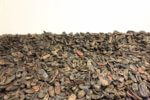 Naming Extermination: History of a Vocabulary
The terms Shoah, Holocaust and Hurban have all been used to refer to the systematic massacre of Jews in Nazi Germany. Laurent Neury explores how the choice of one term rather than another can have implications for understanding this criminal act, underscoring the importance of language when referring to an event of such unspeakable horror.
-
6
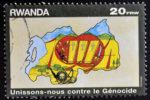 Never Again? Rwanda and the Paradox of the Law
In 1994, the world watched as hundreds of thousands of mostly Tutsi Rwandans were brutally murdered by Hutu soldiers and militias. Thirty years later, as Ravi Bhavnani explains, the legacy of the genocide continues to play an outsized role in Rwandan politics, and the ruling Rwandan Patriotic Front continues to draw on the genocide as a source of political legitimacy.
-
7
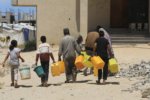 Water Crimes and International Law: The Need for Accountability
During recent and ongoing wars in Ukraine, Sudan and Gaza, civilian access to drinking water has been severely restricted on numerous occasions. Mara Tignino investigates the potentially genocidal nature of wartime attacks on civilian water infrastructure and, more generally, the increasing weaponisation of water in contemporary warfare.
Electronic reference
Mallard, Grégoire, Dominic Eggel, and Marc Galvin. “Genocide: The War of Words.” Global Challenges, no. 18, December 2025. URL: https://globalchallenges.ch/issue/18/genocide-the-war-of-words. DOI: https://repository.graduateinstitute.ch/record/321573.Dossier produced by the Geneva Graduate Institute’s Research Office.
BOX 1 | Definition of the Concept of Genocide
The concept of genocide was defined legally for the first time in the Convention on the Prevention and Punishment of the Crime of Genocide, adopted by the United Nations General Assembly on 9 December 1948. According to Article II of this Convention, genocide means
“any of the following acts committed with intent to destroy, in whole or in part, a national, ethnic, racial or religious group, as such:
a) Killing members of the group;
b) Causing serious bodily or mental harm to members of the group;
c) Deliberately inflicting on the group conditions of life calculated to bring about its physical destruction in whole or in part;
d) Imposing measures intended to prevent births within the group;
e) Forcibly transferring children of the group to another group.
To be noted: “Measures intended to prevent births’”, such as forced sterilisation, can therefore be legally considered an act constituting genocide — provided that the deliberate intention to destroy a targeted group can be proven. It is this dimension of genocidal intent that makes it difficult to legally recognise forced sterilisation as genocide, even if it technically meets the criteria defined by the Convention (Case Matrix Network)
Source: United Nations, Convention on the Prevention and Punishment of the Crime of Genocide.
GRAND ENTRETIEN | Genocide, with Paola Gaeta
Research Office, Geneva Graduate Institute
PODCAST | Past, Present and Future of Genocide. Annyssa Bellal
Research Office, Geneva Graduate Institute
PODCAST | Logiques néocoloniales, responsabilité française et génocide rwandais. J.-F. Bayart
Research Office, Geneva Graduate Institute
PODCAST | Israel’s Weaponisation of Water in Gaza
BOX 2 | Genocides: UN Recognition and Historical Consensus
- The Holocaust (Shoah) (1941–1945), recognised via UN General Assembly Resolution 96 (I) in 1946, which led to the 1948 Genocide Convention
- Genocide against the Tutsi (Rwanda, 1994), recognised by UN Security Council Resolutions 955 and 978 (1994); International Criminal Tribunal for Rwanda (ICTR) established
- Srebrenica Genocide (Bosnia, 1995), recognised by the International Criminal Tribunal for the former Yugoslavia (ICTY) and the International Court of Justice (2007 ruling)
- Herero and Nama Genocide (German Southwest Africa, 1904–1908), recognised by Germany (2021)
- Assyrian and Pontic Greek Genocides (1914–1923), recognised by some national parliaments
- Armenian Genocide (1915–1917), recognised by many national parliaments (France, Germany, Canada, etc.)
- Holodomor (Ukraine famine) (1932–1933), recognised by Ukraine and several other countries
- Cambodian Genocide (1975–1979), recognised by the Extraordinary Chambers in the Courts of Cambodia (ECCC)
- Anfal Campaign against Kurds (Iraq, 1988), recognised by several national courts
- Darfur Genocide (Sudan, 2003–present), prosecuted by the International Criminal Court; UN uses “crimes against humanity”
- Destruction of Indigenous Peoples of the Americas (16th–20th centuries), considered genocidal by many historians
- Cultural genocide of Indigenous Peoples (Canada, Australia, etc.), recognised as “cultural genocide” or “systemic assimilation”, not as genocide in the UN’s legal sense
- Massacre of the Aché People (Paraguay, 1960s–1970s), documented by NGOs and historians
- Gaza / Occupied Palestinian Territories, UN experts describe acts as “genocidal”
- Rohingya in Myanmar, UN Independent Investigative Mechanism; case before the International Court of Justice
- Tigray (Ethiopia), joint UN–Ethiopian Human Rights Commission investigations
- Ukraine, UN Commission of Inquiry examining possible incitement to genocide
- Uyghurs in China (Xinjiang), ongoing UN human rights investigations
Sources: Marc Galvin, Wikipedia, ChapGPT, CoPilot, UN (United Nations General Assembly, Resolution 96 (I), “The Crime of Genocide”, 11 December 1946, https://digitallibrary.un.org/record/209873; Resolution A/RES/60/7, “Holocaust Remembrance”, 21 November 2005, https://docs.un.org/a/res/60/7; Resolution A/RES/78/282, “International Day of Reflection and Commemoration of the 1995 Genocide in Srebrenica”, 23 May 2024, https://docs.un.org/A/Res/78/282; “UN Resolutions Relevant to Genocide Prevention”, https://www.un.org/en/genocide-prevention/SA-prevention-genocide/UN-resolutions; “UN General Assembly Adopts Resolution on Srebrenica Genocide, Designating International Day of Reflection, Commemoration”, press release, 23 May 2024, https://press.un.org/en/2024/ga12601.doc.htm).
BOX 3 | Complaints for Genocide, War Crimes and Crimes against Humanity
Genocide, war crimes and crimes against humanity are among the most serious international crimes, as defined by the Convention on the Prevention and Punishment of the Crime of Genocide (1948), the Geneva Conventions (1949) and their Protocols, and the Rome Statute (1998), which established the International Criminal Court (ICC). They are considered non-prescriptible: complaints can be filed even decades later.
Where can complaints be filed?
– Before the International Criminal Court (ICC)
The ICC can try cases of genocide, war crimes, crimes against humanity and crimes of aggression. Cases can be referred to it in three ways: by a state party to the Rome Statute (123 states today), by the ICC Prosecutor, who can take up a case on his own initiative after authorisation by the judges, or by the UN Security Council (even for non-member states, e.g. Darfur, Libya).
Can an individual file a complaint? Yes, but in the form of a communication to the Office of the Prosecutor (OTP). The ICC is not a direct complaint jurisdiction like a national court: an individual can submit a case, but only the Prosecutor decides whether to open an investigation.
There are significant limitations to the ICC. It only tries individuals, not states. It only has jurisdiction if the crime took place on the territory of a state party, if the perpetrator is a national of a state party, or if the Security Council refers the case. Finally, some geopolitically important states do not recognise the ICC (the United States, Russia, China, Israel, etc.).
– Before a national court
Many states now allow complaints for genocide, crimes against humanity and war crimes, even if the crimes were committed abroad and by foreigners. This is known as universal jurisdiction. Examples of countries that regularly use it include France, Germany, Belgium, the Netherlands, Sweden, Canada (partially) and Spain (more limited since 2014). The specific conditions vary from country to country, but generally require the presence of the suspect on the territory, a complaint from victims or NGOs, and national prosecutors who open investigations themselves. This mechanism is being used increasingly frequently (trials of Syrian torturers, Rwandan soldiers, etc.).
– Before the International Court of Justice (ICJ)
The ICJ does not judge individuals, but can be called upon in disputes between states, particularly for accusations of genocide (e.g. Gambia v. Myanmar; South Africa v. Israel), violations of the Geneva Conventions, and disputes over the interpretation of international treaties. It is important to note that private individuals cannot bring cases before the ICJ. Only states can do so.
The courts for Rwanda and Kosovo
Complaints cannot be brought before these courts by individuals. They are ad hoc international criminal tribunals with jurisdiction to try individuals responsible for serious crimes (genocide, crimes against humanity, war crimes).
The International Criminal Tribunal for Rwanda (ICTR) was established in 1994 by the UN Security Council to try those responsible for the genocide of the Tutsis and crimes against humanity committed in Rwanda.
The Special Tribunal for Kosovo (Kosovo Specialist Chambers) was established in 2015, based in The Hague, to try crimes committed by the Kosovo Liberation Army (KLA) between 1998 and 2000.
There may be indirect interactions with the ICJ, for example when the ICJ examines the responsibility of a state for acts that also constitute crimes tried by a criminal tribunal (e.g. the Bosnia v. Serbia case on the Srebrenica genocide).
Sources: Marc Galvin, Wikipedia, ChapGPT, CoPilot, UN.
BOX 4 | The Obligation to Act in the Face of Genocide
The 1948 United Nations Genocide Convention imposes a legal obligation on all signatory states to prevent and punish genocide. This obligation is known as erga omnes, which means that it is owed to the entire international community and not only to the state where the crime is taking place. Thus, even a country not directly involved must intervene to the extent of its capabilities, in particular through diplomatic, economic, legal or humanitarian means. In concrete terms, this may take the form of economic sanctions, diplomatic pressure, suspension of arms sales, humanitarian aid, cooperation with the courts, or speaking out at the UN.
This obligation applies to all states parties (153 today), regardless of their geography or political interests. It does not depend on the filing of a complaint with the International Court of Justice (ICJ): the complaint is simply one legal mechanism among others, but the obligation to act exists outside of any proceedings.
Finally, it is an obligation of means, not of results: powerful states must do more, while less influential states may limit themselves to actions proportionate to their capabilities.
NB. A State may only intervene militarily to stop genocide if it has authorisation from the Security Council or a recognised collective mandate. No State may invoke genocide to justify a military attack on its own. For example, Russia attempted to justify its invasion of Ukraine in 2022 by invoking the prevention of genocide, but the ICJ rejected this argument.
Sources: Marc Galvin, Wikipedia, ChatGPT, CoPilot, UN.
BOX 5 | Is the Holodomor Recognised as a Genocide?
The legal status of the Holodomor — the Ukrainian famine of 1932–33 — as a genocide remains a matter of international debate. According to the 1948 United Nations Genocide Convention, genocide refers to acts committed “with intent to destroy, in whole or in part, a national, ethnical, racial or religious group, as such”.
Scholars and the Ukrainian state argue that the famine fits this definition, citing Soviet policies that intentionally targeted the Ukrainian peasantry, culture, and political autonomy. Evidence includes:
- Forced grain requisitions far beyond subsistence levels
- Border closures preventing peasants from fleeing famine zones
- Suppression of Ukrainian language, institutions, and elites
- A disproportionate death toll among Ukrainians compared to other Soviet republics
As of 2025, more than 30 countries — including Canada, Ukraine, Poland, the Baltic states, and recently Germany — officially recognise the Holodomor as a genocide. However, neither the United Nations nor the International Criminal Court has issued a binding legal ruling on the matter, and Russia maintains that the famine was a broader Soviet tragedy, not a targeted ethnic crime.
Sources: Marc Galvin, Wikipedia, ChapGPT, CoPilot, UN.