Global Governance in Peril? | Figure for the Issue
Global Governance in Peril?
VIDEO | Nico Krisch on the hierarchy of norms
© The Graduate Institute, Geneva

© The Graduate Institute, Geneva
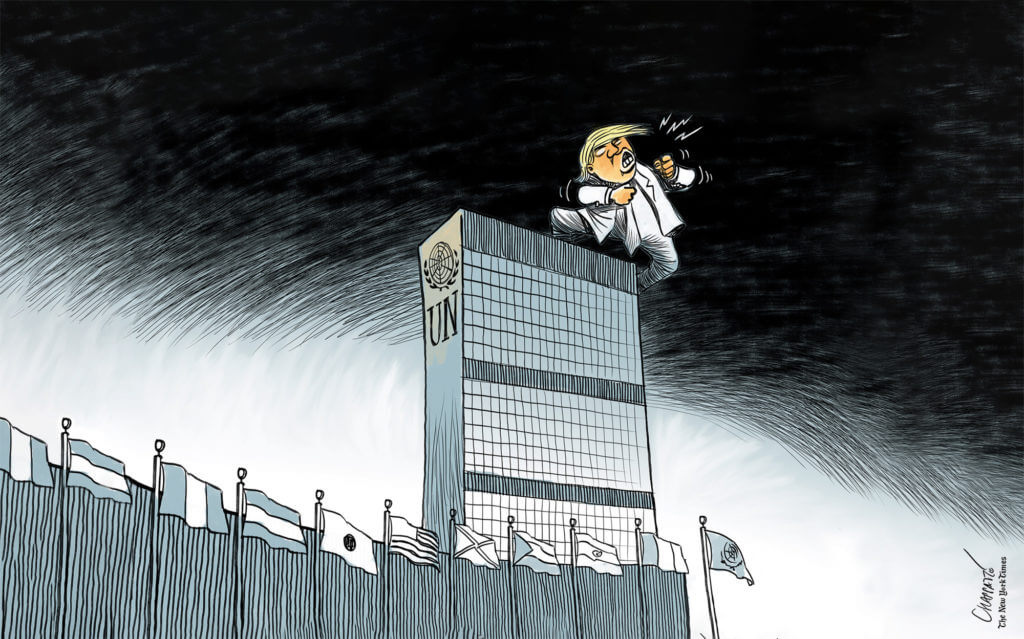
The multipolar world succeeding US hegemony in the early 21st century, the financial crisis of 2007 and the corollary decline of liberalism seem to have ushered in an era of economic nationalism. States are increasingly left to fend for themselves as multilateral mechanisms lose traction and international economic relations gain in toxicity. The sanctions, embargoes and retaliations arising from the war in Ukraine, but also an accelerating struggle for dwindling natural resources, have pushed these logics to new heights. This Dossier assesses ongoing geoeconomic transformations and their potentially devastating consequences.
The present Dossier takes stock of the current state of the multilateral system and its future prospects. It aims to explore to what extent global governance is in crisis as the global geopolitical order is undergoing fundamental shifts and liberal universalism is losing traction. It assesses potential of reform in extant institutions as well as emerging trends, tools and forums that are reshaping multilateral practice on a daily basis.
Note – The dossier was drafted before the Covid-19 world crisis.
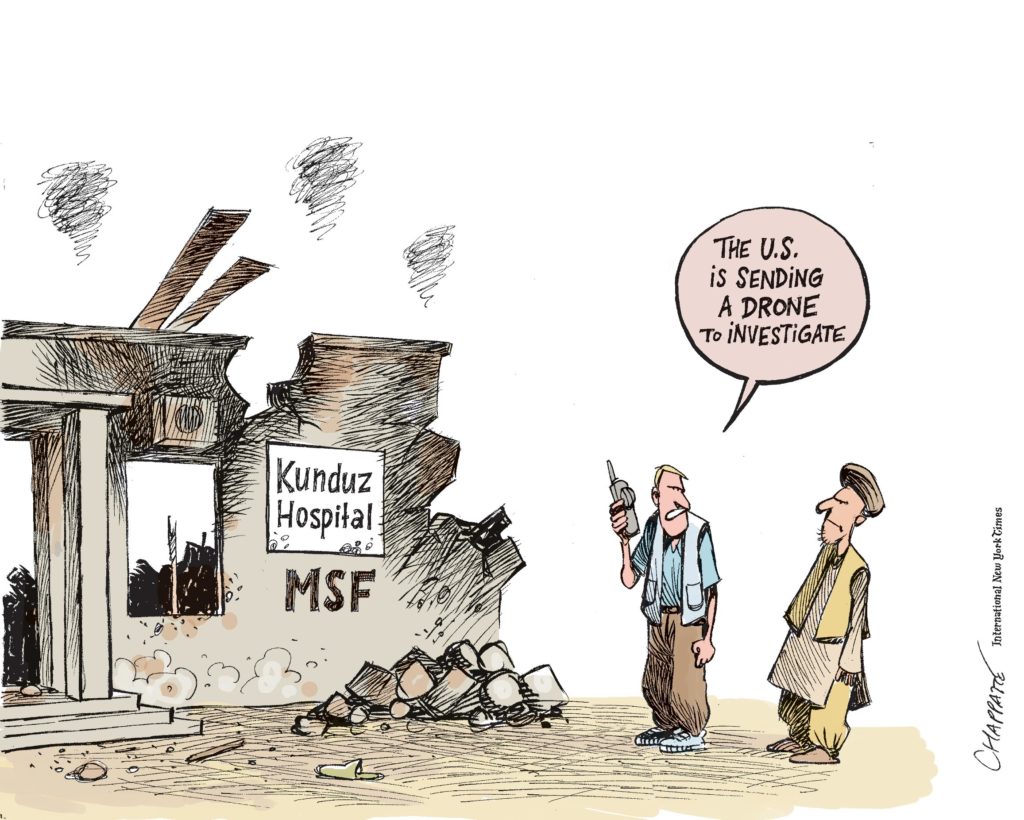
The Dossier aims to explore new trends and expressions of violence in armed conflict in the 21st century. Taking as a starting point the changing paradigm of armed conflict – from conventional wars with clear contours towards more non-linear, fragmented and protracted types of civil and international conflict — it adopts a broad approach to portray changing forms of violence across different types of armed conflicts (including terrorism, international/civil wars or urban warfare). In the context of a fragmenting international order, with increasingly blurred lines between state and non-state, combatant and civilian, domestic and international, the number of actors involved in conflicts and concurrent strategies of violence have multiplied. In face of the ubiquity of violent conflict — despite an overall decline in interstate conflict and global number of casualties — the Dossier aims to shed light on new or changing forms of violence, their contexts, actors and victims. It explores the novelty, heterogeneity, scales and vectors of violent practices in contemporary conflicts by investigating the impact of a series of factors such as new military technologies (drones, robots), new communication tools (social media), gender, migration, or the subcontracting of security to private actors.