The Weaponisation of Economics | Figure for the Issue
The Weaponisation of Economics
VIDEO: A critical analysis of the weaponisation of economics, by Beatrice Weder di Mauro
Research Office, Geneva Graduate Institute.
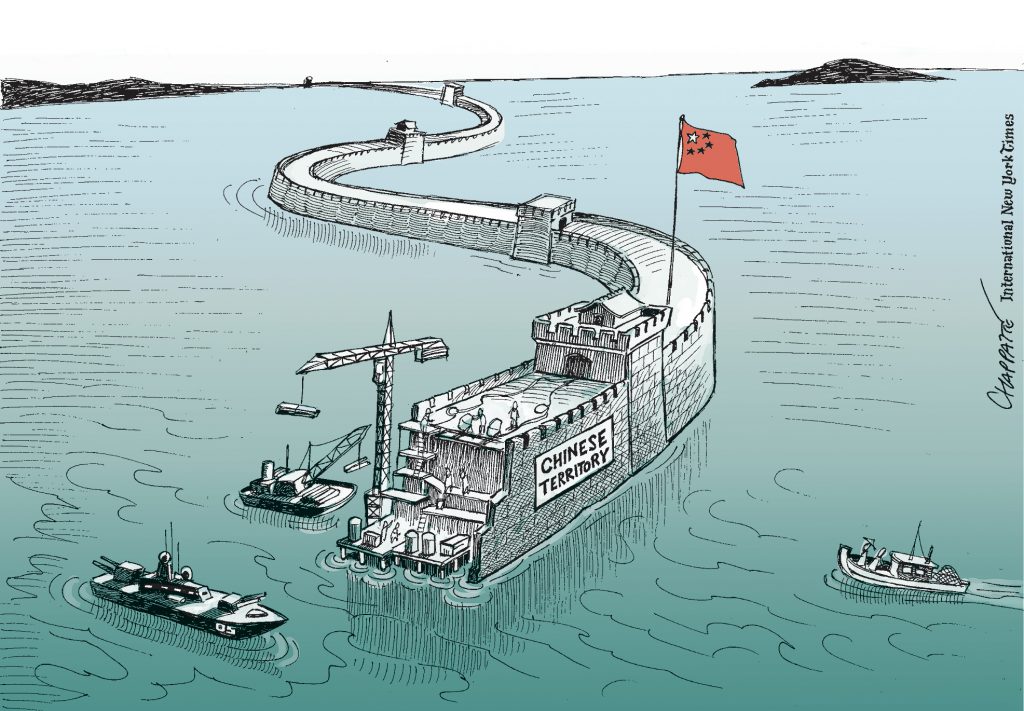
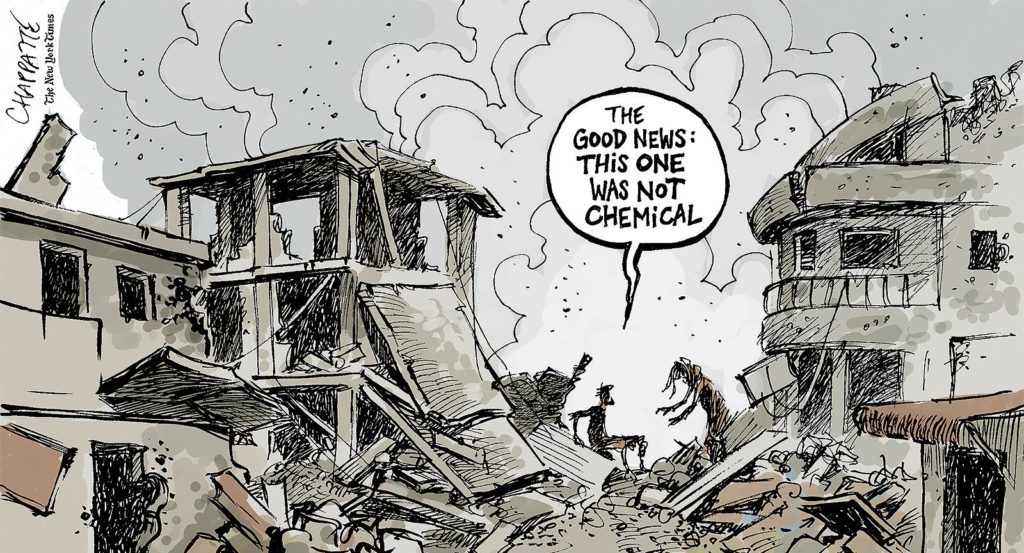
© Chappatte dans NZZ am Sonntag, Zürich
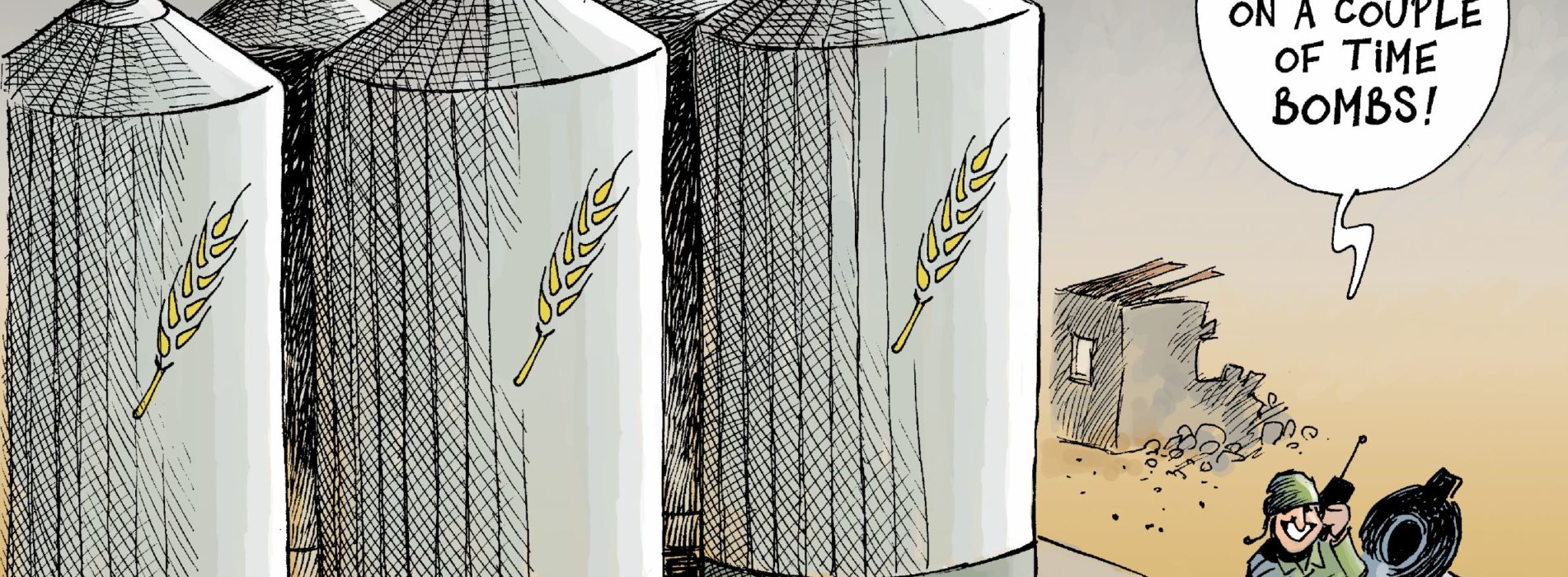
Research Office, Geneva Graduate Institute.
While the global balance of power, under the impetus of the steady rise of China, is shifting towards the Asia-Pacific, and because the future of US policy is uncertain after the election of Donald Trump, tensions in the South China Sea have once again become a major strategic concern. The South China Sea is witnessing a series of sovereignty disputes between littoral states defending rivalling claims to maritime rights and boundaries. Adding weight and urgency to the disputes are the significant natural resources found in the coveted archipelagos and sea beds as well as the rising national sentiments in many of the claimant states. The geostrategic dimension of these quarrels is largely transcending the region and the involvement of external powers such as the United States further complicates the equation. The recent legal victory of the Philippines over China can be seen as a supplementary cause for anxiety in a latent conflict that may at any time escalate into a regional or global confrontation. Henceforth the search for a negotiated solution becomes crucial as military budgets continue to soar in the region.
The essays in this volume are the product of a new ‘research practicum‘ course in the Department of Political Science and International Relations at the Graduate Institute in Geneva. They build on the debates on ‘Urban Morphology and violence’ to reflect on the associations between cities – their political orders and disorders – and outcomes ranging from occupation and resistance to marginalisation and containment. These texts foreshadow the possibility of centring – and challenging – the urban in our understanding of contemporary conflict, violence and peace. They are a first step in opening up a research agenda for a more textured analysis of spatial, geographical and temporal dynamics within the city in relation to violence, and, therefore, the mobilisation of spatial, temporal and visual modes of analysis. The promise is to make visible the varied roles of urban morphologies – adding to the debate on cities in and as sites of conflict.
Neoliberal globalisation has not only transformed the role of the state; it has also shaken up the internal “DNA” of education policies, from schools to universities. New technologies have paved the way for new forms of transmitting knowledge; calls to decolonise curricula are growing louder; in the South, many countries face the challenge of financing public education policies in an era of new public management, while the model and transfer of these policies have become a key problem, compounded by the exclusion of historically marginalised populations and the advance of private and religious players. Against this backdrop of criticism of the public education model, the present Dossier seeks to better apprehend what could be done to restore the purpose and meaning of education and universities.