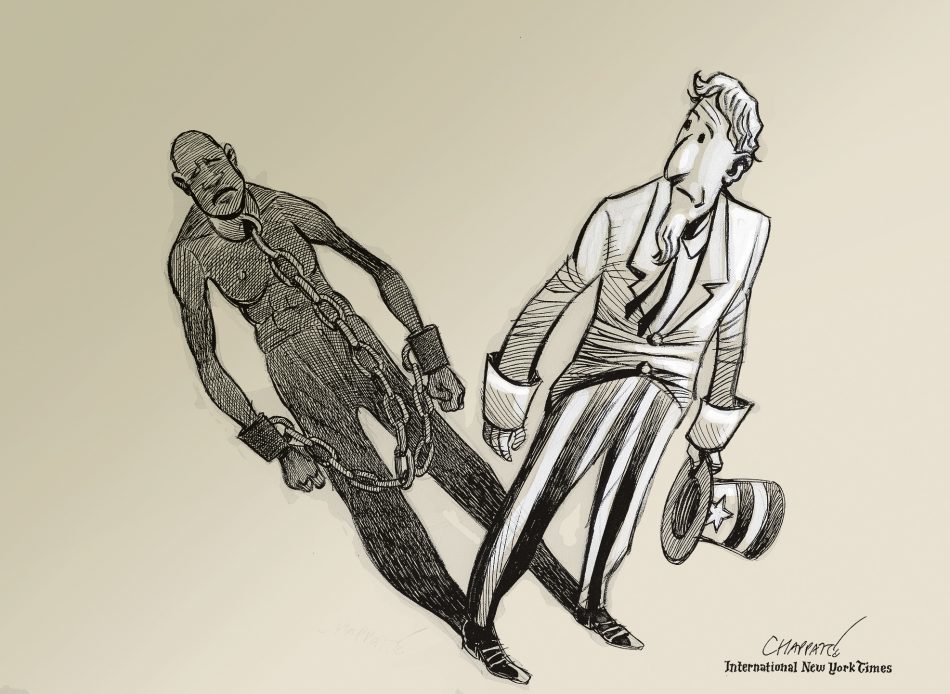
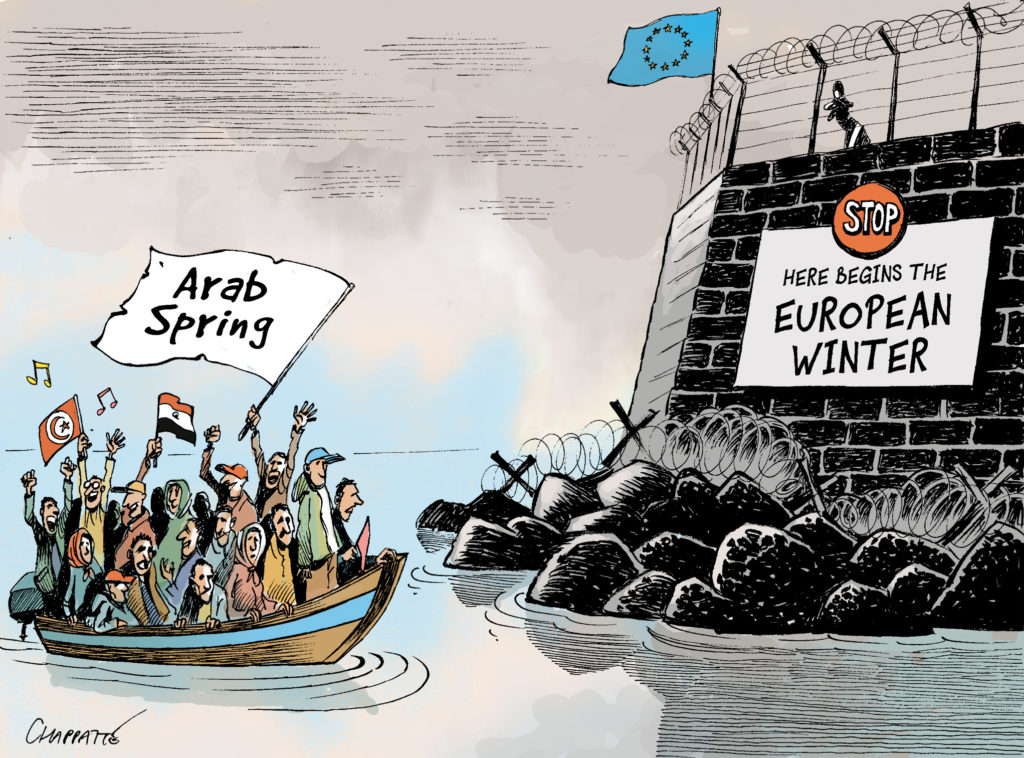
The Uncertain Future of Human Rights | Figure for Introduction
Human Rights in Flux: New Directions beyond Universalism
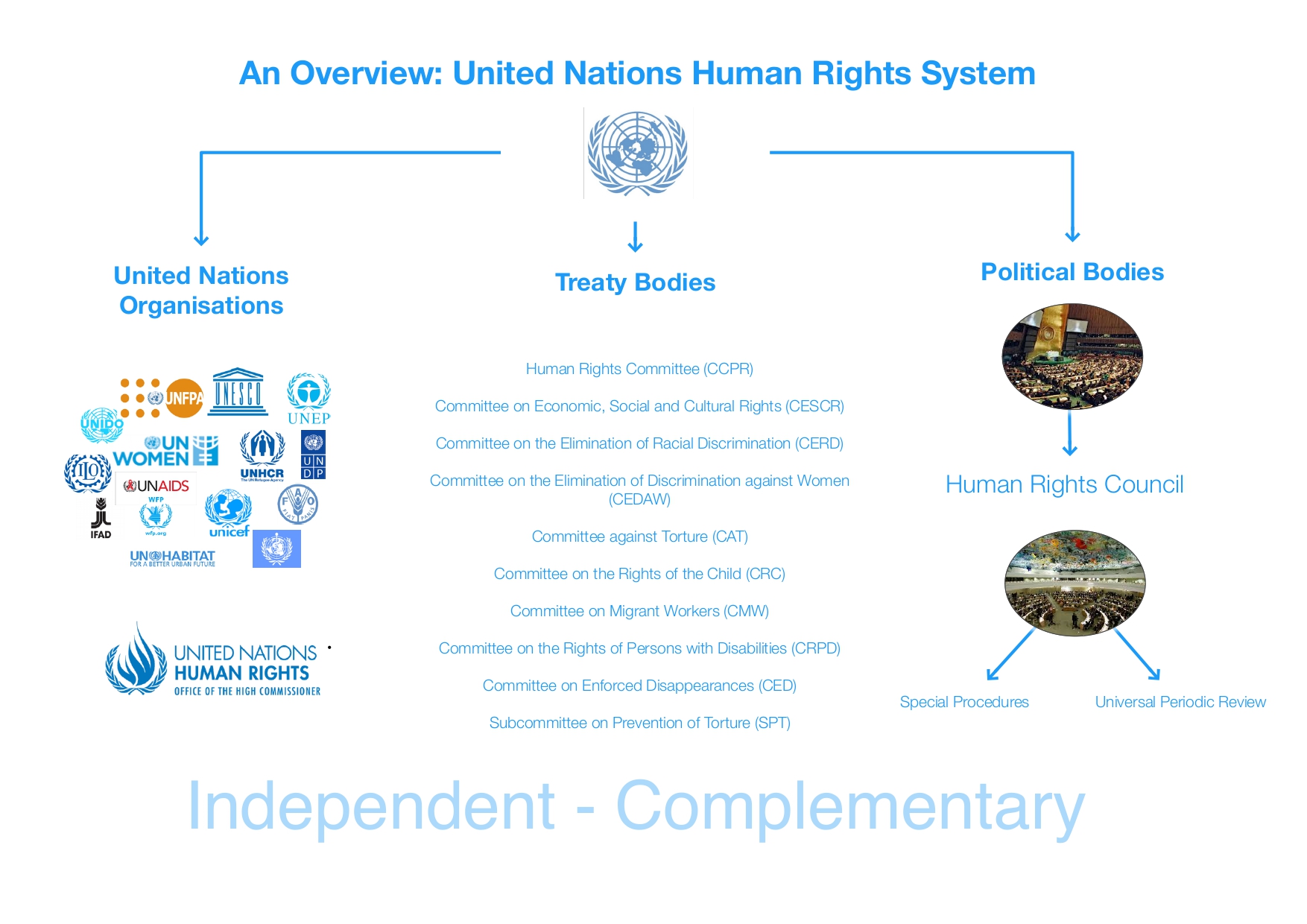
DIAGRAMME: The United Nations Human Rights System
https://www.shutterstock.com

Today, we observe a renewed interest in the theme of decolonisation in three interrelated fields: in the academic world which opens new areas of research and teaching (e.g. decolonisation studies; decolonising the curriculum), in the practice of professionals and international actors who are revisiting their way of working, as well as in the vocabulary and activism of civil society targeting the remnants of colonial times such as street names, statues or museum objects. The renewed focus on decolonisation brings forth underlying issues such as the lingering of Eurocentrism, continued oppression of indigenous people, cultural relativism, the ongoing materiality of colonialism, the guilt of the West or, more generally, “the darker side of Western modernity”. While decolonisation has had a lasting impact on the political scene (with the decolonisation movements of the 1960s) and theoretically in the realm of academia, it lags behind in practice as processes, mentalities and epistemes are still permeated by “coloniality”. The present issue puts therefore decolonisation into historical perspective and provides fresh analytical perspectives on its epistemologies and methodologies as well as its practical application and consequences in various fields.
This issue has been coproduced by the Graduate Institute’s Department of International History and Politics and the Research Office. It also includes contributions from other research centres and departments of the Institute.
We currently face a baffling paradox. While since the fall of the Berlin Wall in 1989 a seemingly inexorable process of globalisation has been foreshadowing a peaceful and frontierless world, the number of walls across the world has been rising at a steady pace. Liberal and open societies buttressed by trade, international law and technological progress were supposed to implacably contribute to the erosion of frontiers and walls between nations. However, in a context of surging populist discourses, securitarian anxieties and identitarian politics as well as concomitant flows of migration alimented by climate change, conflict and poverty, nations have recently started to barricade themselves behind new walls.
Soil is an essential component of the Earth’s ecosystem. It contributes to and fulfills a wide range of environmental and societal functions such as food production, water filtering, carbon storage and the preservation of biodiversity essential to the survival of the human species. While soils have witnessed significant environmental degradation in recent decades, lands have been the object of increased economic competition and financial speculation. The commercial and financial scramble for land has never been more intense as transnational actors and governments such as the Chinese seek large scale bids for land in the Global South that have been likened to new forms of neocolonialism. The consequences of this double tension include the loss of biodiversity, floods, climate change, famines, forced migration and conflict.
It is the assumption of the present Dossier that issues such as large scale exploitation of land and natural resources, soil degradation, biodiversity, food security and climate change are closely interdependent and cannot be treated in isolation. Seeking to explore and better understand the interlinkages between the material degradation of soils and the increased extractive, commercial and speculative pressure on lands, the Dossier aims to address some of the broader stakes the Anthropocene is currently facing: How irreversible is the damage that has been caused to earth’s soils? Have we reached a point of no return? How many people is the earth able to feed and for how long? Are we trapped in a Malthusian logic? How will climate change depend and interact with changing patterns of soil distribution and depletion? What is the impact of large scale deforestation and natural resource extraction on the environment, particularly the soils? What are the governance patterns and technological solutions emerging to address land depletion and scarcity? What are some of the cybernetic loops and mechanisms of autoregulation through which the earth reacts to human interference?