The Weaponisation of Economics | Figure for the Issue
The Weaponisation of Economics
PODCAST: Overview of the WTO challenges in 2022, with Manuel Miranda
Research Office, Geneva Graduate Institute, 2022. Globalchallenges.org
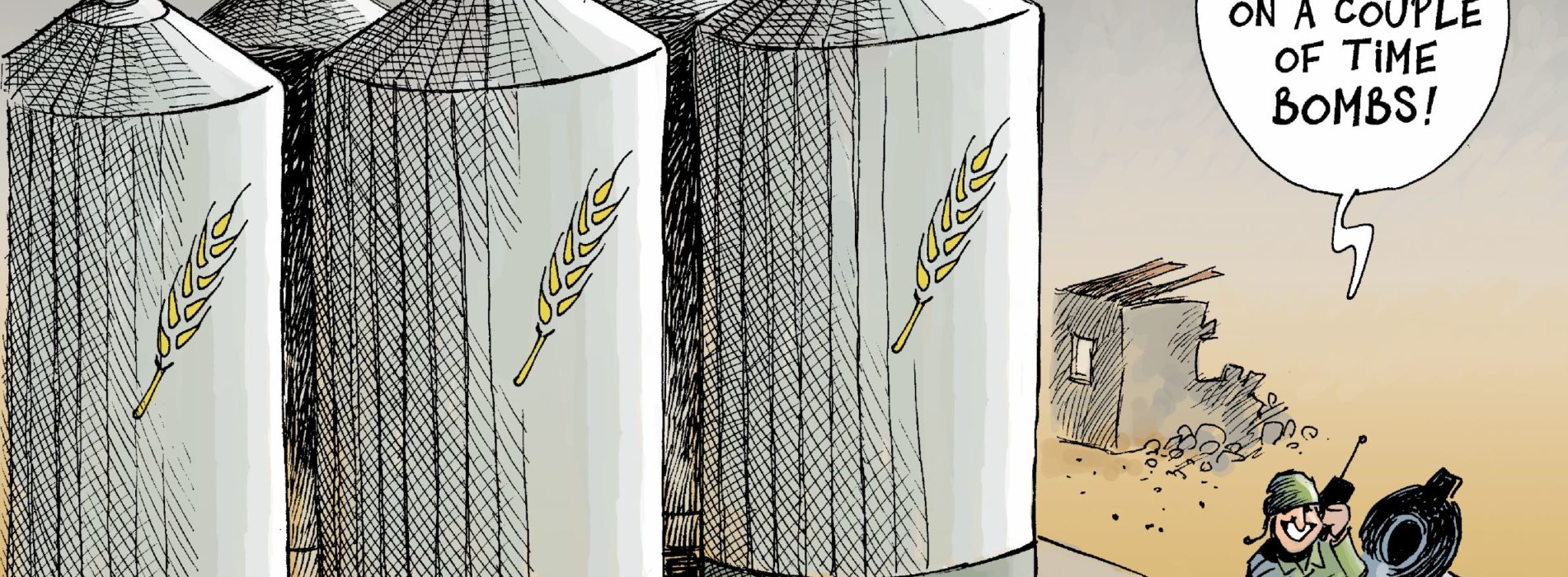
© Chappatte dans NZZ am Sonntag, Zürich
Research Office, Geneva Graduate Institute, 2022. Globalchallenges.org
After the outbreak of COVID-19 – a virus constituting a genuinely worldwide risk – fear internationalised in just a few weeks. As the COVID crisis has profoundly shaken societies on a global scale it has contributed to a reconfiguration – perhaps a multiplication – of risks and their perceptions. While foremost constituting a biological hazard, the pandemic has large repercussions on other types of risks, ranging from long-term economic and digital disruption to psychological distress and political confrontation. The nature and frontiers of risks are thus moving as the multilateral system, the most adequate framework to deal with global risks, is ailing and current risk mitigation strategies are increasingly put to question. The six articles of the present Dossier explore these changing hierarchies of risk and the underpinning structural issues that endanger our existence.
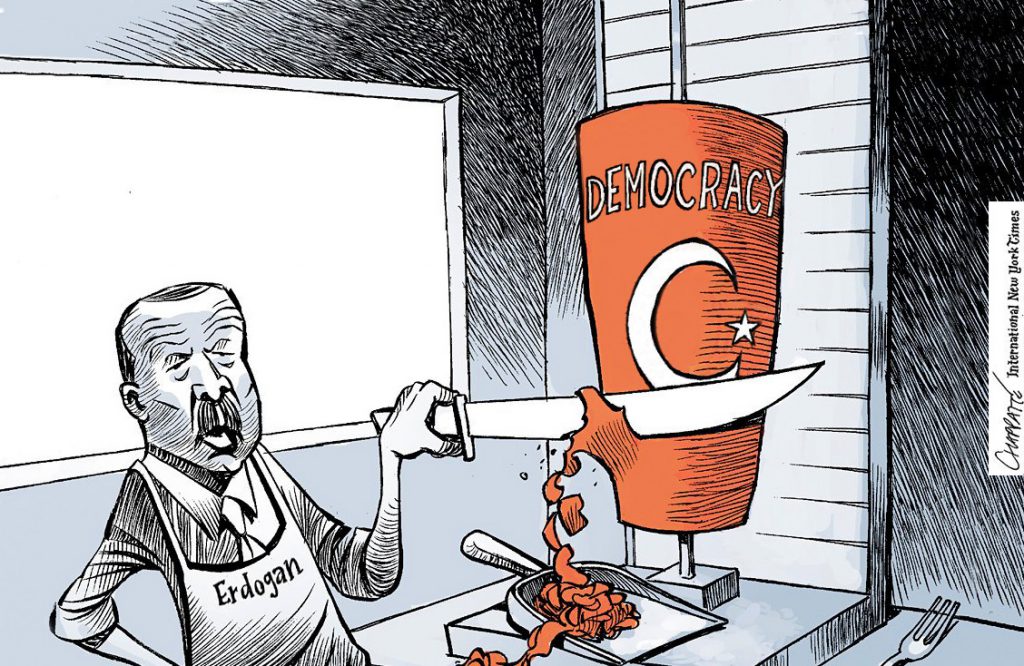
While the 20th century has been characterised by the generalisation of democratisation processes, the 21st century seems to have started with the reverse trend. An authoritarian-populist nexus is threatening liberal democracy on a global scale, including in its American and European heartlands. Charismatic leaders – thriving on electoral majorities and popular referenda – methodically undermine the rule of law and constitutional safeguards in order to consolidate their own power basis. Coupling inflammatory rhetoric with modern communication technologies, they short-circuit traditional elites and refuse to abide by international norms. Agitating contemporary scourges such as insecurity, loss of identity, mass migration and corrupt elites, they put in place new laws and mechanisms to harness civil society and political opponents. In order to better understand the novelty, permanence and global reach of “illiberal democracy”, this second issue of Global Challenges proposes seven case studies (Russia, Hungary, Turkey, the Middle East, Uganda, Venezuela and the United States) complemented by a series of expert interviews, maps and infographics.
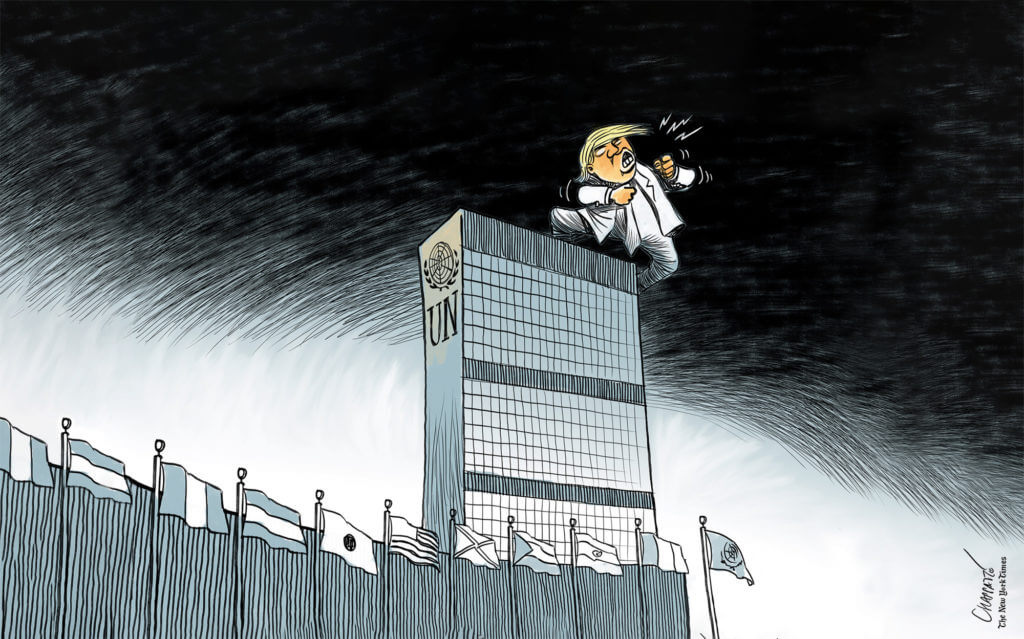
The present Dossier takes stock of the current state of the multilateral system and its future prospects. It aims to explore to what extent global governance is in crisis as the global geopolitical order is undergoing fundamental shifts and liberal universalism is losing traction. It assesses potential of reform in extant institutions as well as emerging trends, tools and forums that are reshaping multilateral practice on a daily basis.
Note – The dossier was drafted before the Covid-19 world crisis.