The Global Disinformation Order | Figure for the Issue
The Global Disinformation Order
PODCAST: The Right of Freedom in Armed Conflicts: A View from the United Nations, with Paige Morrow
RO Geneva Graduate Institute.
RO Geneva Graduate Institute.
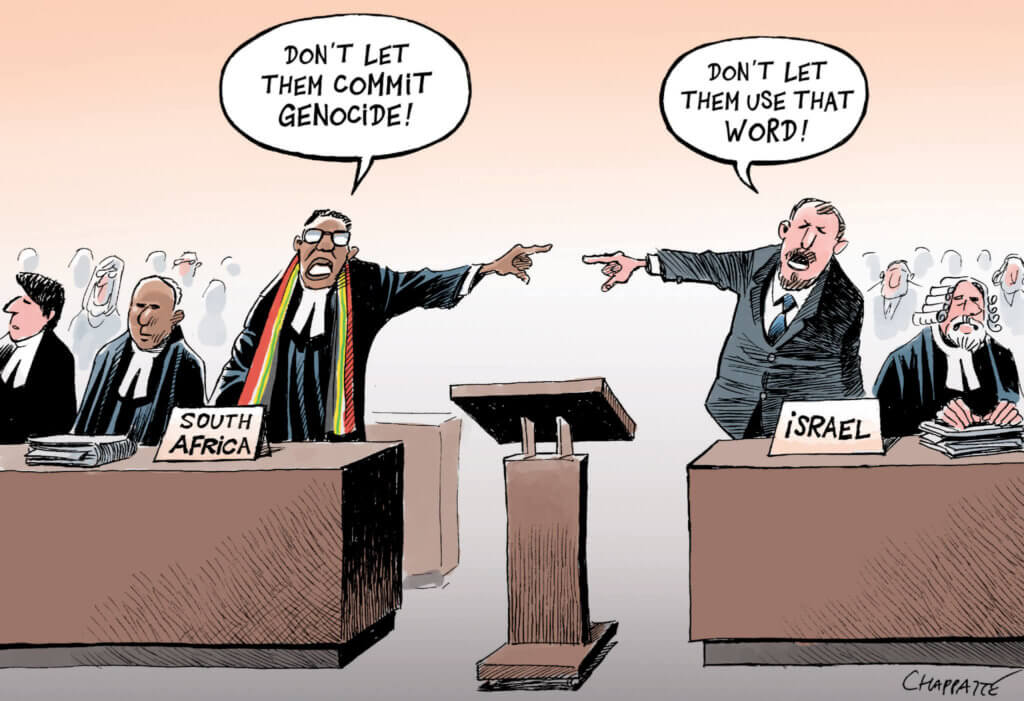
As images of conflict and atrocities multiply, a disturbing question resurfaces: do international treaties designed to protect civilians, prevent genocide and regulate the use of war still carry any weight? From the Convention on the Prevention of Genocide to the founding principles of humanitarian law, the legal edifice built after the Second World War is faltering. Between institutional paralysis, political manipulation and blatant impunity, there is a seeming “return to the law of the strongest”. Concurrently, the notion of genocide has gained traction again as it is mobilised by a wide range of actors to denounce Israel’s attack on Gaza and its lethal consequences since 7 October 2023.
This Dossier questions the capacity — and the limits — of international law in the face of contemporary violence. What is the current level of trust in the international legal architecture to address occurrences of mass violence? What is the relevance of the notion of genocide today, as opposed to that of war crimes or crimes against humanity? What are the political stakes in the use of terms that have a judicial grounding and are invested with historical meaning and precedents? In a world where legal landmarks are more necessary but also more contested than ever, the dossier offers valuable insights into these questions.
In 2024, nearly half the world’s population, including citizens of the eight most populous nations, voted or will vote in elections. While this signals democratic engagement, many elections are run by autocratic or illiberal regimes pursuing self-serving agendas. Paradoxically thus, as elections are generalising as a practice, democracy is met with growing defiance. On closer scrutiny, however, it appears that it is not only the indicators of democracy but also those of elections that have been declining over the past decade. This dossier, produced with the Albert Hirschman Centre for Democracy, examines the essential role of elections in the construction of democracy today.
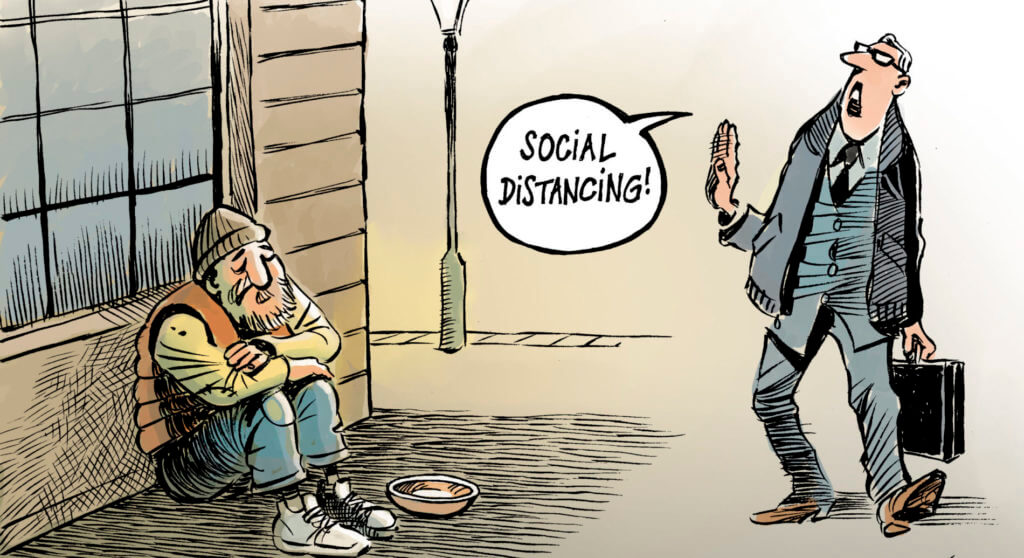
While poverty has been diminishing in absolute terms and relative income has been growing on a global scale for over two centuries, inequality – as measured by instruments such as the Gini coefficient – has been increasing steadily since the early 1980s. With the financial crisis of 2007, the growing digitalisation of the economy and the current pandemic, global inequality has further worsened, seeing the fortunes of the superrich attaining unprecedented levels and revenue concentrating in the top percentiles of societies.
Concurrently to the aggravation of the social fracture, additional fault lines have been opening or hardening along logics of race, gender, ethnicity and religion. Identarian revendications and logics of difference and exclusion have come to complement, compete with or supersede more traditional struggles for equality in a postmodern and neoliberal context that has normalised inequality, homogenised societies and done away with earlier grand narratives and collective agendas.
The consequences of inequality(ies) are dramatic, as reflected in the polarisation and fragmentation of societies, worsening health and mortality indicators, political tensions and violence, a decline in democracy, and mistrust in state institutions. The objective of the current issue of Global Challenges is therefore – by reverting to the analytical tools of social science – to reflect on the causes behind the multifaceted growth of inequality(ies), anticipate their noxious fallouts and explore potential remedies.