Africas Rising? | Figure for the Issue
Africas Rising?
DOCUMENTARY | Missing Dollars: How Illicit Financial Flows Affect Developing Countries
Geneva Graduate Institute
Emad Hajjaj / cartooningforpeace.org/

Geneva Graduate Institute
What does the experience of combining art and science bring to the study of international relations? Why blend sensibility with reason to think about the evolution of the world? How does aesthetic and/or creative performance nourish the production of academic knowledge? If thinking about creation and integrating art with the Humanities and Social Sciences is nothing new, the challenges of the 21st century call for new analyses and creative approaches that give a voice to frequently neglected perspectives, and contribute to a more nuanced and multidimensional understanding of the world. The dialectic of art and research can be approached through the artistic dimension of the object of study, proximity to artists, experimentation with new forms of fieldwork and writing, or through the cultural mediation of the results. In this special issue of the digital magazine Global Challenges, jointly produced by the Graduate Institute of International and Development Studies (Geneva Graduate Institute) and the Centre de recherches internationales (Sciences Po), the contributors shed light on the role of art in research.
After a century marked by decolonisation and the imposition of a development model based on Western standards, Africa has entered the 21st century with a new status thanks, among other things, to its demographic dynamism (2 billion inhabitants in 2050 according to the UN, over 50% of whom will be under 25), its sustained economic growth, its extensive mineral and energy resources, and its drive for political leadership.
Additionally, since the end of the Cold War, emerging countries are successfully challenging the leadership of the West and are transforming this plural continent. If China has come to play a preponderant role, notably in terms of infrastructure development, the existence of multiple Africas presents prospects for a host of other international actors.
The continent’s development, however, is not without raising many questions, as it is still marked, in many ways, by issues of poverty and inequalities, as well as civil conflict and political repression.
The African continent is seeking more than ever to assert its autonomy of decision and action by making the most of its diverse potential. How will Africa – in its plural dimension – take advantage of this dynamism to write a new page in its history in the decades to come?
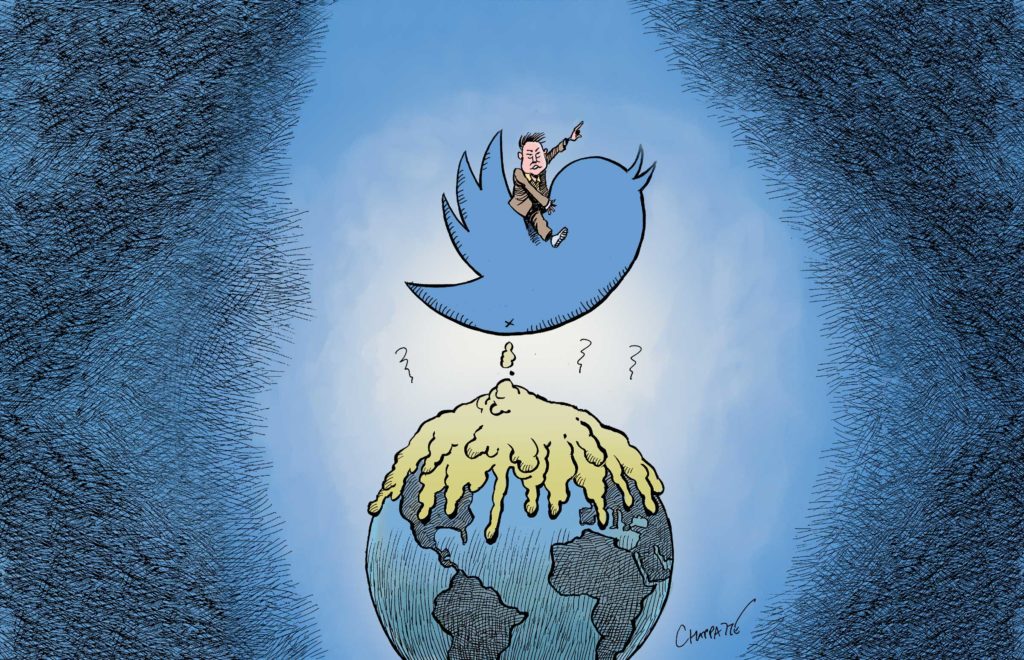
The present issue seeks to better apprehend the nature of this new era of digital disinformation and how it differs from prior eras marked by the dissemination of more traditional propaganda (notably the Cold War) or by the spread of American (or liberal) soft power through mass media and consumption. In so doing the issue seeks to address a series of questions such as: has traditional propaganda consisting in over-selling a model or ideology by means of manipulation and mass media been replaced by the generalisation of disinformation in the post-truth era characterized by systematic epistemic deconstruction and the outright discreditation of any truth claims? What is the role of states (as opposed to other actors) in this process and what tools and operational mechanisms are they mobilizing to pursue their global (dis-)information campaigns? What is the impact of the generalisation of alternative facts and disinformation campaigns on the international order? Who is to win and lose from it? What can be done, notably at the international level and the UN, to counter the noxious effects of global disinformation campaigns and to recreate trust in the global information order?