Global Challenges
Special Issue no. 1 | October 2025
© Miriam Périer
What does the experience of combining art and science bring to the study of international relations? Why blend sensibility with reason to think about the evolution of the world? How does aesthetic and/or creative performance nourish the production of academic knowledge? If thinking about creation and integrating art with the Humanities and Social Sciences is nothing new, the challenges of the 21st century call for new analyses and creative approaches that give a voice to frequently neglected perspectives, and contribute to a more nuanced and multidimensional understanding of the world. The dialectic of art and research can be approached through the artistic dimension of the object of study, proximity to artists, experimentation with new forms of fieldwork and writing, or through the cultural mediation of the results. In this special issue of the digital magazine Global Challenges, jointly produced by the Graduate Institute of International and Development Studies (Geneva Graduate Institute) and the Centre de recherches internationales (Sciences Po), the contributors shed light on the role of art in research.
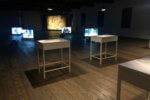






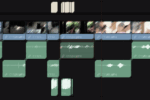
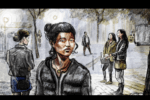
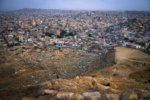

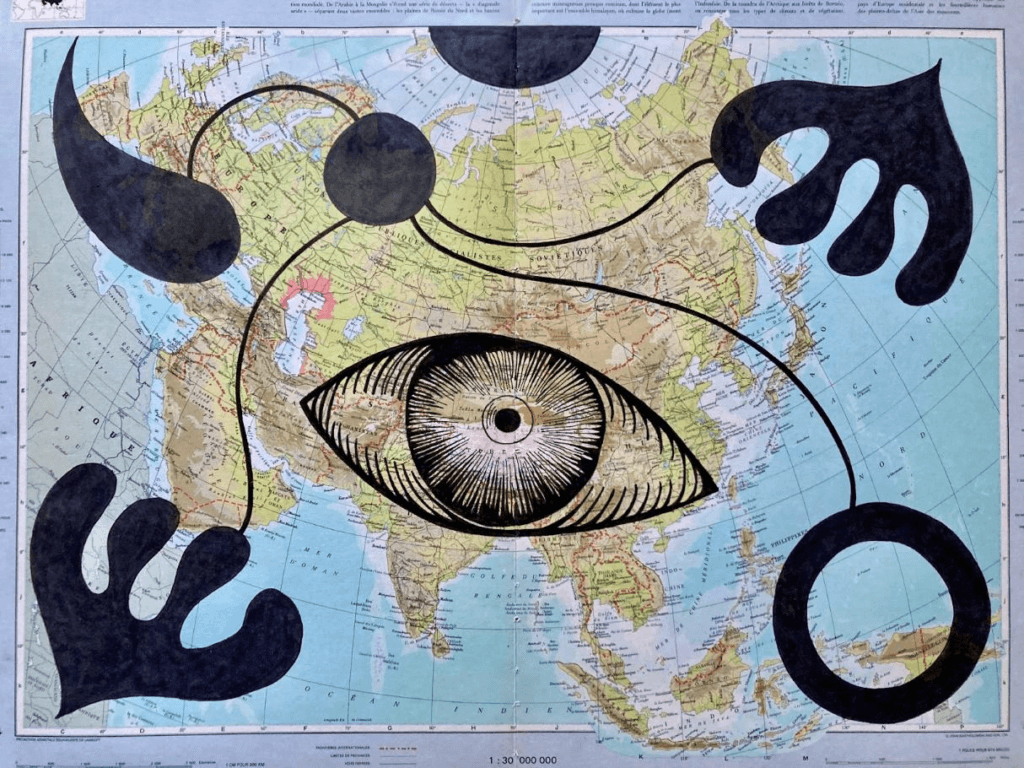
![Tiffany Chung, flotsam and jetsam, 28 watercolor/ink/acrylic paintings; texts etched on 40 Plexiglas plates; two single-channel
digital videos (colour, sound), M+, Hong Kong. Brown Family Annual Acquisition Fund, 2016. © Tiffany Chung. [The paintings are part of Chung's Vietnam Exodus History Learning project; this iteration was carried out in collaboration with Hồ Hưng, Lê Nam Đy, Nguyễn Kim Tố Lan, Nguyễn Văn Đủ]](https://globalchallenges.ch/wp-content/uploads/2025/10/Flotsam-and-Jetsam-2016-Mplus-7.6mgb-scaled-thumbnail.jpg)

This bilingual special issue of Global Challenges has been jointly produced by the Geneva Graduate Institute’s Research Office and the Centre for International Studies (CERI – Sciences Po – CNRS). Coordination was provided by Miriam Périer for CERI and Marc Galvin for the Geneva Graduate Institute.
What does the experience of combining art and science bring to the study of international relations? Why blend sensibility with reason to think about the evolution of the world? How does aesthetic and/or creative performance nourish the production of academic knowledge? If thinking about creation and integrating art with the Humanities and Social Sciences is nothing new, the challenges of the 21st century call for new analyses and creative approaches that give a voice to frequently neglected perspectives, and contribute to a more nuanced and multidimensional understanding of the world. The dialectic of art and research can be approached through the artistic dimension of the object of study, proximity to artists, experimentation with new forms of fieldwork and writing, or through the cultural mediation of the results. In this special issue of the digital magazine Global Challenges, jointly produced by the Graduate Institute of International and Development Studies (Geneva Graduate Institute) and the Centre de recherches internationales (Sciences Po), the contributors shed light on the role of art in research.
The Dossier aims to explore new trends and expressions of violence in armed conflict in the 21st century. Taking as a starting point the changing paradigm of armed conflict – from conventional wars with clear contours towards more non-linear, fragmented and protracted types of civil and international conflict — it adopts a broad approach to portray changing forms of violence across different types of armed conflicts (including terrorism, international/civil wars or urban warfare). In the context of a fragmenting international order, with increasingly blurred lines between state and non-state, combatant and civilian, domestic and international, the number of actors involved in conflicts and concurrent strategies of violence have multiplied. In face of the ubiquity of violent conflict — despite an overall decline in interstate conflict and global number of casualties — the Dossier aims to shed light on new or changing forms of violence, their contexts, actors and victims. It explores the novelty, heterogeneity, scales and vectors of violent practices in contemporary conflicts by investigating the impact of a series of factors such as new military technologies (drones, robots), new communication tools (social media), gender, migration, or the subcontracting of security to private actors.