








Loading...
Global Challenges
Issue no. 1 | February 2017
South China Sea:
War on the Horizon?
Start reading
Articles for this issue
Global Challenges
Issue no. 1 | February 2017
South China Sea: War on the Horizon?

While the global balance of power, under the impetus of the steady rise of China, is shifting towards the Asia-Pacific, and because the future of US policy is uncertain after the election of Donald Trump, tensions in the South China Sea have once again become a major strategic concern. The South China Sea is witnessing a series of sovereignty disputes between littoral states defending rivalling claims to maritime rights and boundaries. Adding weight and urgency to the disputes are the significant natural resources found in the coveted archipelagos and sea beds as well as the rising national sentiments in many of the claimant states. The geostrategic dimension of these quarrels is largely transcending the region and the involvement of external powers such as the United States further complicates the equation. The recent legal victory of the Philippines over China can be seen as a supplementary cause for anxiety in a latent conflict that may at any time escalate into a regional or global confrontation. Henceforth the search for a negotiated solution becomes crucial as military budgets continue to soar in the region.

Articles for this issue

South China Sea:
War on the Horizon?

Editors’ note:
This research dossier was written until January 2017 and therefore does not take into account recent developments regarding the South China Sea.

Other Issues
Issue no. 14 | November 2023
image
The Future of Universities
Global Challenges
Issue no. 14 | November 2023
The Future of Universities

Neoliberal globalisation has not only transformed the role of the state; it has also shaken up the internal “DNA” of education policies, from schools to universities. New technologies have paved the way for new forms of transmitting knowledge; calls to decolonise curricula are growing louder; in the South, many countries face the challenge of financing public education policies in an era of new public management, while the model and transfer of these policies have become a key problem, compounded by the exclusion of historically marginalised populations and the advance of private and religious players. Against this backdrop of criticism of the public education model, the present Dossier seeks to better apprehend what could be done to restore the purpose and meaning of education and universities.

Special Issue no. 3 | October 2025
image
Arts and the Study of the International
Global Challenges
Special Issue no. 3 | October 2025
Arts and the Study of the International

What does the experience of combining art and science bring to the study of international relations? Why blend sensibility with reason to think about the evolution of the world? How does aesthetic and/or creative performance nourish the production of academic knowledge? If thinking about creation and integrating art with the Humanities and Social Sciences is nothing new, the challenges of the 21st century call for new analyses and creative approaches that give a voice to frequently neglected perspectives, and contribute to a more nuanced and multidimensional understanding of the world. The dialectic of art and research can be approached through the artistic dimension of the object of study, proximity to artists, experimentation with new forms of fieldwork and writing, or through the cultural mediation of the results. In this special issue of the digital magazine Global Challenges, jointly produced by the Graduate Institute of International and Development Studies (Geneva Graduate Institute) and the Centre de recherches internationales (Sciences Po), the contributors shed light on the role of art in research.
Issue no. 2 | September 2017
image
Democracy at Risk
Global Challenges
Issue no. 2 | September 2017
Democracy at Risk

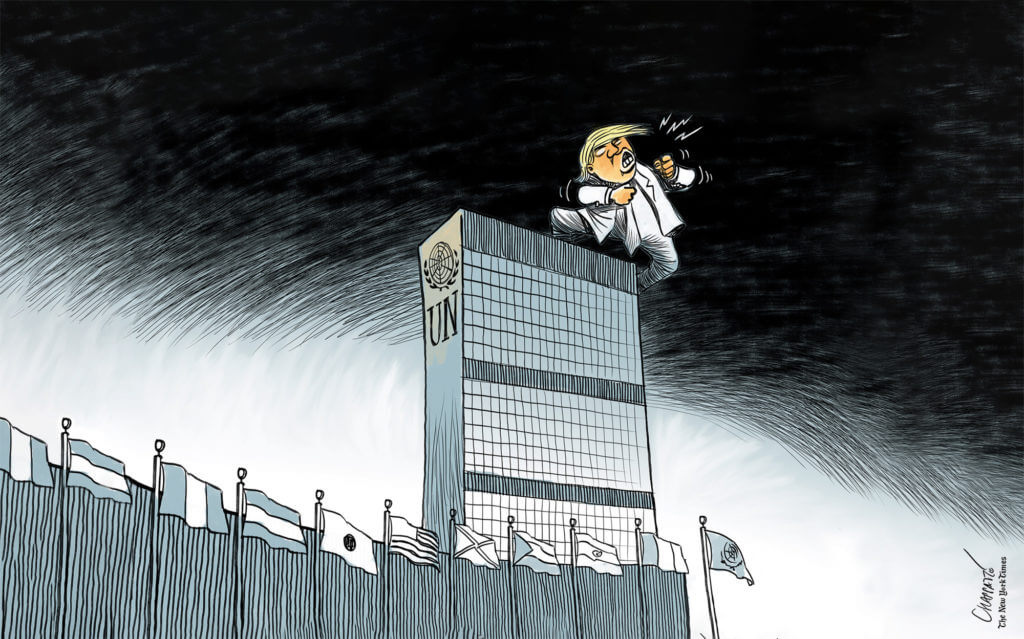
While the 20th century has been characterised by the generalisation of democratisation processes, the 21st century seems to have started with the reverse trend. An authoritarian-populist nexus is threatening liberal democracy on a global scale, including in its American and European heartlands. Charismatic leaders – thriving on electoral majorities and popular referenda – methodically undermine the rule of law and constitutional safeguards in order to consolidate their own power basis. Coupling inflammatory rhetoric with modern communication technologies, they short-circuit traditional elites and refuse to abide by international norms. Agitating contemporary scourges such as insecurity, loss of identity, mass migration and corrupt elites, they put in place new laws and mechanisms to harness civil society and political opponents. In order to better understand the novelty, permanence and global reach of “illiberal democracy”, this second issue of Global Challenges proposes seven case studies (Russia, Hungary, Turkey, the Middle East, Uganda, Venezuela and the United States) complemented by a series of expert interviews, maps and infographics.