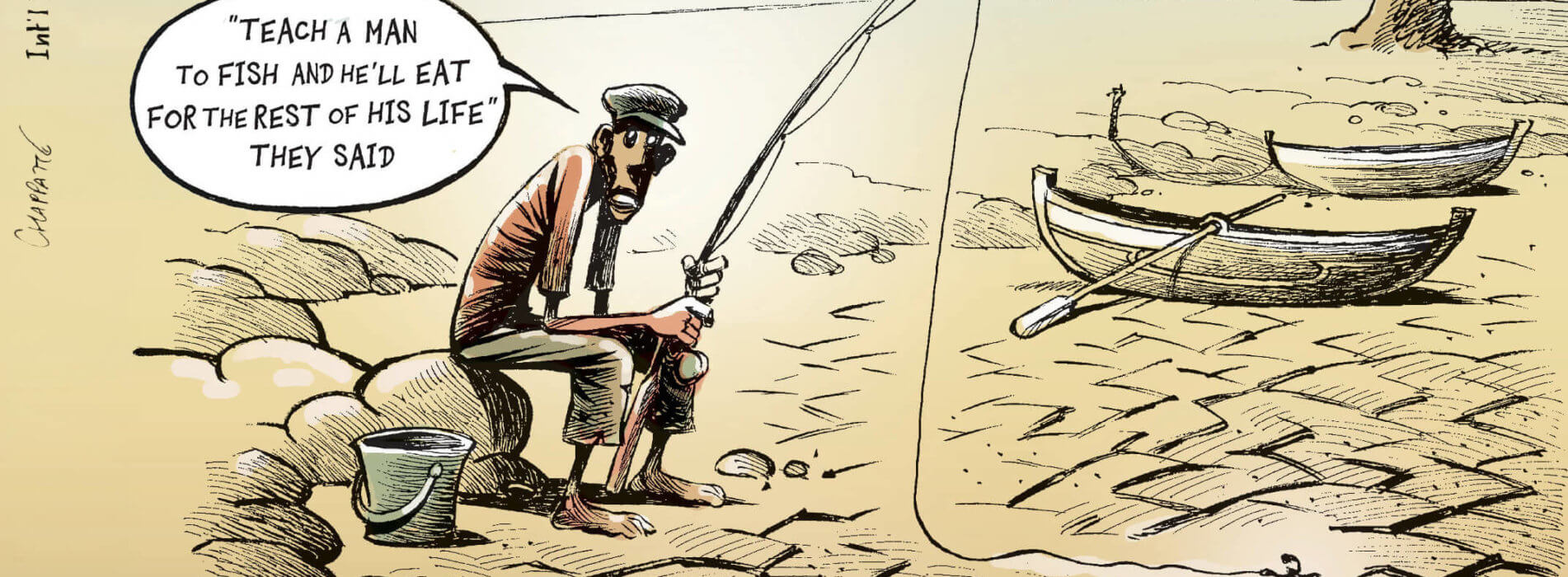
The End of Development? | Figure for the Issue
The End of Development?
PODCAST | El fin del desarrollo? Perspectiva desde Honduras, con Claudia Calderon
Research Office, Geneva Graduate Institute.
Research Office, Geneva Graduate Institute.
Neoliberal globalisation has not only transformed the role of the state; it has also shaken up the internal “DNA” of education policies, from schools to universities. New technologies have paved the way for new forms of transmitting knowledge; calls to decolonise curricula are growing louder; in the South, many countries face the challenge of financing public education policies in an era of new public management, while the model and transfer of these policies have become a key problem, compounded by the exclusion of historically marginalised populations and the advance of private and religious players. Against this backdrop of criticism of the public education model, the present Dossier seeks to better apprehend what could be done to restore the purpose and meaning of education and universities.
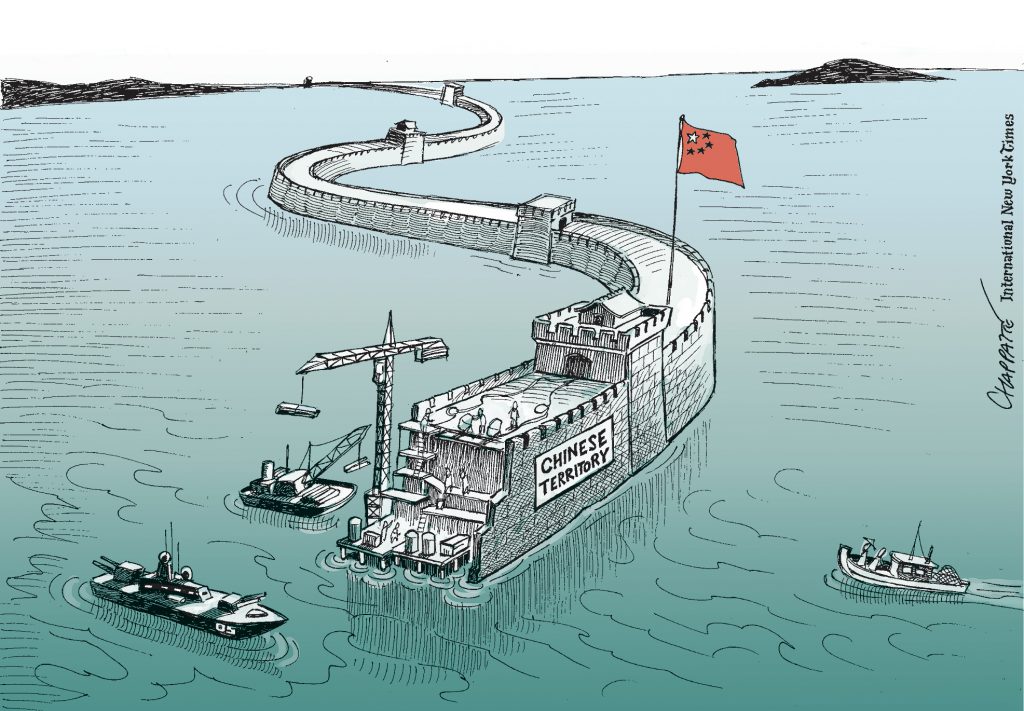
While the global balance of power, under the impetus of the steady rise of China, is shifting towards the Asia-Pacific, and because the future of US policy is uncertain after the election of Donald Trump, tensions in the South China Sea have once again become a major strategic concern. The South China Sea is witnessing a series of sovereignty disputes between littoral states defending rivalling claims to maritime rights and boundaries. Adding weight and urgency to the disputes are the significant natural resources found in the coveted archipelagos and sea beds as well as the rising national sentiments in many of the claimant states. The geostrategic dimension of these quarrels is largely transcending the region and the involvement of external powers such as the United States further complicates the equation. The recent legal victory of the Philippines over China can be seen as a supplementary cause for anxiety in a latent conflict that may at any time escalate into a regional or global confrontation. Henceforth the search for a negotiated solution becomes crucial as military budgets continue to soar in the region.
After the outbreak of COVID-19 – a virus constituting a genuinely worldwide risk – fear internationalised in just a few weeks. As the COVID crisis has profoundly shaken societies on a global scale it has contributed to a reconfiguration – perhaps a multiplication – of risks and their perceptions. While foremost constituting a biological hazard, the pandemic has large repercussions on other types of risks, ranging from long-term economic and digital disruption to psychological distress and political confrontation. The nature and frontiers of risks are thus moving as the multilateral system, the most adequate framework to deal with global risks, is ailing and current risk mitigation strategies are increasingly put to question. The six articles of the present Dossier explore these changing hierarchies of risk and the underpinning structural issues that endanger our existence.