The End of Development? | Figure for the Issue
The End of Development?
VIDEO | «Coopération Nord-Sud: la solidarité à l’épreuve» | Présentation du livre de Jacques Forster
Research Office. Geneva Graduate Institute.
Research Office. Geneva Graduate Institute.
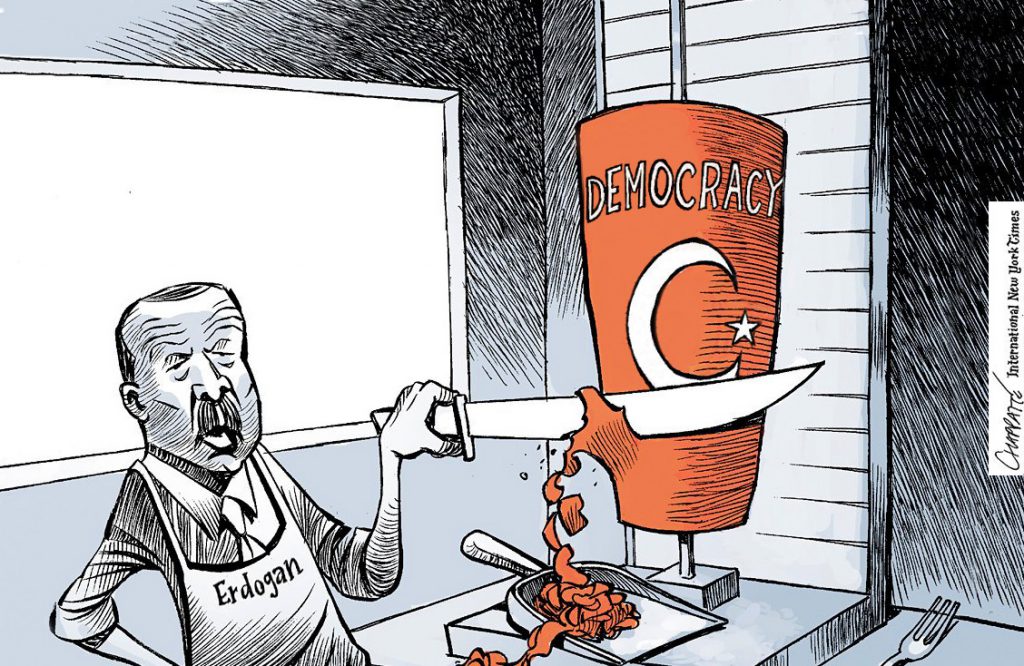
While the 20th century has been characterised by the generalisation of democratisation processes, the 21st century seems to have started with the reverse trend. An authoritarian-populist nexus is threatening liberal democracy on a global scale, including in its American and European heartlands. Charismatic leaders – thriving on electoral majorities and popular referenda – methodically undermine the rule of law and constitutional safeguards in order to consolidate their own power basis. Coupling inflammatory rhetoric with modern communication technologies, they short-circuit traditional elites and refuse to abide by international norms. Agitating contemporary scourges such as insecurity, loss of identity, mass migration and corrupt elites, they put in place new laws and mechanisms to harness civil society and political opponents. In order to better understand the novelty, permanence and global reach of “illiberal democracy”, this second issue of Global Challenges proposes seven case studies (Russia, Hungary, Turkey, the Middle East, Uganda, Venezuela and the United States) complemented by a series of expert interviews, maps and infographics.
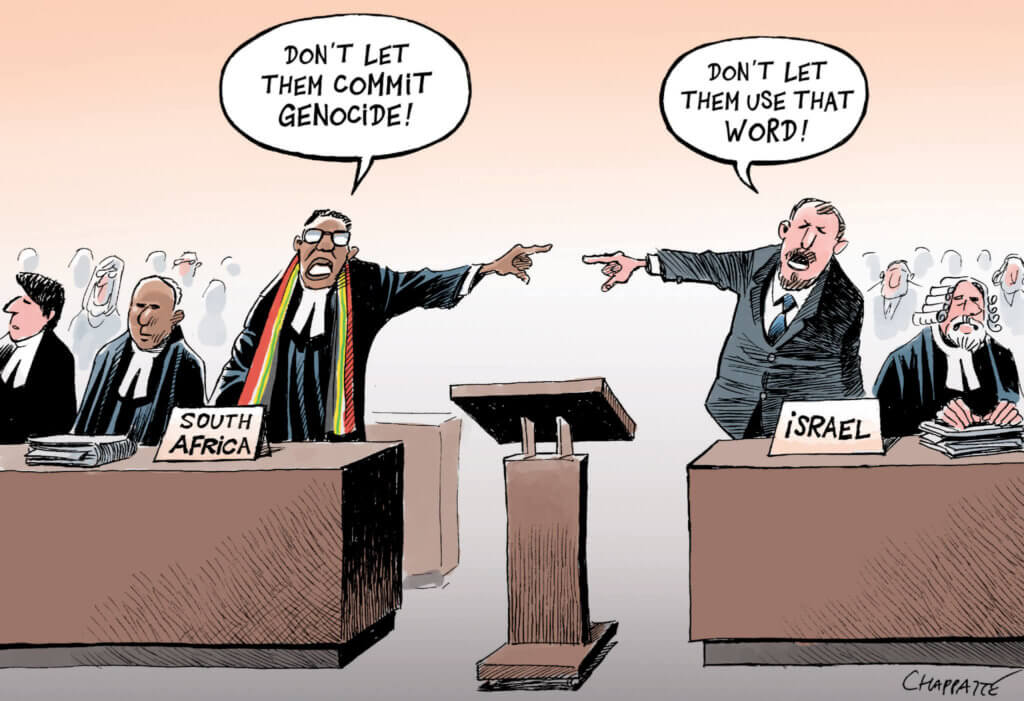
As images of conflict and atrocities multiply, a disturbing question resurfaces: do international treaties designed to protect civilians, prevent genocide and regulate the use of war still carry any weight? From the Convention on the Prevention of Genocide to the founding principles of humanitarian law, the legal edifice built after the Second World War is faltering. Between institutional paralysis, political manipulation and blatant impunity, there is a seeming “return to the law of the strongest”. Concurrently, the notion of genocide has gained traction again as it is mobilised by a wide range of actors to denounce Israel’s attack on Gaza and its lethal consequences since 7 October 2023.
This Dossier questions the capacity — and the limits — of international law in the face of contemporary violence. What is the current level of trust in the international legal architecture to address occurrences of mass violence? What is the relevance of the notion of genocide today, as opposed to that of war crimes or crimes against humanity? What are the political stakes in the use of terms that have a judicial grounding and are invested with historical meaning and precedents? In a world where legal landmarks are more necessary but also more contested than ever, the dossier offers valuable insights into these questions.
In 2024, nearly half the world’s population, including citizens of the eight most populous nations, voted or will vote in elections. While this signals democratic engagement, many elections are run by autocratic or illiberal regimes pursuing self-serving agendas. Paradoxically thus, as elections are generalising as a practice, democracy is met with growing defiance. On closer scrutiny, however, it appears that it is not only the indicators of democracy but also those of elections that have been declining over the past decade. This dossier, produced with the Albert Hirschman Centre for Democracy, examines the essential role of elections in the construction of democracy today.