Global Challenges
Issue no. 17 | March 2018
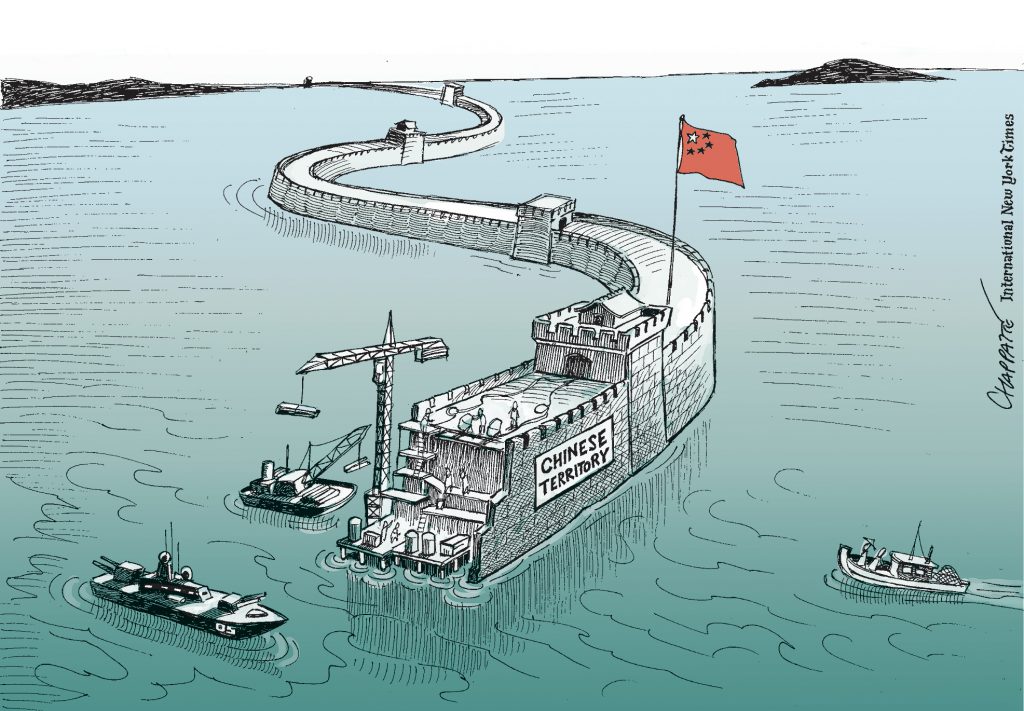
© Chappatte, The International New York Times - 04 mars 2017. www.chappatte.com
Has globalisation reached its apex after centuries of growth as suggested by the latest figures of the WTO? In the affirmative, does this imply that we are ushering into a new era of degrowth? Or are we witnessing the reorganisation of the very architecture of globalisation, which remains based on the twin logic of the acceleration and continuous increase of the volume of exchanges, as well as the steady densification of geographic connectedness. Are global exchanges restructuring concomitantly to the fourth technological revolution and the expansion of the digital economy? The present Dossier proposes to approach this question by observing the nature and the evolution of the principal flows that characterise globalisation.
While the global balance of power, under the impetus of the steady rise of China, is shifting towards the Asia-Pacific, and because the future of US policy is uncertain after the election of Donald Trump, tensions in the South China Sea have once again become a major strategic concern. The South China Sea is witnessing a series of sovereignty disputes between littoral states defending rivalling claims to maritime rights and boundaries. Adding weight and urgency to the disputes are the significant natural resources found in the coveted archipelagos and sea beds as well as the rising national sentiments in many of the claimant states. The geostrategic dimension of these quarrels is largely transcending the region and the involvement of external powers such as the United States further complicates the equation. The recent legal victory of the Philippines over China can be seen as a supplementary cause for anxiety in a latent conflict that may at any time escalate into a regional or global confrontation. Henceforth the search for a negotiated solution becomes crucial as military budgets continue to soar in the region.
The multipolar world succeeding US hegemony in the early 21st century, the financial crisis of 2007 and the corollary decline of liberalism seem to have ushered in an era of economic nationalism. States are increasingly left to fend for themselves as multilateral mechanisms lose traction and international economic relations gain in toxicity. The sanctions, embargoes and retaliations arising from the war in Ukraine, but also an accelerating struggle for dwindling natural resources, have pushed these logics to new heights. This Dossier assesses ongoing geoeconomic transformations and their potentially devastating consequences.
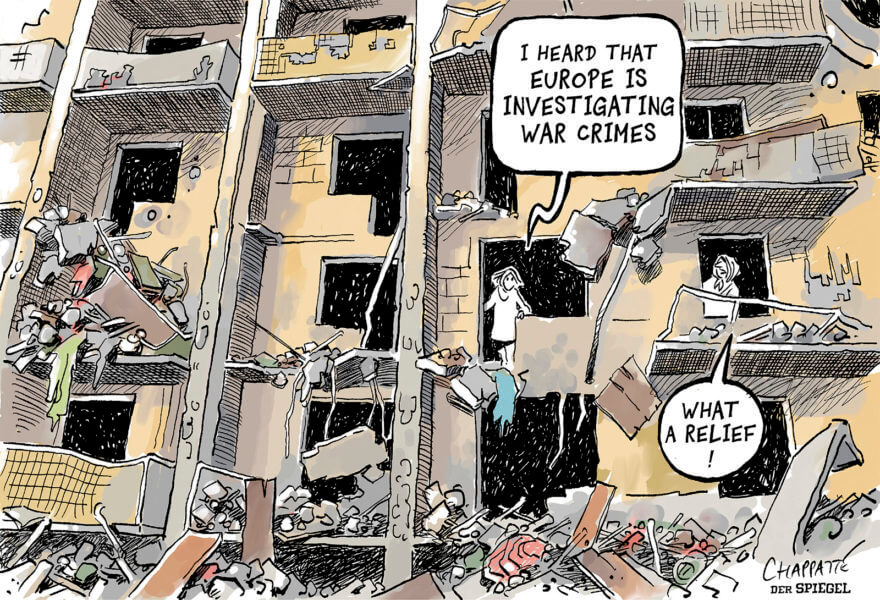
After 70 years of existence, human rights are facing criticism from many sides, some even claiming their fundamental inadequacy for the 21st century or imminent end. The human rights regime, based on the Universal Declaration of Human Rights (1948) and several subsequent covenants, is variously being accused of being elitist, Eurocentric and/or imperialistic in its universal claims and remaining blind to local customs and cultural specificities; of being implemented too tamely, inconsistently or even counterproductively by International organisations that are frequently co-opted by powerful state interests; and of being unable to address fundamental societal issues and transformations such as inequality, digital transformations and climate change.
Further critiques castigate human rights’ unmet promises, framing them as a neoliberal smokescreen, or admonishing their anthropocentrism, overlooking the rights of animals, plants or other non-human entities such as robots. In such a state of flux and uncertainty, human rights have also become, to some extent, victims of their own success, being articulated not only by an increasing armada of human rights actors and activists but also by atavistic forces referring to them more cynically. Such inflationary use of human rights, increasingly following a logic of transversality as reflected in the ever-expanding UN human rights issues or the flourishing of corporate CSR strategies and codes, ultimately risks eroding their operability and epistemic traction.
However, as shifting geostrategic constellations, the rise of populism, identitarian politics, authoritarian governments and the current epidemic are all contributing to further fragilising human rights, they remain more crucial to the world’s future than ever. The current Dossier therefore asks how the human rights regime will likely evolve faced by such challenges. Can it reinvent itself and, if so, how? Can we imagine human rights without the pretension to universalism and beyond the decline of the liberal paradigm? Are we moving towards human rights that are more collective in nature or of variable geometry? New perspectives and insights are needed from the legal, social and human sciences to answer these pivotal questions.
This dossier was produced by the Graduate Institute’s Research Office in collaboration with the Geneva Academy of International Humanitarian Law and Human Rights.