Urban Morphology & Violence | Figure for Article 7
Informality as a Right to Necessity?
Source: B’tselem, UNHabitat and IPCC.

Source: B’tselem, UNHabitat and IPCC.
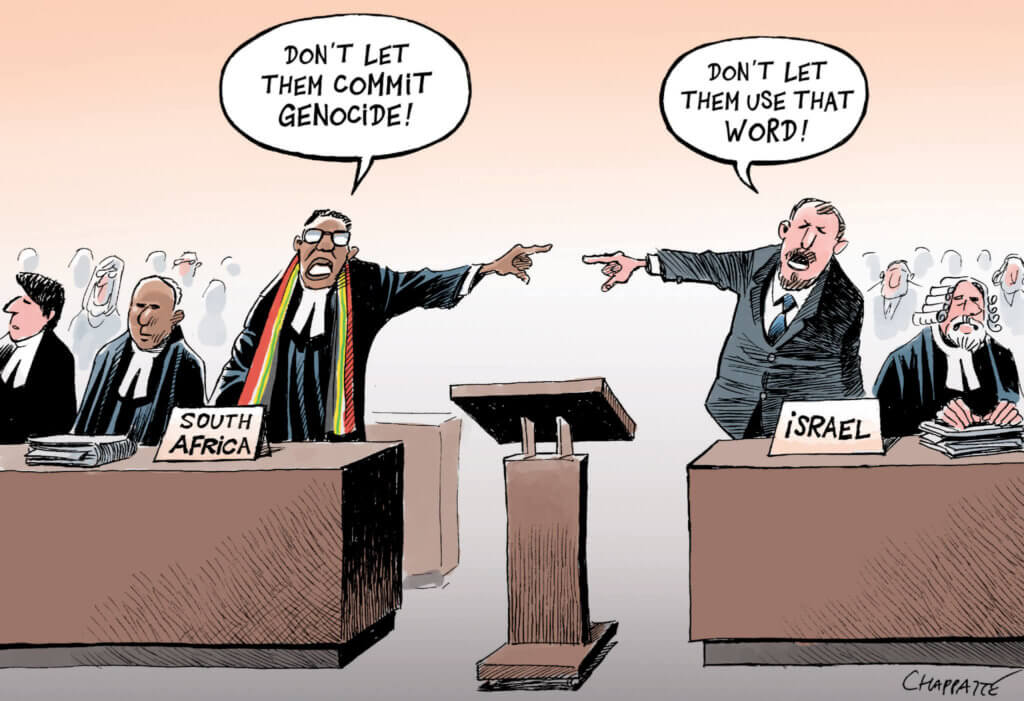
As images of conflict and atrocities multiply, a disturbing question resurfaces: do international treaties designed to protect civilians, prevent genocide and regulate the use of war still carry any weight? From the Convention on the Prevention of Genocide to the founding principles of humanitarian law, the legal edifice built after the Second World War is faltering. Between institutional paralysis, political manipulation and blatant impunity, there is a seeming “return to the law of the strongest”. Concurrently, the notion of genocide has gained traction again as it is mobilised by a wide range of actors to denounce Israel’s attack on Gaza and its lethal consequences since 7 October 2023.
This Dossier questions the capacity — and the limits — of international law in the face of contemporary violence. What is the current level of trust in the international legal architecture to address occurrences of mass violence? What is the relevance of the notion of genocide today, as opposed to that of war crimes or crimes against humanity? What are the political stakes in the use of terms that have a judicial grounding and are invested with historical meaning and precedents? In a world where legal landmarks are more necessary but also more contested than ever, the dossier offers valuable insights into these questions.
Neoliberal globalisation has not only transformed the role of the state; it has also shaken up the internal “DNA” of education policies, from schools to universities. New technologies have paved the way for new forms of transmitting knowledge; calls to decolonise curricula are growing louder; in the South, many countries face the challenge of financing public education policies in an era of new public management, while the model and transfer of these policies have become a key problem, compounded by the exclusion of historically marginalised populations and the advance of private and religious players. Against this backdrop of criticism of the public education model, the present Dossier seeks to better apprehend what could be done to restore the purpose and meaning of education and universities.
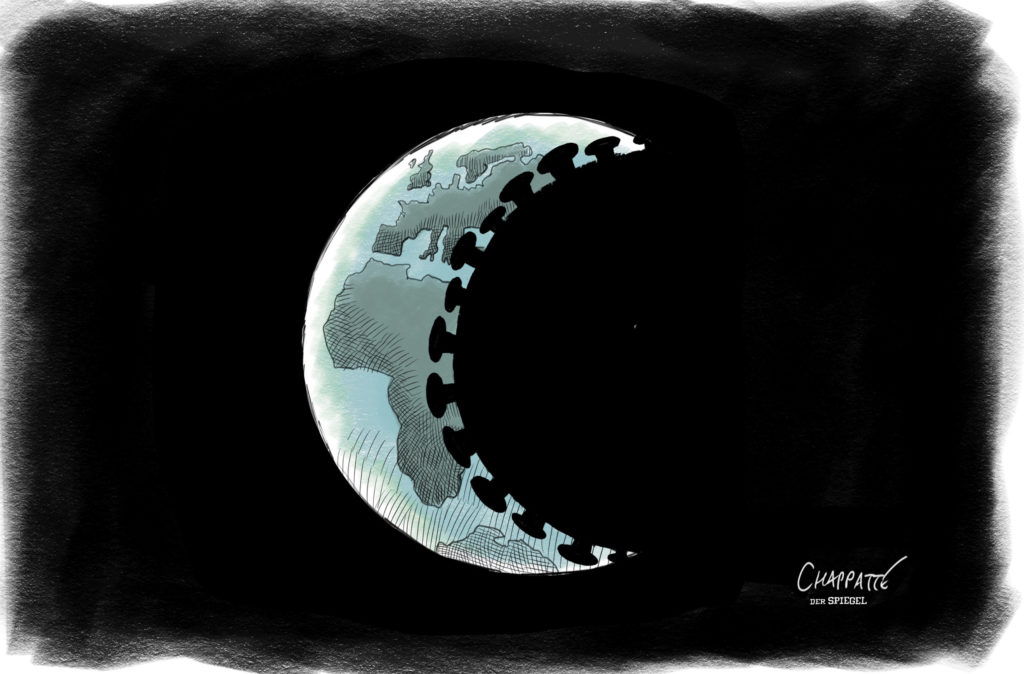
A pandemic is not just a medical emergency – it is also a political, economic, and social crisis. It implies new challenges for democratic institutions and practices, for citizenship rights and human rights as some of the restrictions on civil liberties put in place by liberal and illiberal democracies may well outlive the coronavirus. This special issue explores some tensions and dilemmas of democracies faced with the current crisis. “Politics of the Coronavirus Pandemics” addresses questions like: Can we speak of a decline in politics during the pandemic? While states have been using the full gamut of their sovereign prerogatives, has the political (temporarily) faded in the face of, for example, “expertise”? What will be the lasting impact of the rule by administrative fiat, and of emergency powers put in place in many countries? What kinds of agenda and instruments of civic activism are likely to emerge given that courts are rarely in session and public protest not permitted due to distancing rules? What are the likely consequences of these reconfigurations for democracy, governance, and welfare systems in the global South and North?