The Weaponisation of Economics | Figure for the Issue
© Chappatte dans NZZ am Sonntag, Zürich
The Weaponisation of Economics
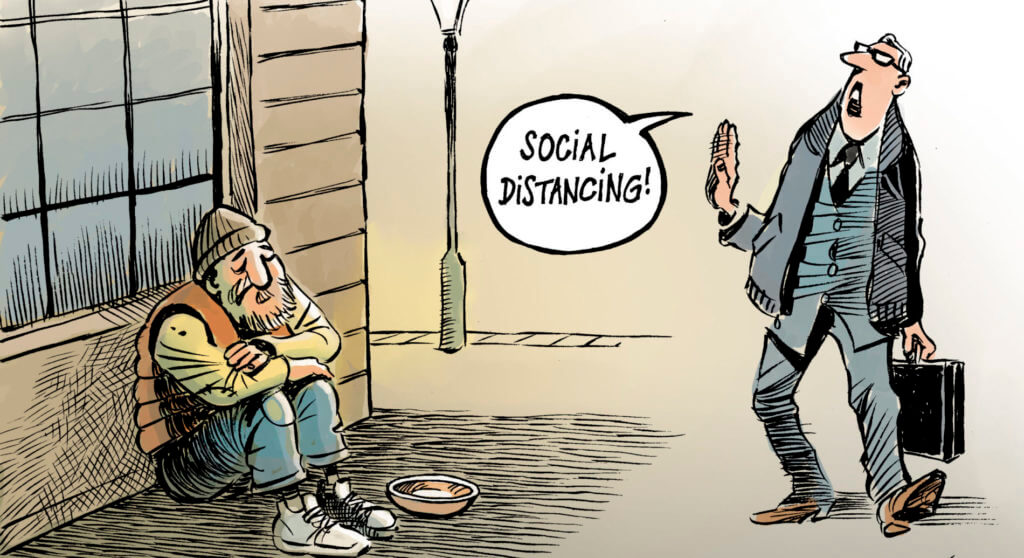
While poverty has been diminishing in absolute terms and relative income has been growing on a global scale for over two centuries, inequality – as measured by instruments such as the Gini coefficient – has been increasing steadily since the early 1980s. With the financial crisis of 2007, the growing digitalisation of the economy and the current pandemic, global inequality has further worsened, seeing the fortunes of the superrich attaining unprecedented levels and revenue concentrating in the top percentiles of societies.
Concurrently to the aggravation of the social fracture, additional fault lines have been opening or hardening along logics of race, gender, ethnicity and religion. Identarian revendications and logics of difference and exclusion have come to complement, compete with or supersede more traditional struggles for equality in a postmodern and neoliberal context that has normalised inequality, homogenised societies and done away with earlier grand narratives and collective agendas.
The consequences of inequality(ies) are dramatic, as reflected in the polarisation and fragmentation of societies, worsening health and mortality indicators, political tensions and violence, a decline in democracy, and mistrust in state institutions. The objective of the current issue of Global Challenges is therefore – by reverting to the analytical tools of social science – to reflect on the causes behind the multifaceted growth of inequality(ies), anticipate their noxious fallouts and explore potential remedies.
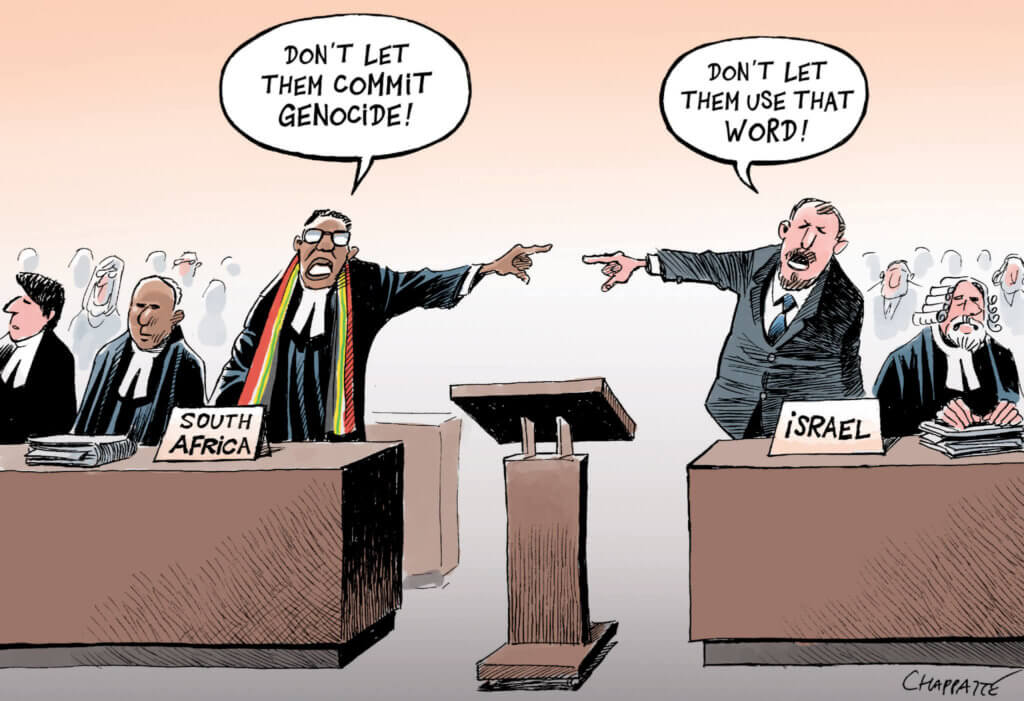
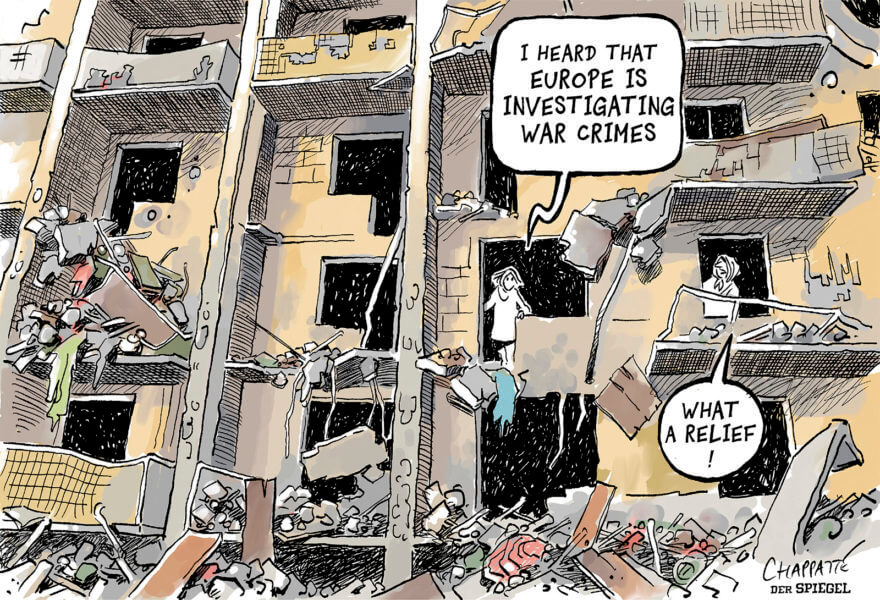
As images of conflict and atrocities multiply, a disturbing question resurfaces: do international treaties designed to protect civilians, prevent genocide and regulate the use of war still carry any weight? From the Convention on the Prevention of Genocide to the founding principles of humanitarian law, the legal edifice built after the Second World War is faltering. Between institutional paralysis, political manipulation and blatant impunity, there is a seeming “return to the law of the strongest”. Concurrently, the notion of genocide has gained traction again as it is mobilised by a wide range of actors to denounce Israel’s attack on Gaza and its lethal consequences since 7 October 2023.
This Dossier questions the capacity — and the limits — of international law in the face of contemporary violence. What is the current level of trust in the international legal architecture to address occurrences of mass violence? What is the relevance of the notion of genocide today, as opposed to that of war crimes or crimes against humanity? What are the political stakes in the use of terms that have a judicial grounding and are invested with historical meaning and precedents? In a world where legal landmarks are more necessary but also more contested than ever, the dossier offers valuable insights into these questions.
After 70 years of existence, human rights are facing criticism from many sides, some even claiming their fundamental inadequacy for the 21st century or imminent end. The human rights regime, based on the Universal Declaration of Human Rights (1948) and several subsequent covenants, is variously being accused of being elitist, Eurocentric and/or imperialistic in its universal claims and remaining blind to local customs and cultural specificities; of being implemented too tamely, inconsistently or even counterproductively by International organisations that are frequently co-opted by powerful state interests; and of being unable to address fundamental societal issues and transformations such as inequality, digital transformations and climate change.
Further critiques castigate human rights’ unmet promises, framing them as a neoliberal smokescreen, or admonishing their anthropocentrism, overlooking the rights of animals, plants or other non-human entities such as robots. In such a state of flux and uncertainty, human rights have also become, to some extent, victims of their own success, being articulated not only by an increasing armada of human rights actors and activists but also by atavistic forces referring to them more cynically. Such inflationary use of human rights, increasingly following a logic of transversality as reflected in the ever-expanding UN human rights issues or the flourishing of corporate CSR strategies and codes, ultimately risks eroding their operability and epistemic traction.
However, as shifting geostrategic constellations, the rise of populism, identitarian politics, authoritarian governments and the current epidemic are all contributing to further fragilising human rights, they remain more crucial to the world’s future than ever. The current Dossier therefore asks how the human rights regime will likely evolve faced by such challenges. Can it reinvent itself and, if so, how? Can we imagine human rights without the pretension to universalism and beyond the decline of the liberal paradigm? Are we moving towards human rights that are more collective in nature or of variable geometry? New perspectives and insights are needed from the legal, social and human sciences to answer these pivotal questions.
This dossier was produced by the Graduate Institute’s Research Office in collaboration with the Geneva Academy of International Humanitarian Law and Human Rights.