Elections – What For? | Figure for the Issue
© Chappatte dans Le Temps, Genève.
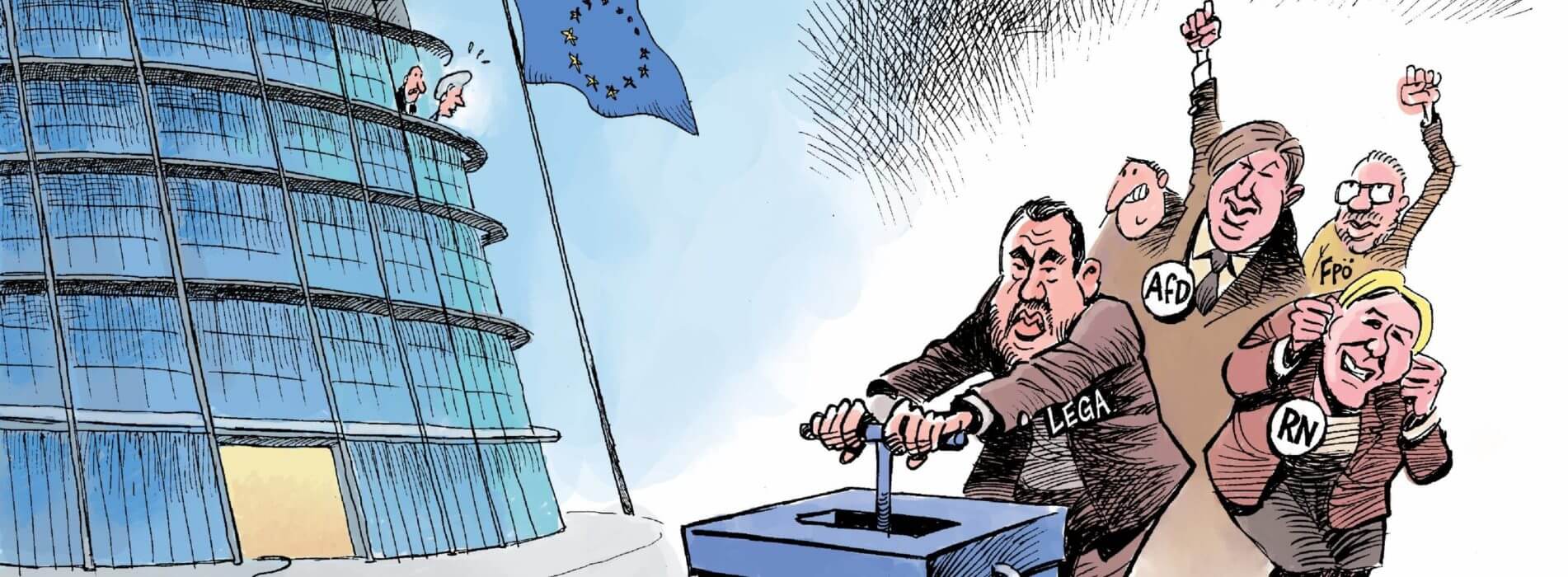
Elections – What For?
After a century marked by decolonisation and the imposition of a development model based on Western standards, Africa has entered the 21st century with a new status thanks, among other things, to its demographic dynamism (2 billion inhabitants in 2050 according to the UN, over 50% of whom will be under 25), its sustained economic growth, its extensive mineral and energy resources, and its drive for political leadership.
Additionally, since the end of the Cold War, emerging countries are successfully challenging the leadership of the West and are transforming this plural continent. If China has come to play a preponderant role, notably in terms of infrastructure development, the existence of multiple Africas presents prospects for a host of other international actors.
The continent’s development, however, is not without raising many questions, as it is still marked, in many ways, by issues of poverty and inequalities, as well as civil conflict and political repression.
The African continent is seeking more than ever to assert its autonomy of decision and action by making the most of its diverse potential. How will Africa – in its plural dimension – take advantage of this dynamism to write a new page in its history in the decades to come?
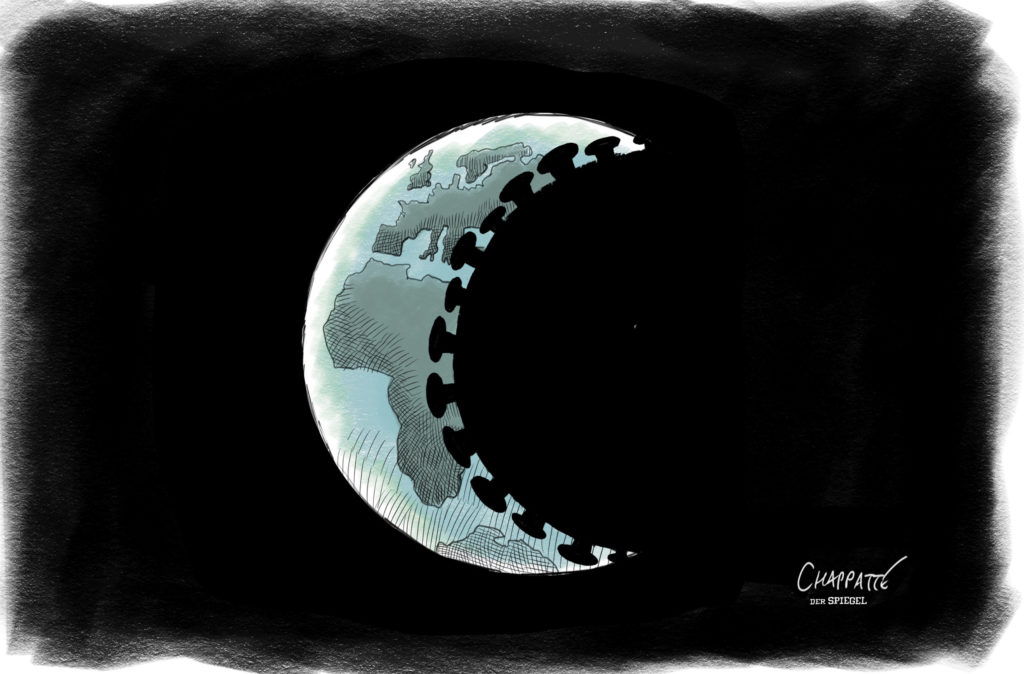
A pandemic is not just a medical emergency – it is also a political, economic, and social crisis. It implies new challenges for democratic institutions and practices, for citizenship rights and human rights as some of the restrictions on civil liberties put in place by liberal and illiberal democracies may well outlive the coronavirus. This special issue explores some tensions and dilemmas of democracies faced with the current crisis. “Politics of the Coronavirus Pandemics” addresses questions like: Can we speak of a decline in politics during the pandemic? While states have been using the full gamut of their sovereign prerogatives, has the political (temporarily) faded in the face of, for example, “expertise”? What will be the lasting impact of the rule by administrative fiat, and of emergency powers put in place in many countries? What kinds of agenda and instruments of civic activism are likely to emerge given that courts are rarely in session and public protest not permitted due to distancing rules? What are the likely consequences of these reconfigurations for democracy, governance, and welfare systems in the global South and North?
Soil is an essential component of the Earth’s ecosystem. It contributes to and fulfills a wide range of environmental and societal functions such as food production, water filtering, carbon storage and the preservation of biodiversity essential to the survival of the human species. While soils have witnessed significant environmental degradation in recent decades, lands have been the object of increased economic competition and financial speculation. The commercial and financial scramble for land has never been more intense as transnational actors and governments such as the Chinese seek large scale bids for land in the Global South that have been likened to new forms of neocolonialism. The consequences of this double tension include the loss of biodiversity, floods, climate change, famines, forced migration and conflict.
It is the assumption of the present Dossier that issues such as large scale exploitation of land and natural resources, soil degradation, biodiversity, food security and climate change are closely interdependent and cannot be treated in isolation. Seeking to explore and better understand the interlinkages between the material degradation of soils and the increased extractive, commercial and speculative pressure on lands, the Dossier aims to address some of the broader stakes the Anthropocene is currently facing: How irreversible is the damage that has been caused to earth’s soils? Have we reached a point of no return? How many people is the earth able to feed and for how long? Are we trapped in a Malthusian logic? How will climate change depend and interact with changing patterns of soil distribution and depletion? What is the impact of large scale deforestation and natural resource extraction on the environment, particularly the soils? What are the governance patterns and technological solutions emerging to address land depletion and scarcity? What are some of the cybernetic loops and mechanisms of autoregulation through which the earth reacts to human interference?