Diplomacy Today | Figure for the Issue
Diplomacy Today
VIDEO | Former US Representative to the UN Amb. Sheba Crocker on Her Three Years in International Geneva
U.S. Mission Geneva
© Chappatte dans Le Temps, Genève.
U.S. Mission Geneva
Has globalisation reached its apex after centuries of growth as suggested by the latest figures of the WTO? In the affirmative, does this imply that we are ushering into a new era of degrowth? Or are we witnessing the reorganisation of the very architecture of globalisation, which remains based on the twin logic of the acceleration and continuous increase of the volume of exchanges, as well as the steady densification of geographic connectedness. Are global exchanges restructuring concomitantly to the fourth technological revolution and the expansion of the digital economy? The present Dossier proposes to approach this question by observing the nature and the evolution of the principal flows that characterise globalisation.
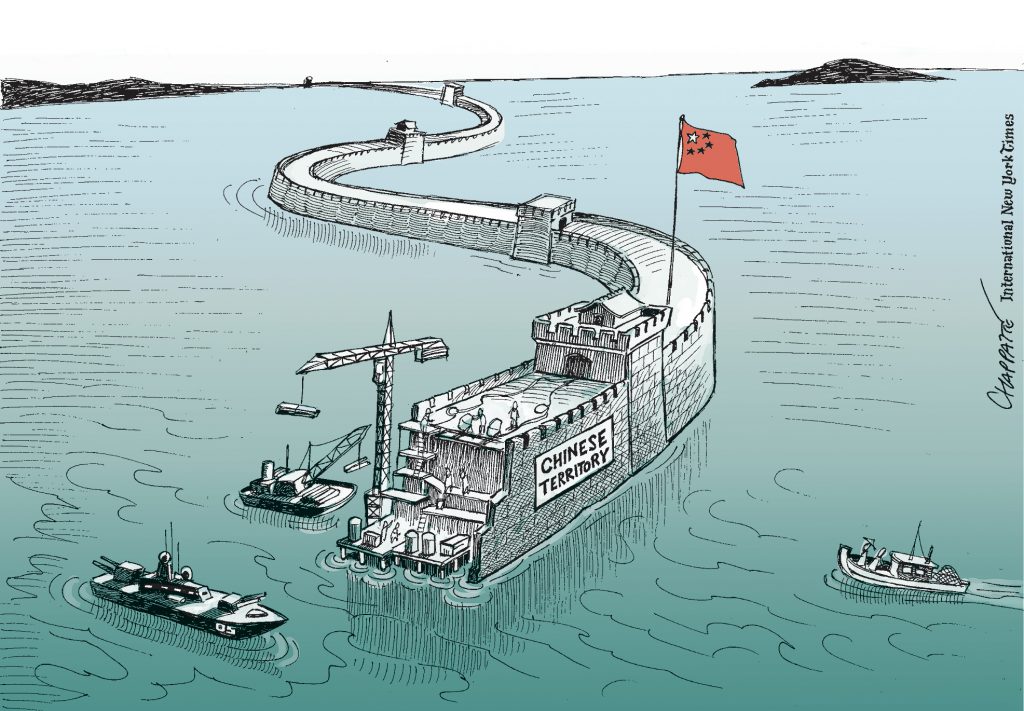
While the global balance of power, under the impetus of the steady rise of China, is shifting towards the Asia-Pacific, and because the future of US policy is uncertain after the election of Donald Trump, tensions in the South China Sea have once again become a major strategic concern. The South China Sea is witnessing a series of sovereignty disputes between littoral states defending rivalling claims to maritime rights and boundaries. Adding weight and urgency to the disputes are the significant natural resources found in the coveted archipelagos and sea beds as well as the rising national sentiments in many of the claimant states. The geostrategic dimension of these quarrels is largely transcending the region and the involvement of external powers such as the United States further complicates the equation. The recent legal victory of the Philippines over China can be seen as a supplementary cause for anxiety in a latent conflict that may at any time escalate into a regional or global confrontation. Henceforth the search for a negotiated solution becomes crucial as military budgets continue to soar in the region.
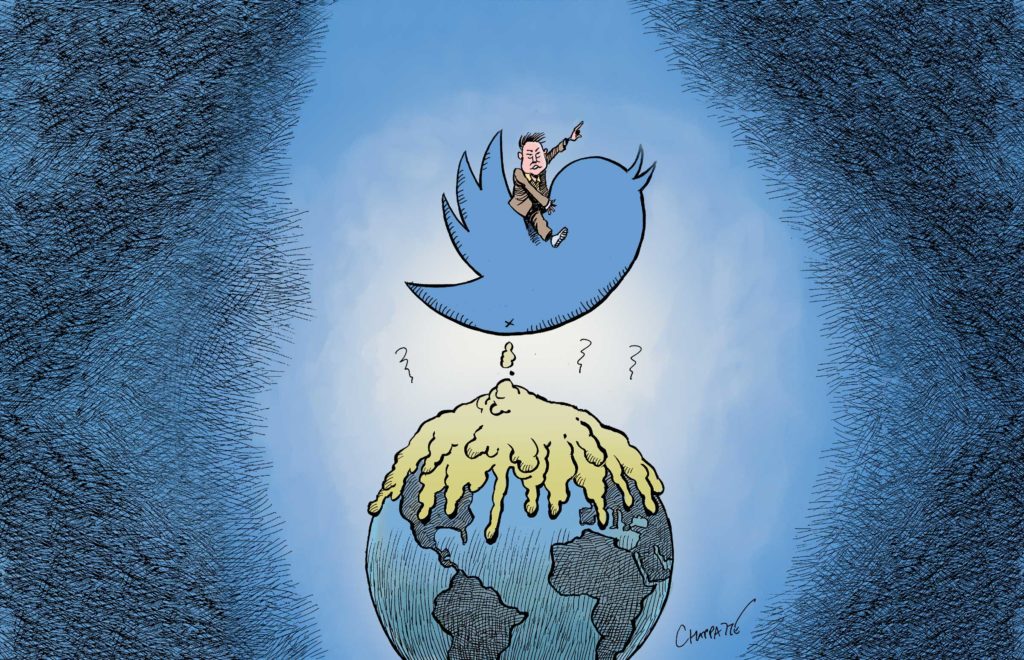
The present issue seeks to better apprehend the nature of this new era of digital disinformation and how it differs from prior eras marked by the dissemination of more traditional propaganda (notably the Cold War) or by the spread of American (or liberal) soft power through mass media and consumption. In so doing the issue seeks to address a series of questions such as: has traditional propaganda consisting in over-selling a model or ideology by means of manipulation and mass media been replaced by the generalisation of disinformation in the post-truth era characterized by systematic epistemic deconstruction and the outright discreditation of any truth claims? What is the role of states (as opposed to other actors) in this process and what tools and operational mechanisms are they mobilizing to pursue their global (dis-)information campaigns? What is the impact of the generalisation of alternative facts and disinformation campaigns on the international order? Who is to win and lose from it? What can be done, notably at the international level and the UN, to counter the noxious effects of global disinformation campaigns and to recreate trust in the global information order?