Genocide and International Law: The Power of Semantics
BOX 3 | Complaints for Genocide, War Crimes and Crimes against Humanity
Genocide, war crimes and crimes against humanity are among the most serious international crimes, as defined by the Convention on the Prevention and Punishment of the Crime of Genocide (1948), the Geneva Conventions (1949) and their Protocols, and the Rome Statute (1998), which established the International Criminal Court (ICC). They are considered non-prescriptible: complaints can be filed even decades later.
Where can complaints be filed?
– Before the International Criminal Court (ICC)
The ICC can try cases of genocide, war crimes, crimes against humanity and crimes of aggression. Cases can be referred to it in three ways: by a state party to the Rome Statute (123 states today), by the ICC Prosecutor, who can take up a case on his own initiative after authorisation by the judges, or by the UN Security Council (even for non-member states, e.g. Darfur, Libya).
Can an individual file a complaint? Yes, but in the form of a communication to the Office of the Prosecutor (OTP). The ICC is not a direct complaint jurisdiction like a national court: an individual can submit a case, but only the Prosecutor decides whether to open an investigation.
There are significant limitations to the ICC. It only tries individuals, not states. It only has jurisdiction if the crime took place on the territory of a state party, if the perpetrator is a national of a state party, or if the Security Council refers the case. Finally, some geopolitically important states do not recognise the ICC (the United States, Russia, China, Israel, etc.).
– Before a national court
Many states now allow complaints for genocide, crimes against humanity and war crimes, even if the crimes were committed abroad and by foreigners. This is known as universal jurisdiction. Examples of countries that regularly use it include France, Germany, Belgium, the Netherlands, Sweden, Canada (partially) and Spain (more limited since 2014). The specific conditions vary from country to country, but generally require the presence of the suspect on the territory, a complaint from victims or NGOs, and national prosecutors who open investigations themselves. This mechanism is being used increasingly frequently (trials of Syrian torturers, Rwandan soldiers, etc.).
– Before the International Court of Justice (ICJ)
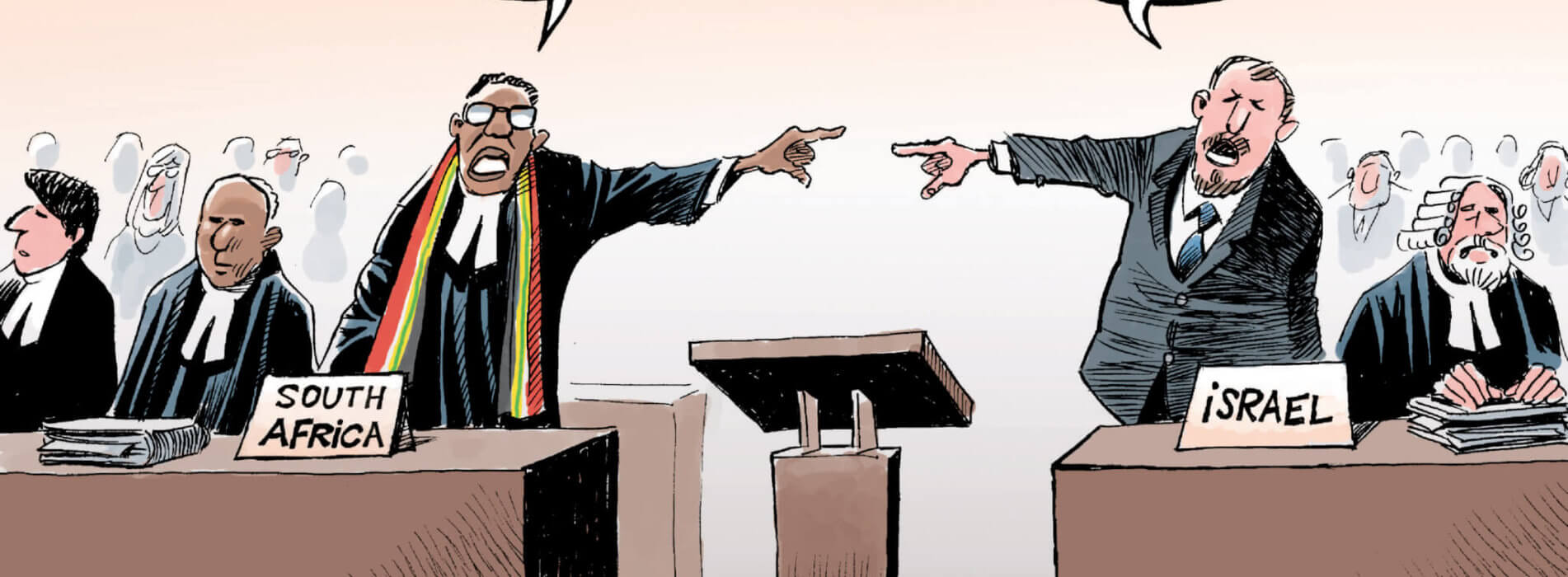
The ICJ does not judge individuals, but can be called upon in disputes between states, particularly for accusations of genocide (e.g. Gambia v. Myanmar; South Africa v. Israel), violations of the Geneva Conventions, and disputes over the interpretation of international treaties. It is important to note that private individuals cannot bring cases before the ICJ. Only states can do so.
The courts for Rwanda and Kosovo
Complaints cannot be brought before these courts by individuals. They are ad hoc international criminal tribunals with jurisdiction to try individuals responsible for serious crimes (genocide, crimes against humanity, war crimes).
The International Criminal Tribunal for Rwanda (ICTR) was established in 1994 by the UN Security Council to try those responsible for the genocide of the Tutsis and crimes against humanity committed in Rwanda.
The Special Tribunal for Kosovo (Kosovo Specialist Chambers) was established in 2015, based in The Hague, to try crimes committed by the Kosovo Liberation Army (KLA) between 1998 and 2000.
There may be indirect interactions with the ICJ, for example when the ICJ examines the responsibility of a state for acts that also constitute crimes tried by a criminal tribunal (e.g. the Bosnia v. Serbia case on the Srebrenica genocide).
Sources: Marc Galvin, Wikipedia, ChapGPT, CoPilot, UN.