The End of Development? | Figure for the Issue
The End of Development?
PODCAST | The End of Development? A View from Mozambique, with Milton Saranga
Research Office, Geneva Graduate Institute.
Research Office, Geneva Graduate Institute.
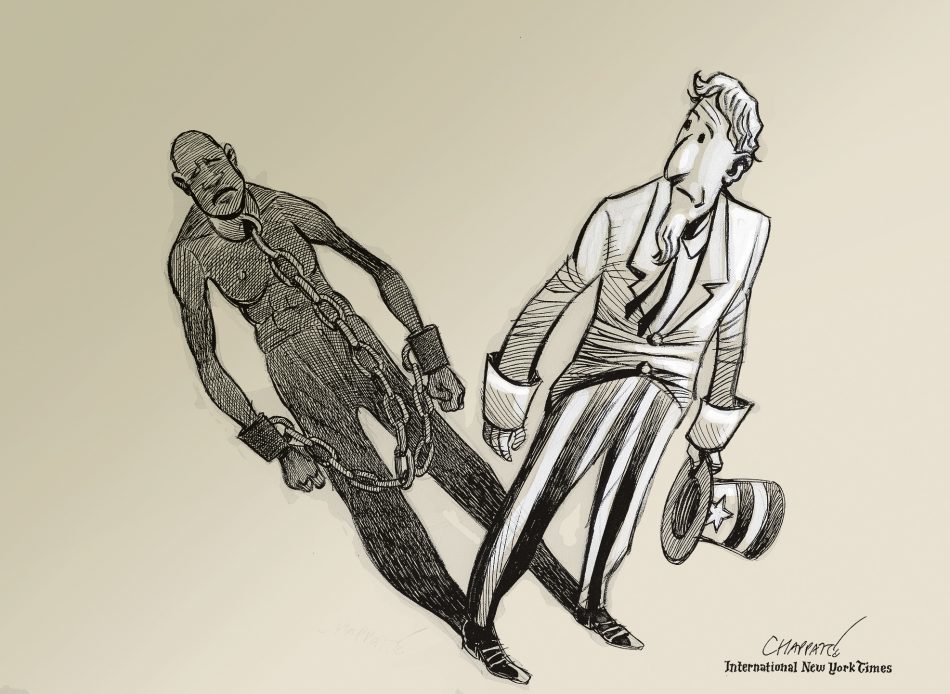
Today, we observe a renewed interest in the theme of decolonisation in three interrelated fields: in the academic world which opens new areas of research and teaching (e.g. decolonisation studies; decolonising the curriculum), in the practice of professionals and international actors who are revisiting their way of working, as well as in the vocabulary and activism of civil society targeting the remnants of colonial times such as street names, statues or museum objects. The renewed focus on decolonisation brings forth underlying issues such as the lingering of Eurocentrism, continued oppression of indigenous people, cultural relativism, the ongoing materiality of colonialism, the guilt of the West or, more generally, “the darker side of Western modernity”. While decolonisation has had a lasting impact on the political scene (with the decolonisation movements of the 1960s) and theoretically in the realm of academia, it lags behind in practice as processes, mentalities and epistemes are still permeated by “coloniality”. The present issue puts therefore decolonisation into historical perspective and provides fresh analytical perspectives on its epistemologies and methodologies as well as its practical application and consequences in various fields.
This issue has been coproduced by the Graduate Institute’s Department of International History and Politics and the Research Office. It also includes contributions from other research centres and departments of the Institute.
In 2024, nearly half the world’s population, including citizens of the eight most populous nations, voted or will vote in elections. While this signals democratic engagement, many elections are run by autocratic or illiberal regimes pursuing self-serving agendas. Paradoxically thus, as elections are generalising as a practice, democracy is met with growing defiance. On closer scrutiny, however, it appears that it is not only the indicators of democracy but also those of elections that have been declining over the past decade. This dossier, produced with the Albert Hirschman Centre for Democracy, examines the essential role of elections in the construction of democracy today.
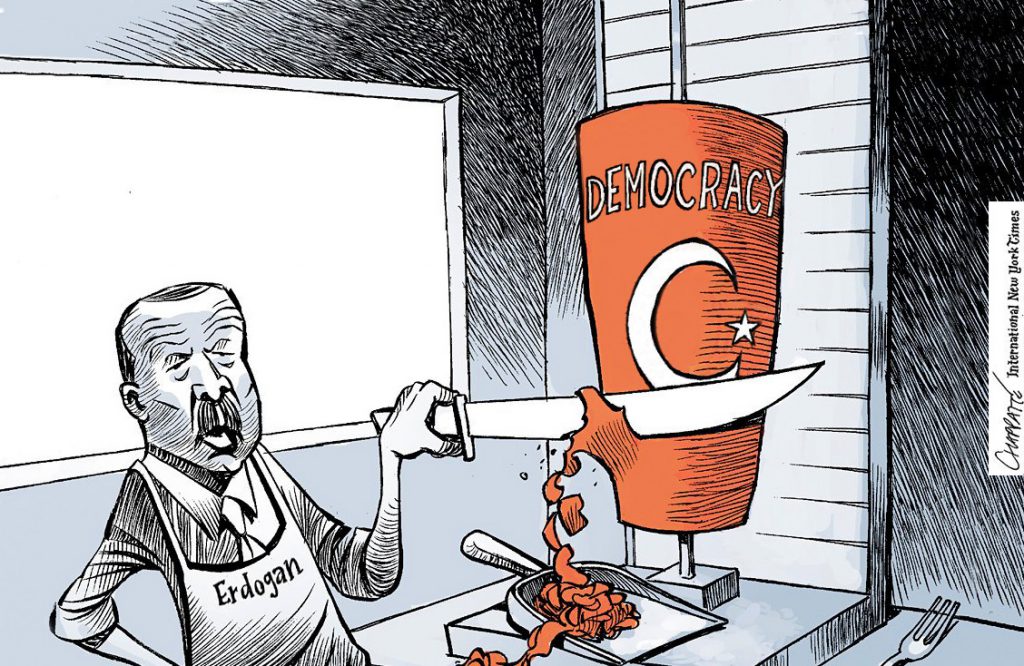
While the 20th century has been characterised by the generalisation of democratisation processes, the 21st century seems to have started with the reverse trend. An authoritarian-populist nexus is threatening liberal democracy on a global scale, including in its American and European heartlands. Charismatic leaders – thriving on electoral majorities and popular referenda – methodically undermine the rule of law and constitutional safeguards in order to consolidate their own power basis. Coupling inflammatory rhetoric with modern communication technologies, they short-circuit traditional elites and refuse to abide by international norms. Agitating contemporary scourges such as insecurity, loss of identity, mass migration and corrupt elites, they put in place new laws and mechanisms to harness civil society and political opponents. In order to better understand the novelty, permanence and global reach of “illiberal democracy”, this second issue of Global Challenges proposes seven case studies (Russia, Hungary, Turkey, the Middle East, Uganda, Venezuela and the United States) complemented by a series of expert interviews, maps and infographics.