New Dynamics of War | Figure for the Issue
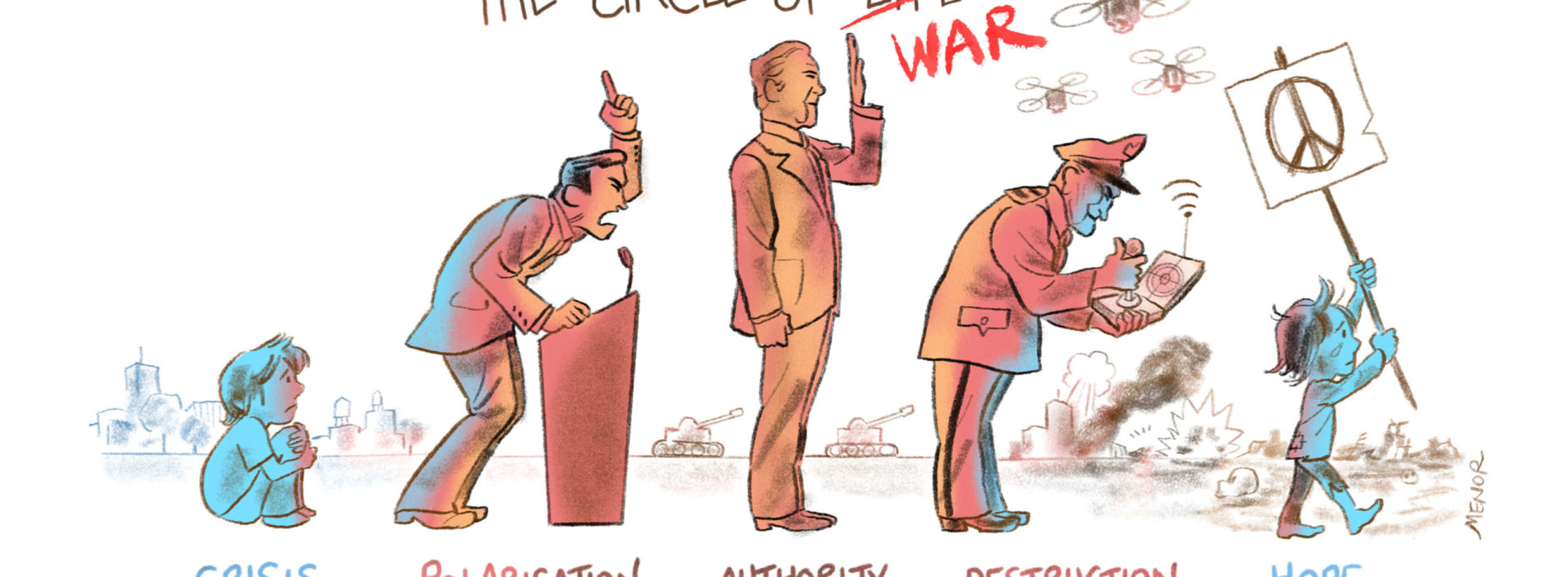
New Dynamics of War
Neoliberal globalisation has not only transformed the role of the state; it has also shaken up the internal “DNA” of education policies, from schools to universities. New technologies have paved the way for new forms of transmitting knowledge; calls to decolonise curricula are growing louder; in the South, many countries face the challenge of financing public education policies in an era of new public management, while the model and transfer of these policies have become a key problem, compounded by the exclusion of historically marginalised populations and the advance of private and religious players. Against this backdrop of criticism of the public education model, the present Dossier seeks to better apprehend what could be done to restore the purpose and meaning of education and universities.
The multipolar world succeeding US hegemony in the early 21st century, the financial crisis of 2007 and the corollary decline of liberalism seem to have ushered in an era of economic nationalism. States are increasingly left to fend for themselves as multilateral mechanisms lose traction and international economic relations gain in toxicity. The sanctions, embargoes and retaliations arising from the war in Ukraine, but also an accelerating struggle for dwindling natural resources, have pushed these logics to new heights. This Dossier assesses ongoing geoeconomic transformations and their potentially devastating consequences.
In 1970, the United Nations General Assembly set a target for countries to allocate 0.7% of their gross national income (GNI) to official development assistance (ODA). Today, against a backdrop of an unprecedented decline in international development funding, this goal seems further away than ever. Is the framework established after World War II — which shaped North-South relations for decades — collapsing? The elimination or drastic reduction of many public budgets reveals donor fatigue, calling for strategic changes in both the North and the South regarding the future of the very concept of development.
Are countries in the South facing a dangerous vacuum or an opportunity to forge new, less asymmetrical partnerships? This crisis may pave the way for a new paradigm, based on a reinvented solidarity, with the risk of a return to geopolitical competition and conditionalities for access to resources.