Urban Morphology & Violence | Figure for Article 4
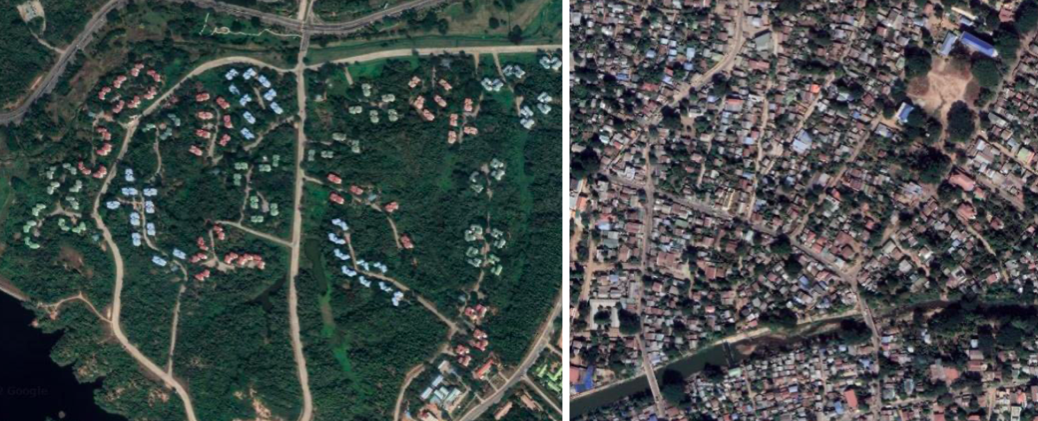
Naypyidaw, Myanmar: A Capital Devoid of Protests
Figure 6 – The roofs of the houses are colour coded for easy identification

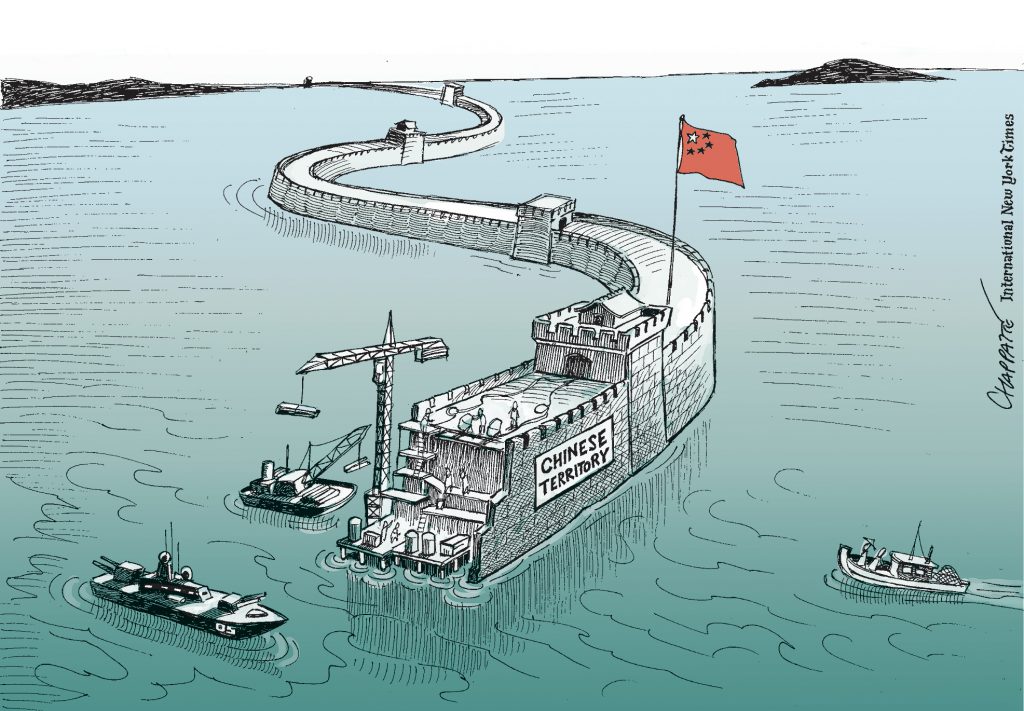
While the global balance of power, under the impetus of the steady rise of China, is shifting towards the Asia-Pacific, and because the future of US policy is uncertain after the election of Donald Trump, tensions in the South China Sea have once again become a major strategic concern. The South China Sea is witnessing a series of sovereignty disputes between littoral states defending rivalling claims to maritime rights and boundaries. Adding weight and urgency to the disputes are the significant natural resources found in the coveted archipelagos and sea beds as well as the rising national sentiments in many of the claimant states. The geostrategic dimension of these quarrels is largely transcending the region and the involvement of external powers such as the United States further complicates the equation. The recent legal victory of the Philippines over China can be seen as a supplementary cause for anxiety in a latent conflict that may at any time escalate into a regional or global confrontation. Henceforth the search for a negotiated solution becomes crucial as military budgets continue to soar in the region.
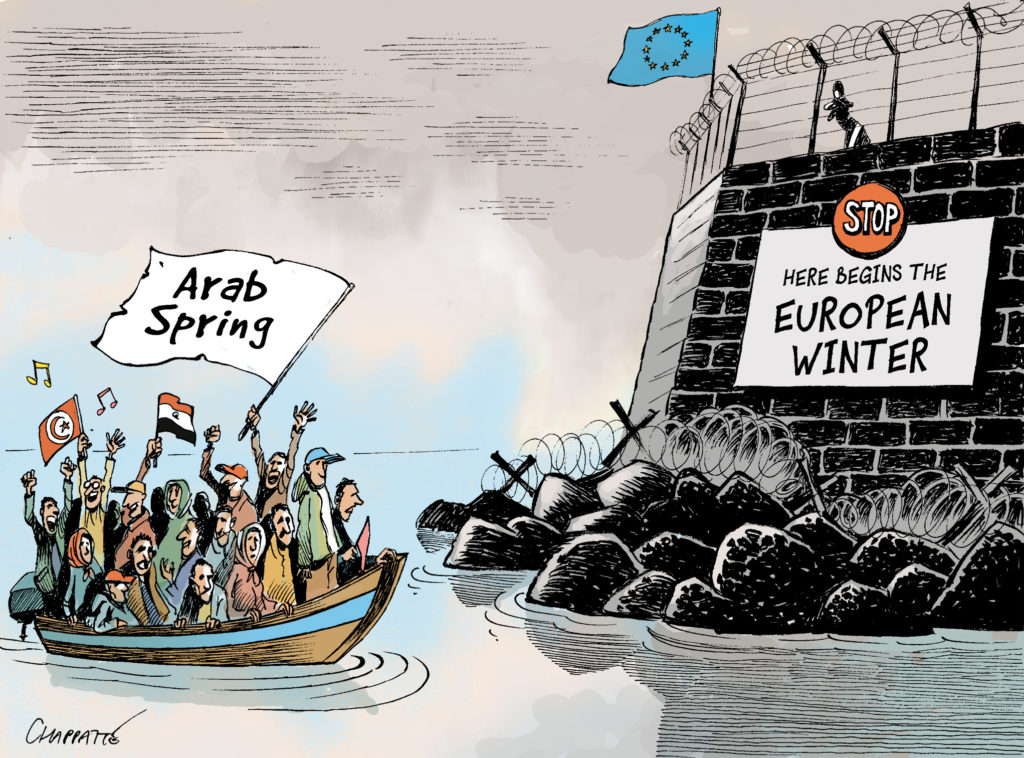
We currently face a baffling paradox. While since the fall of the Berlin Wall in 1989 a seemingly inexorable process of globalisation has been foreshadowing a peaceful and frontierless world, the number of walls across the world has been rising at a steady pace. Liberal and open societies buttressed by trade, international law and technological progress were supposed to implacably contribute to the erosion of frontiers and walls between nations. However, in a context of surging populist discourses, securitarian anxieties and identitarian politics as well as concomitant flows of migration alimented by climate change, conflict and poverty, nations have recently started to barricade themselves behind new walls.
While poverty has been diminishing in absolute terms and relative income has been growing on a global scale for over two centuries, inequality – as measured by instruments such as the Gini coefficient – has been increasing steadily since the early 1980s. With the financial crisis of 2007, the growing digitalisation of the economy and the current pandemic, global inequality has further worsened, seeing the fortunes of the superrich attaining unprecedented levels and revenue concentrating in the top percentiles of societies.
Concurrently to the aggravation of the social fracture, additional fault lines have been opening or hardening along logics of race, gender, ethnicity and religion. Identarian revendications and logics of difference and exclusion have come to complement, compete with or supersede more traditional struggles for equality in a postmodern and neoliberal context that has normalised inequality, homogenised societies and done away with earlier grand narratives and collective agendas.
The consequences of inequality(ies) are dramatic, as reflected in the polarisation and fragmentation of societies, worsening health and mortality indicators, political tensions and violence, a decline in democracy, and mistrust in state institutions. The objective of the current issue of Global Challenges is therefore – by reverting to the analytical tools of social science – to reflect on the causes behind the multifaceted growth of inequality(ies), anticipate their noxious fallouts and explore potential remedies.