Arts and the Study of the International | Figure for the Issue
© Miriam Périer
Arts and the Study of the International
© Miriam Périer
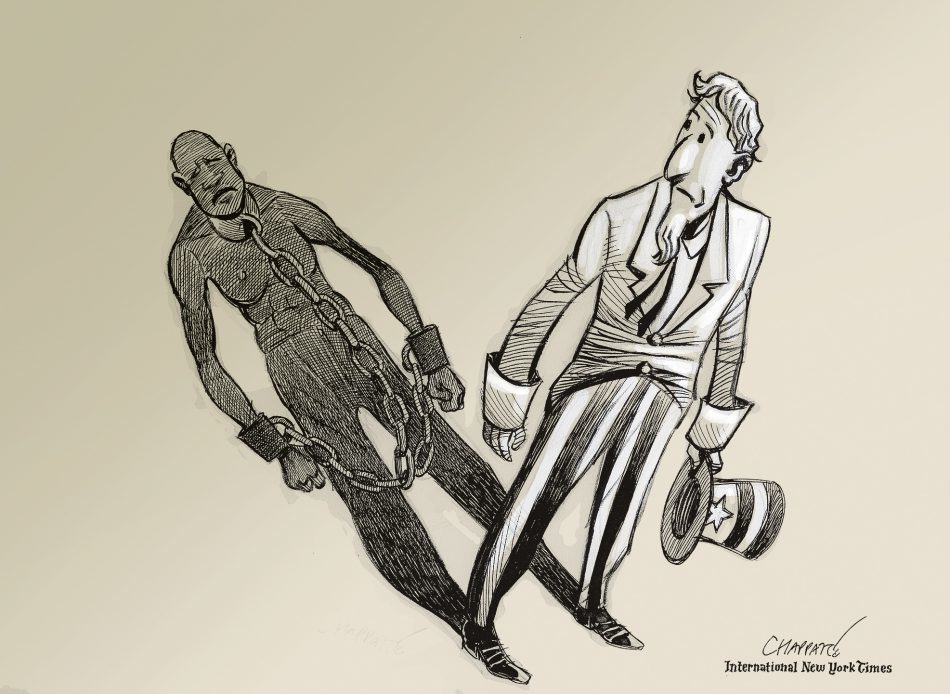
Today, we observe a renewed interest in the theme of decolonisation in three interrelated fields: in the academic world which opens new areas of research and teaching (e.g. decolonisation studies; decolonising the curriculum), in the practice of professionals and international actors who are revisiting their way of working, as well as in the vocabulary and activism of civil society targeting the remnants of colonial times such as street names, statues or museum objects. The renewed focus on decolonisation brings forth underlying issues such as the lingering of Eurocentrism, continued oppression of indigenous people, cultural relativism, the ongoing materiality of colonialism, the guilt of the West or, more generally, “the darker side of Western modernity”. While decolonisation has had a lasting impact on the political scene (with the decolonisation movements of the 1960s) and theoretically in the realm of academia, it lags behind in practice as processes, mentalities and epistemes are still permeated by “coloniality”. The present issue puts therefore decolonisation into historical perspective and provides fresh analytical perspectives on its epistemologies and methodologies as well as its practical application and consequences in various fields.
This issue has been coproduced by the Graduate Institute’s Department of International History and Politics and the Research Office. It also includes contributions from other research centres and departments of the Institute.
In 2024, nearly half the world’s population, including citizens of the eight most populous nations, voted or will vote in elections. While this signals democratic engagement, many elections are run by autocratic or illiberal regimes pursuing self-serving agendas. Paradoxically thus, as elections are generalising as a practice, democracy is met with growing defiance. On closer scrutiny, however, it appears that it is not only the indicators of democracy but also those of elections that have been declining over the past decade. This dossier, produced with the Albert Hirschman Centre for Democracy, examines the essential role of elections in the construction of democracy today.
In 1970, the United Nations General Assembly set a target for countries to allocate 0.7% of their gross national income (GNI) to official development assistance (ODA). Today, against a backdrop of an unprecedented decline in international development funding, this goal seems further away than ever. Is the framework established after World War II — which shaped North-South relations for decades — collapsing? The elimination or drastic reduction of many public budgets reveals donor fatigue, calling for strategic changes in both the North and the South regarding the future of the very concept of development.
Are countries in the South facing a dangerous vacuum or an opportunity to forge new, less asymmetrical partnerships? This crisis may pave the way for a new paradigm, based on a reinvented solidarity, with the risk of a return to geopolitical competition and conditionalities for access to resources.