








The Slow Death of International Cooperation
https://doi.org/10.71609/iheid-rv5y-fq59International cooperation and humanitarian aid are currently being contested to an extent not seen for several decades. A clear downward trend in funding for development assistance to countries of the Global South can be observed, particularly among Western countries and liberal democracies that have historically been the principal providers of official development assistance (ODA). According to the OECD, ODA declined by approximately 7% in 2024 compared with 2023, and a further reduction of between 9% and 17% is projected for 2025.
This contraction in funding is occurring in countries where international cooperation has long represented a central pillar of foreign policy and a key instrument of soft power. It is generally accompanied by increasingly security-oriented and nationalist political narratives that tend to delegitimise public resources allocated to international cooperation. These geopolitical trends raise broader questions regarding the social cohesion of liberal democracies and the ways in which their internal transformations are progressively reshaping the international order.
Long perceived as politically stable, socially cohesive, and grounded in shared normative values, liberal democracies are now witnessing a gradual erosion of their political model. Their domestic legitimacy historically enabled them to sustain multilateralism, economic openness, and long-term strategic commitments. Today, however, many of these democracies are experiencing heightened political polarisation, declining trust in public institutions, fragmentation of the public sphere exacerbated by digital platforms, and the rise of populist and anti-system movements. Political consensus around major societal issues, including international cooperation, is gradually eroding. Foreign policy is no longer insulated from domestic cultural conflicts; rather, it increasingly reflects and amplifies them.
In response to these developments, the solutions most frequently proposed tend to follow familiar lines: “doing more with less”, promoting innovation, reforming aid systems, strengthening partnerships with the private sector, or improving aid effectiveness. Several criticisms directed at international cooperation, including concerns related to effectiveness, conditionality, dependency, and neocolonial dynamics, are legitimate and deserve careful consideration. However, the core issue does not appear to be a global shortage of resources. On the contrary, global wealth has never been greater. According to estimates by UBS, it grew at an annual rate of between 4% and 6% between 2020 and 2025. ODA currently amounts to approximately USD 210-230 billion per year. By comparison, total global wealth — including households’ financial and non-financial assets — exceeds USD 300 trillion. ODA therefore represents roughly 0.07%-0.08% of global wealth annually, a proportion that appears marginal.
The central issue is therefore less one of resource scarcity than one of allocation. In other words, it is fundamentally a political choice.The central issue is therefore less one of resource scarcity than one of allocation. In other words, it is fundamentally a political choice. Current debates, often marked by a degree of resignation, tend to avoid confronting this core issue and instead emphasise technical solutions that, while potentially useful, fail to address the underlying structural problem. In some cases, such approaches may even risk weakening international cooperation as a structuring instrument for global well-being and peace.
Although they receive less attention in contemporary public debate, the Sustainable Development Goals (SDGs) continue to embody global public goods and shared values. If this is indeed the case, it may be worth considering the development of more stable financing mechanisms that are less dependent on national political cycles, involve countries of the Global South more substantially, or resemble international institutions endowed with more sustainable financial mechanisms (such as WIPO). This raises a broader question: have we reached a point where a new paradigm for international cooperation is required? If so, what form should it take? How can the perspectives of countries from the Global South be better represented?
The case of Latin America illustrates several of these dynamics. In numerous countries across the region, the erosion of state legitimacy has contributed to the expansion of illegal economies, the consolidation of criminal governance structures, and the weakening of institutional guarantees for fundamental rights. Drug trafficking, illegal mining, smuggling, and human trafficking have expanded significantly in several countries. These phenomena undermine democratic institutions, weaken the protection of rights, and directly threaten social and non-governmental organisations. Across the region, the criminalisation of social protest and attacks against human rights defenders have intensified.
At the same time, the economic structure of many countries in Latin America remains heavily dependent on agricultural, mining, and energy exports, which amplifies their vulnerability to the impacts of climate change. These dynamics threaten agricultural productivity and food security, generating heightened risks of rural poverty and forced migration. In states with limited planning capacities and constrained financial resources, the implementation of climate adaptation policies remains particularly challenging. The risks associated with climate-related disasters disproportionately affect the most vulnerable populations.
Still in Latin America, recent transformations in global governance have created a convergence between external pressures and long-standing internal structural fragilities. Within this context, the effective exercise of economic, social, cultural, and environmental rights by large segments of the population (particularly women) is increasingly compromised.
Over the past decade, international cooperation has represented less than 0.2% of the region’s annual GDP, and the United States Agency for International Development (USAID) has been one of the principal bilateral donors in the region. In 2023, USAID distributed approximately USD 42 billion globally, of which around USD 1.7 billion was allocated to Latin America. This amount represents roughly 20% of the average annual international cooperation funding received by the region. While this funding represents a relatively modest share in terms of the region’s GDP, the qualitative impact of international cooperation remains considerable, as it is often concentrated in strategic sectors such as human rights, gender equality, climate change, and institutional strengthening.
In this context, the gradual reduction of international cooperation funding allocated to Latin America, combined with the withdrawal of USAID and other bilateral cooperation agencies, has significant implications for several critical dimensions of the regional landscape. It contributes to the weakening of democratic institutions and undermines social organisations and NGOs, which play a fundamental role in ensuring democratic accountability. It also disrupts the transfer of knowledge that supports effective public policy management and the development of social leadership. At the same time, it worsens the already precarious situation of the most marginalised groups — particularly in areas such as health, education, food security, and gender equality — many of whom still depend on humanitarian and development assistance supported by international cooperation.
These transformations highlight the urgent need for social organisations, NGOs, and states to adapt to a context that differs substantially from the one in which their institutional objectives and operational tools were originally conceived. In this regard, capacity-building initiatives that promote critical and analytical perspectives on the international environment are more necessary than ever.
International cooperation and ODA are currently undergoing profound transformations, including budget cuts, programme cancellations, job losses within the sector, the exclusion of beneficiaries from previously guaranteed support, and increasing political contestation of issues such as human rights, gender equality, and minority rights. In light of these developments and the broader critiques affecting the sector, many actors are questioning the future of international cooperation programmes and initiatives. Does this signal the “end of development”? Is it conceivable that agencies engaged in international cooperation could progressively disengage — or even disappear?
Although international cooperation can and should be improved, it remains indispensable. For partners in the Global South and for the beneficiaries of development programmes, the disappearance of development cooperation would represent a profound setback. By addressing inequalities and asymmetrical relationships, it contributes to strengthening dialogue and exchange among societies and serves as a stabilising factor for peace. For partners in the Global South and for the beneficiaries of development programmes, the disappearance of development cooperation would represent a profound setback. It would entail the abrupt interruption of initiatives that contribute to improvements in health, education, human rights protection, gender equality, and environmental sustainability. Rising security expenditures and shrinking public budgets should therefore not lead to the reduction or elimination of funding for international cooperation, as this would risk deepening inequalities and undermining global stability.
However, advocating for the continuation of international cooperation does not imply abandoning critical reflection. Contexts evolve, and approaches must evolve accordingly in order to better respond to the expectations of partner countries. For some actors, this implies placing greater emphasis on domestic policy pathways, including strengthening local capacities, fostering private sector development, and implementing fiscal reforms. For others, ODA should remain a central instrument, but it requires profound reform to address contemporary challenges.
One important dimension of these reforms concerns the localisation of aid. As early as 2005, the Paris Declaration on Aid Effectiveness called for strengthening partner ownership, improving coordination among donors, and simplifying administrative procedures. The direction of reform had already been clearly identified.
Such reforms would contribute to a more balanced distribution of power within international cooperation. Greater priority should be given to the voices and perspectives of partners from the Global South, while ensuring greater coherence in foreign policy so that policies in other domains do not undermine decades of development cooperation efforts. Even if this requires significant transformations in practices and procedures, the time has come to build more balanced and equitable partnerships.
These changes must be implemented with clarity, determination, and above all with a strong commitment from those who finance development assistance.
Electronic reference
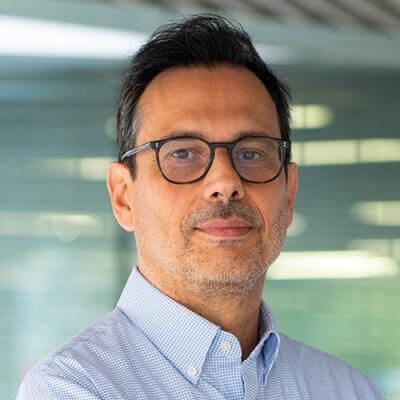
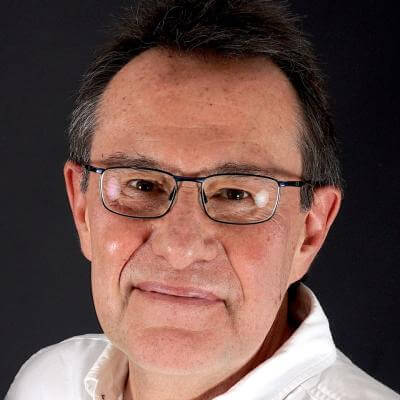
Dormeier Freire, Alexandre, Dominique Rossier, and Maria Liliana Soler-Gómez Lutzelschwab. “The Slow Death of International Cooperation.” Global Challenges, no. 1, May 2026. URL: https://globalchallenges.ch/issue/19/the-slow-death-of-international-cooperation. DOI: https://doi.org/10.71609/iheid-rv5y-fq59.This issue of Global Challenges has been jointly produced by the Geneva Graduate Institute’s Research Office and the Geneva Graduate Institute’s Executive Education department, especially the Development Policies and Practices (DPP) team.
GRAPH | Sovereign Borrowing by Instrument Type

Source: Mark Manger et al., Africa’s Domestic Debt Boom: Evidence from the African Debt Database (CEPR Discussion Paper no. 20747, CEPR Press, 2025), p. 23, https://cepr.org/publications/dp20747.
BOX | The African Debt Database
Elaborated by an international team of researchers from the Geneva Graduate Institute — including Prof. Ugo Panizza and Dr Ka Lok Wong — as well as from the Global Sovereign Advisory, the Kiel Institute, the UN Economic Commission for Africa, and the Universities Aix Marseille and Toronto, the African Debt Database (ADD) is the first comprehensive database of African debt.
Building on a new, comprehensive dataset that traces both domestic and external debt instruments across Africa at a granular level, its main innovation is a “detailed mapping of Africa’s domestic debt markets, drawing on rich, new data extracted from government auction reports and bond prospectuses”.
Learn more about the project and read the report.
Research Office, Geneva Graduate Institute
BOX | Definitions of Development Aid
Development
The term “development” as used in the concept of development aid is far from having a universally accepted definition. A consensual definition considers that the concept of development refers to the set of technical, social, territorial, demographic, and cultural transformations accompanying the growth of material production or the improvement of human living conditions. It reflects the structural and qualitative aspects of growth and can be associated with the idea of economic and social progress. For Gilbert Rist, nevertheless, development is not an objective or universal process, but a collective belief, a “Western myth” that serves to legitimise the intervention of Northern countries in Southern societies. He defines it as a modern ideology, based on the idea of progress, which masks relations of domination and perpetuates forms of dependency.
Official Development Assistance (ODA)
Official development assistance (ODA) — or Aide publique au développement (APD) in French — is government aid that promotes and specifically targets the economic development and welfare of developing countries. ODA has been the main source of financing for development aid since it was adopted by the OECD’s Development Assistance Committee (DAC) as the “gold standard” of foreign aid in 1969. The DAC sets eligibility criteria, statistical rules, and principles of cooperation.
Human Development
Human development grew out of global discussions on the links between economic growth and development during the second half of the 20th century. By the early 1960s there were increasingly loud calls to “dethrone” GDP: economic growth had emerged as both a leading objective, and indicator, of national progress in many countries, even though GDP was never intended to be used as a measure of wellbeing. In the 1970s and 80s, development debate considered using alternative focuses to go beyond GDP, including putting greater emphasis on employment, followed by redistribution with growth, and then whether people had their basic needs met. These ideas helped pave the way for the human development approach, which is about expanding the richness of human life, rather than simply the richness of the economy in which human beings live. It is an approach that is focused on creating fair opportunities and choices for all people.
Sustainable Development
Sustainable development is “development that meets the needs of the present without compromising the ability of future generations to meet their own needs”, a quote from Gro Harlem Brundtland, Prime Minister of Norway (1987). In 1992, the Earth Summit in Rio, held under the auspices of the United Nations, formalised the concept of sustainable development and its three pillars (economic, ecological, and social): development that is economically efficient, socially equitable, and ecologically sustainable.
Millennium Development Goals (MDGs)
The Millennium Development Goals (MDGs) are eight goals adopted in 2000 in New York (United States) as part of the United Nations Millennium Declaration by 193 member states of the UN and at least 23 international organisations, which agreed to achieve them by 2015. These goals address major humanitarian challenges: reducing extreme poverty and child mortality, combating several epidemics including AIDS, ensuring access to education, promoting gender equality, and advancing sustainable development. In 2015, the Sustainable Development Goals (SDGs) were published, succeeding these goals.
Sustainable Development Goals (SDGs)
The term “Sustainable Development Goals” (SDGs) is commonly used to refer to the 17 goals established by the member states of the United Nations and set forth in the 2030 Agenda. This agenda, adopted by the United Nations in September 2015 following two years of negotiations involving both governments and civil society, sets out 169 targets to be achieved by 2030, common to all participating countries and divided into 17 SDGs.
Research Office – Geneva Graduate Institute
TABLE | Trends in Global Development Assistance Volumes (1960–2025)
| Year | Global ODA volume (in billions of USD, constant 2023 prices) | Historical Context |
|---|---|---|
| 1960 | ~ 40 | Start of OECD statistics; rise of post-colonial bilateral programs |
| 1970 | ~ 60 | UN commitment to 0.7% of GNI; expansion of bilateral agencies. |
| 1980 | ~ 85 | Peak linked to the Cold War and concessional loans; prior to the debt crisis. |
| 1990 | ~ 105 | End of the Cold War; shift toward governance and structural reform |
| 2000 | ~ 95 | Relative decline; launch of the MDGs and start of debt relief initiatives. |
| 2005 | ~ 130 | Impact of debt cancellations (HIPC) and the Paris Declaration. |
| 2010 | ~ 150 | Stabilization following the financial crisis; rise in humanitarian aid. |
| 2015 | ~ 160 | Adoption of the SDGs; expansion of funded sectors. |
| 2020 | ~ 185 | Increase linked to global crises (climate, migration, pandemics). |
| 2023 | ~ 223 | Historical high; sharp increase in humanitarian aid and concessional loans. |
| 2024 | ~ 212 | Beginning of the cuts |
| 2025 | ~ 174 | With, 23.1% decrease over 2024, it is the largest annual contraction on record and a second consecutive year of decline. |
Data: OECD (International Development Statistics); Our World in Data (ODA, constant 2023 USD).
BOX | What Is Policy Coherence for Sustainable Development (PCSD)?
The OECD defines PCSD as “an approach and policy tool that supports the integration of the economic, social, environmental, and governance dimensions of sustainable development across all stages of policymaking, facilitating integrated approaches”, including aid, trade, agriculture, finance, investment, taxation, and other relevant policy domains.
PODCAST | The End of Development? A View from Georgia, with Nana Tsertsvadze
Research Office, Geneva Graduate Institute.
PODCAST | The End of Development? A View from Mozambique, with Milton Saranga
Research Office, Geneva Graduate Institute.
PODCAST | La fin du développement? Une vue du Mali, avec Mamedi Thera
Research Office, Geneva Graduate Institute.
PODCAST | El fin del desarrollo? Perspectiva desde Honduras, con Claudia Calderon
Research Office, Geneva Graduate Institute.
VIDEO | Development Policies and Practices Programme | 20 Years Documentary
DPP, Geneva Graduate Institute.
VIDEO | «Coopération Nord-Sud: la solidarité à l’épreuve» | Présentation du livre de Jacques Forster
Research Office. Geneva Graduate Institute.
VIDEO | Rethinking Development: Toward Collective Stewardship of Our Shared Future, with Agi Veres, Director of the UNDP Office in Geneva, and Marie-Laure Salles
Research Office, Geneva Graduate Institute
PODCAST | L’aide au développement et la Fédération genevoise de coopération (FGC), avec Catherine Schümperli et Dominique Rossier
Research Office, Geneva Graduate Institute