Urban Morphology & Violence | Figure for Article 5
Planetary Conflict: Exploring the Urban Geography of Boko Haram
Map 2 – Violence Escalates in Maiduguri: June 11 – 24, 2009
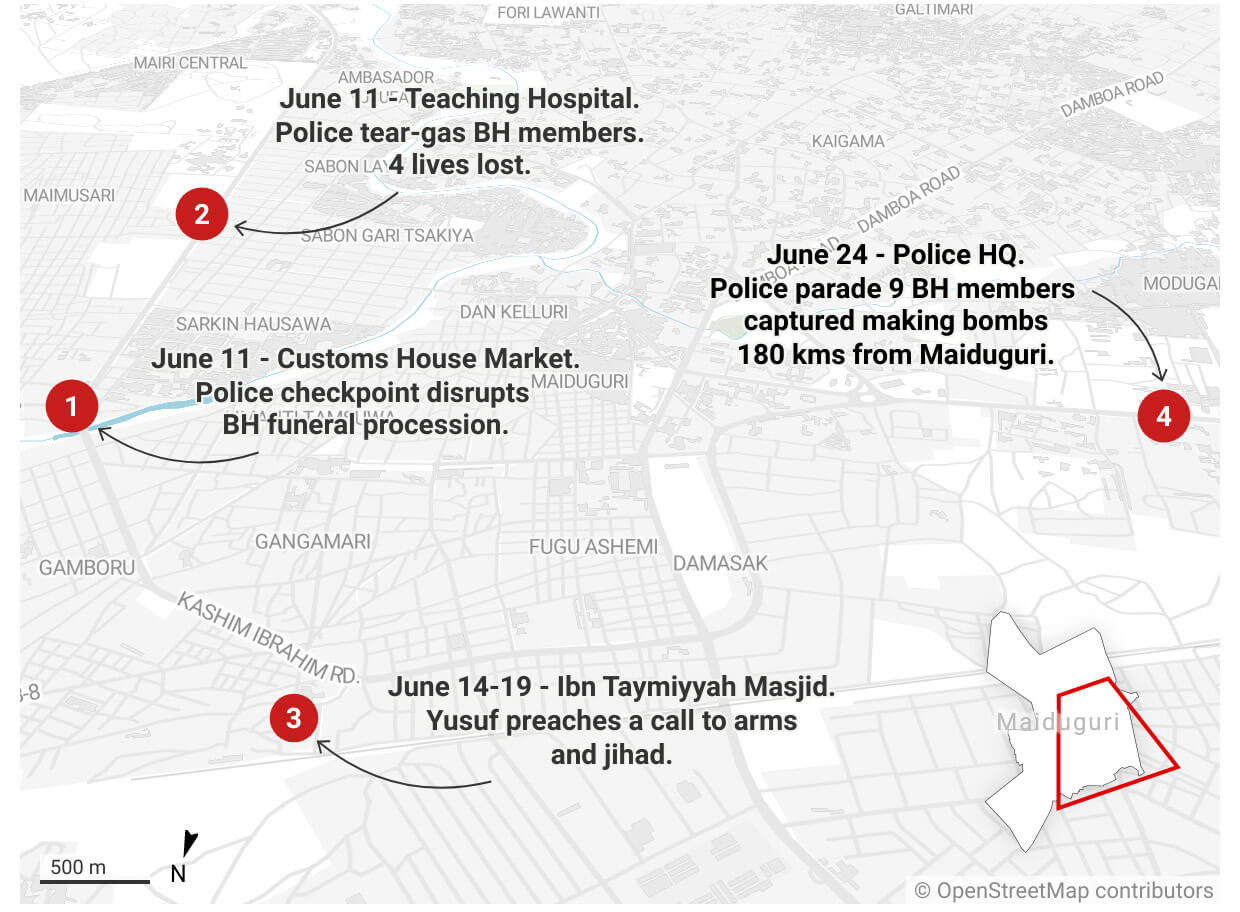
On June 24 the first Boko Haram bomb inadvertently exploded in the home of a member in Maiduguri. Here are the key events leading up to this and where they occurred in the urban center of Maiduguri.
Map: Adam Talsma • Source: Collated from Murtada 2013, Zen 2020, Omen 2020 and media sources. • Created with Datawrapper