











Reflecting on War to Better Reinvent Peace
It is inevitable today to confront the question of war.
War has never disappeared. But where the ambition of the 1945 project, enshrined in the United Nations Charter, was to make war the exception and to protect future generations from its devastations, our perspective has profoundly changed. The Geneva Academy currently lists 102 active armed conflicts across the world. Global military spending reached a record USD 2,900 billion in 2025, continuing a trend of uninterrupted growth for more than two decades. By contrast, that same year, the entire annual budget of the United Nations system amounted to USD 3.72 billion.
Beyond the figures, what deserves particular attention is the transformation of our collective imagination. The spirit of the times is characterised by rearmament, the reassertion of borders in various forms, and the return of a conception of international relations grounded in power politics. We are also seeing, in the public sphere as well as in certain political and cultural circles, a growing glorification of assertive forms of masculinity, competition and confrontation, embraced in an increasingly unapologetic and sometimes extreme manner. The spirit of the times is characterised by rearmament, the reassertion of borders in various forms, and the return of a conception of international relations grounded in power politics. The 1945 promise of emancipation through interdependence, openness and cooperation is losing ground to narratives centred on the “return to greatness” of particular nations or identities, thriving far beyond simple rhetorical slogans and spreading to many parts of the world.
But What, Then, Is War?
The conflicts that are undermining entire regions of our planet and leaving a lasting mark on the fate of many populations — sometimes spanning several generations — now seem to be converging towards forms of violence and conflict that defy the categories through which we have learnt to think about war. War is no longer, far from it, a simple and direct armed confrontation between states vying for territory, resources or positions of power.
Indeed, can we still clearly distinguish war from peace? When attacks unfold in cyberspace, when civilian infrastructure becomes a strategic target, when information itself is turned into a weapon, or when private actors acquire capabilities once reserved for states, the conceptual boundaries that shaped our understanding of war become increasingly blurred. Conflict now permeates spaces, timeframes and spheres of activity that blur the traditional distinctions between the military and the civilian, the internal and the external, the local and the global, the real and the virtual, and times of war and times of peace.
As these boundaries become increasingly blurred, war ceases to appear as an exceptional rupture that suspends an otherwise stable order. It now permeates digital spaces, supply chains, migration flows, critical infrastructure and information systems. It also permeates those liminal spaces situated on the fringes of state sovereignty, which belong fully to no one yet are coveted by all: the polar regions, outer space and the deep seas. Contemporary wars also involve the control of narratives, identities (including gender identities), collective perceptions and, at times, imagined futures.
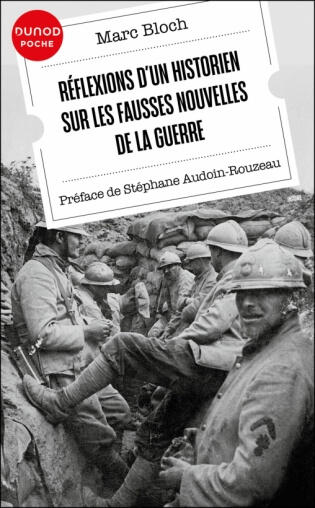
None of this is entirely new. As early as 1921, Marc Bloch emphasised, in his Réflexions d’un historien sur les fausses nouvelles de la guerre, the importance of perceptions, beliefs and mechanisms of persuasion in the conduct of conflicts. But the contemporary technological environment gives these dynamics an unprecedented scale. The widespread adoption of digital networks, the capacity to process and disseminate information on a massive scale, and rapid advances in artificial intelligence now give “narrative wars” an unprecedented scope. They no longer aim merely to influence opinions; they seek to shape perceptions of reality and redefine the boundaries of what is possible, in an increasingly explicit attempt to colonise our futures.
Understanding War to Find the Path Back to Peace
In late summer 1939, the professors at the Graduate Institute of International Studies in Geneva – HEI, the predecessor of the Geneva Graduate Institute – embarked on what they themselves described as an “exceptional scientific endeavour”: analysing the causes of the failure of the international order established in 1919 in order to reflect, in the very midst of the war, on the conditions for a more stable international order and for future peace. In late summer 1939, the professors at the Graduate Institute of International Studies in Geneva – HEI, the predecessor of the Geneva Graduate Institute – embarked on what they themselves described as an “exceptional scientific endeavour”: analysing the causes of the failure of the international order established in 1919 in order to reflect, in the very midst of the war, on the conditions for a more stable international order and for future peace. Their approach was based on a simple yet demanding conviction: an institution dedicated to the study of international relations cannot remain a mere spectator when the future of the international system it studies is at stake. Without claiming to provide definitive answers, they sought to harness the knowledge accumulated by the social sciences to understand the present and help prepare for the future.
This issue of Global Challenges stems from a similar intuition and ambition. The context is profoundly different, yet the questions we face about the future of our international order are no less fundamental. With changing forms of conflict, the erosion of certain categories through which we used to conceptualise war, and the growing uncertainty surrounding the evolution of the international order, the aim is not to predict the future or to provide ready-made answers and solutions. It is rather to provide analytical tools, to contextualise and put events in perspective, thus enabling a better understanding of the transformations underway.
More than ever, this type of approach appears necessary. For behind the conflicts that dominate today’s headlines lies a more fundamental question: what kind of international order is taking shape and what place will it leave for the rule of law, open international cooperation and peaceful coexistence? Like their predecessors in 1939, professors at the Geneva Graduate Institute today believe that research cannot remain detached from the major upheavals of the times. The aim should be to reconcile intellectual engagement with scientific rigour, public responsibility with academic independence, in order to shed light on the collective choices facing our societies and to help redraw the contours of the complex, fragile, yet essential path that should lead us back to a desire for peace.
-
1
 Talking about War and Peace
Contemporary leaders invoke the language of war to justify violence while often avoiding the accountability that war entails, argues Andrew Clapham in this paper. Warning against a growing fatalism that treats conflict as inevitable, he calls for a revival of active engagement in support of peace, justice and respect for international law.
-
2
 Neither War, Nor Peace: Toward a Brutal World
Current conflicts are increasingly taking place in a grey area between war and peace, where military coercion, targeted strikes and diplomatic pressure are becoming common instruments of power. Drawing on the examples of Ukraine and Iran, Grégoire Mallard shows how this trend is undermining international norms and multilateral institutions, thereby increasing the risk of a more fragmented world order, governed by power politics rather than by common rules.
-
3
 The Finnish Solution: Neutrality and the Return of Realpolitik
Finland’s accession to NATO did not constitute a rejection of its long tradition of neutrality, but rather an expression of the very same pragmatic ‘realpolitik’ that had guided Finnish foreign policy throughout the Cold War, shows Jussi Hanhimäki in this paper. Faced with Russia’s invasion of Ukraine, Finland concluded that military non-alignment no longer offered the best guarantee of security. The Finnish case illustrates how neutrality can be an effective strategy under certain conditions, but also why changing geopolitical realities may force states to adapt in order to preserve their independence and sovereignty.
-
4
 War in the time of Global Disorder
Keith Krause argues that the world is entering a more violent and uncertain era marked by protracted conflicts, rising military spending and the erosion of international humanitarian norms. Technological innovations such as drones are transforming warfare, while growing resource scarcity, inequality and geopolitical competition are creating conditions that make conflict more likely. The result is a global landscape in which violence is increasingly normalised and the prospects for a durable peace seem more distant than ever.
-
5
 A “Small World War” in the Middle East
The 40-day US-Israeli war against Iran evolved into a “small world war,” drawing in regional and global actors while disrupting energy markets and reshaping geopolitical balances far beyond the Middle East. According to Cyrus Schayegh, its aftermath is accelerating the transition from a US-led unipolar order to a more contested multipolar world.
-
6
 From Economic Warfare to a Generalised War Economy: A Fatal Trajectory?
Gilles Carbonnier argues that geo-economics has become a primary instrument of state power, with sanctions, export controls, industrial policies and military spending increasingly used to pursue strategic objectives rather than economic efficiency. This new era of “Mercantilism 2.0” is unfolding alongside hybrid warfare, blurring the lines between peace and conflict while weakening traditional norms of international cooperation. The author warns that this trajectory is a political choice rather than an inevitability and calls for renewed multilateral cooperation, stronger international norms and greater transparency around the costs and profits of war to prevent geo-economics from becoming the precursor to a permanent global war economy.
-
7
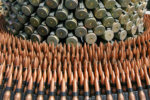 The Arms Trade in a New Era of War
The current resurgence of armed conflicts has fuelled unprecedented growth in the global arms trade, benefiting states and defence sector companies. War is becoming an increasingly lucrative activity, even as its humanitarian, environmental and social costs continue to mount. Hiruni Alwishewa warns against a new, technology-driven arms race that is blurring the lines between the civilian and military sectors, drawing digital technology companies into the political economy of war and placing a heavy strain on existing legal frameworks.
-
8
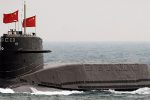 Seapower in a Disordered World
Basil Germond argues that maritime power remains a cornerstone of global power, extending beyond mere naval strength to encompass control over maritime trade, infrastructure, shipping networks and the rules governing the oceans. Historically, maritime dominance has enabled Western powers to shape the international order, but this advantage is now increasingly being challenged. The author highlights that attacks on undersea cables, the use of ‘ghost fleets’ and maritime operations in ‘grey zones’ by actors such as China, Russia and Iran are challenging Western influence in various ways.
-
9
 When War Has No Front Lines
In this article, Robert Muggah shows that cyberwar blurs the line between peace and conflict, as well as between combatants and civilians. Intermediaries, distributed servers and AI enable actions that may or may not be considered acts of war. Faced with the rise in espionage, sabotage and attacks on civilian infrastructure, digital resilience is becoming an essential defence strategy.
-
10
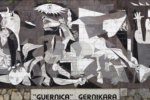 Assessing Violence in Wartime
Contemporary violence is undergoing a profound transformation. Inter-state war is re-emerging, though it has not supplanted civil conflicts. And as Ravi Bhavnani demonstrates here, violence is concentrated in hotspots – cities, corridors, borders – where infrastructure and urban density amplify its destructive effects and the number of civilian casualties.
-
11
 Under Efficiency’s Shadow: The Algorithmic Imaginary of Warfare
Anna Rosalie Greipl shows that the major transformation in today’s weapons systems does not lie in autonomous weapons, but in the targeting algorithms that guide the use of force. Their promises – speed, precision, rationality – shift the balance of power: humans no longer make judgements, they merely validate decisions, which jeopardises the protection of civilians.
-
12
 Gender Wars and Gendered Wars
For Elisabeth Prügl, the invasion of Ukraine is not merely a geopolitical issue: it is also a gendered war. By denouncing ‘feminism’ and the rights of LGBTQ+ people as a threat to civilisation, Vladimir Putin has rooted his offensive in an ideological project that defends the hetero-patriarchal family and criminalises minorities. Aggressive masculinity is becoming a driving force behind expansionism.
-
13
Flee or Die: Forced Displacement, a Weapon of War like Any Other
According to Vincent Chetail, the most formidable weapon in modern warfare is neither drones nor AI, but forced displacement. Bombing neighbourhoods, destroying water and electricity networks, and starving populations: these are the tactics increasingly used to rid a territory of its people. Exile no longer merely accompanies war – it has become its ultimate aim.
-
14
 Respect for the Law of War Tells Us Nothing about Genocide
Paola Gaeta emphasises that apparent compliance with the laws of war says nothing about genocide: an army can claim to be abiding by the rules whilst continuing to destroy a group, provided it can assert that its attacks were ‘proportionate’. The author stresses that, in order to establish the existence of genocide, one must examine the intent to destroy, and that formal compliance with the laws of war is not sufficient.
Electronic reference
Salles, Marie-Laure. “Reflecting on War to Better Reinvent Peace.” Global Challenges, no. 20, October 2026. URL: https://globalchallenges.ch/issue/20/reflecting-on-war-to-better-reinvent-peace.Anticipating the many events that will mark the Institute’s Centenary in 2027, this issue on War is the first instalment of a special double issue “War and Peace” to be followed next spring by a second part focusing on Peace and the dynamics of its necessary re-affirmation. Edited by Professor Andrew Clapham and produced by the Research Office, it was first published in “Le Temps” in September 2026.
TABLE | Trends in the 10 Largest Military Budgets
| Country | 2020 | 2024 | 2026 (estimation) |
|---|---|---|---|
| USA | 778 | 968 | > 1000 |
| China | 252 | 318 | 360 |
| Russia | 62 | 150 | 200 |
| Germany | 53 | 86 | 120 |
| India | 73 | 86 | 98 |
| UK | 70 | 91 | 92 |
| Ukraine | 6 | 70 | 95 |
| Saudi Arabia | 57 | 82 | 85 |
| France | 53 | 67 | 72 |
| Japan | 49 | 57 | 68 |
The top three military powers (the United States, China, and Russia) will account for a total of $1,480 billion in 2025, representing more than half of global military spending. In 2025, Germany has become Europe’s largest military spender with $114 billion, significantly surpassing France and the United Kingdom.
Source: https://www.sipri.org. Table produced by the Research office – Geneva Graduate Institute
© Geneva Academy of International Humanitarian Law and Human Rights
PODCAST: War WATCH – Ukraine: The Human Cost of Drones
Episode 6 of the War Watch series (Geneva Academy).