













The Finnish Solution: Neutrality and the Return of Realpolitik
When Finland joined NATO in April 2023, it seemed to mark the end of one of the defining features of Finnish foreign policy. For decades, military nonalignment had been regarded as almost synonymous with the Finnish approach to international affairs. It had survived the Cold War, the collapse of the Soviet Union and Finland’s integration into the European Union. Yet Russia’s invasion of Ukraine made neutrality appear less a guarantee of security than a potential vulnerability. Finland chose NATO.
Finland’s decision can be understood as a continuation of the realpolitik that had underpinned Finnish neutrality throughout the Cold War. At first sight, this looks like a decisive break with the past. I would argue the opposite. Finland’s decision can be understood as a continuation of the realpolitik that had underpinned Finnish neutrality throughout the Cold War. The policy changed because the circumstances changed. What remained constant was the objective: preserving Finnish independence in a dangerous neighbourhood.
Neutrality is often presented as a principle. Historically, however, it has also been a strategy liable to change as circumstances change. Finland offers an especially revealing example. For much of the Cold War, Finland represented a combination of political independence and geopolitical accommodation. It was a Western democracy that shared more than 1,300 kilometres of border with the Soviet Union. It maintained a market economy, parliamentary institutions and close ties with Western Europe, yet remained outside both NATO and the Warsaw Pact. To outsiders, this could look like an awkward compromise. To most Finns, it was a practical way of preserving independence in an exceptionally difficult neighbourhood.
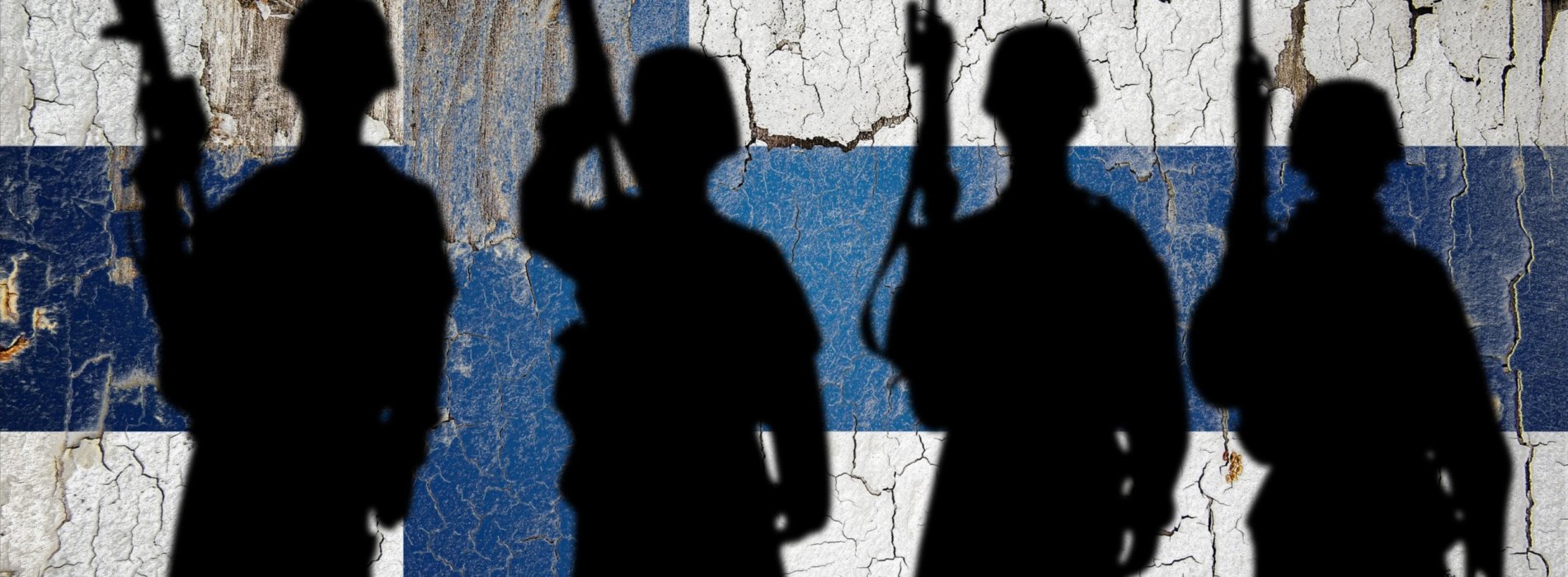
The roots of what can be called the Finnish solution lay in the experience of the Second World War. Finland had fought the Soviet Union twice, first in the Winter War of 1939–40 and then, alongside Germany, in the Continuation War of 1941–44. By the end of the war, the country had lost territory, paid reparations and accepted restrictions on its foreign policy. The Soviet Union was the dominant military power on Finland’s eastern border. The question for Finnish policymakers was therefore not how to defeat or contain the Soviet Union, but how to remain independent in its shadow.
The answer was a policy of neutrality and military nonalignment. The 1948 Treaty of Friendship, Cooperation and Mutual Assistance established the framework for Finland’s relationship with Moscow. Yet Finnish leaders, particularly President Juho Kusti Paasikivi and his successor Urho Kekkonen, sought to ensure that accommodation of Soviet interests did not become political subordination. Finland would avoid becoming a platform for hostile military activity against the Soviet Union, while retaining its political system and strengthening its connections with the West.
This was realpolitik in its most literal sense. Finland’s neutrality was not primarily a moral statement about standing outside great-power blocs. It was a strategy for managing an unfavourable balance of power. Its success depended on a difficult combination of restraint, credibility and luck. Finnish governments had to take Soviet security concerns seriously, while Finnish society remained attached to its democratic institutions and Western orientation.
Finland remained a sovereign democracy throughout the Cold War, avoiding both incorporation into the Soviet sphere and direct confrontation with its overwhelmingly more powerful neighbour. The policy could be controversial. The term “Finlandization”, coined outside Finland, suggested excessive Soviet influence and became a shorthand for the compromises Finnish governments made. But from the Finnish perspective, the more important fact was what the policy achieved. Finland remained a sovereign democracy throughout the Cold War, avoiding both incorporation into the Soviet sphere and direct confrontation with its overwhelmingly more powerful neighbour.
When the Soviet Union collapsed in 1991, the original rationale for neutrality seemed to disappear. Finland quickly took advantage of the new circumstances. It joined the European Union in 1995 and became deeply integrated into Western political and economic structures. Yet it did not join NATO. Military nonalignment remained remarkably popular. There seemed little compelling reason to change course. Russia was weakened, European security appeared comparatively stable, and Finland possessed substantial military capabilities. It also developed increasingly close practical cooperation with NATO without taking the final step of membership.
For many Finns, nonalignment had become a settled and successful security policy. It provided room for manoeuvre while avoiding the costs and risks associated with membership in a military alliance. In the absence of an obvious threat to Finland itself, there was little domestic appetite for abandoning it.
Then came February 2022.
Russia’s full-scale invasion of Ukraine transformed the Finnish debate with extraordinary speed. What had seemed a prudent policy suddenly looked like a potentially dangerous assumption. The central question was no longer whether Finland could remain outside a military alliance while maintaining a workable relationship with Moscow. It was whether nonalignment could provide sufficient security if Russia were prepared to use overwhelming military force against a neighbouring state.
New perspectives on the end of the Cold War: unexpected transformations?, Blumenau, Bernhard ed. ; Hanhimäki, Jussi M ed., London ; New York, Routledge, 2018[/caption]Historical memory mattered enormously. The war in Ukraine revived memories of Finland’s own encounters with Soviet power. The Winter War, once primarily a foundational episode of Finnish national history, acquired new strategic relevance. The sight of a larger neighbour invading a smaller one made the logic of Finland’s postwar security choices look different. The issue was no longer an abstract debate about neutrality. It was whether the policy could work under the conditions of a new European war.
The answer, increasingly, was no.
Finland’s decision to apply for NATO membership in May 2022 was therefore a dramatic change of policy. But it can also be understood as a continuation of the logic that had underpinned Finnish neutrality for decades. Finland did not suddenly abandon realpolitik. It returned to it.
During the Cold War, neutrality was judged to be the best available means of protecting Finnish sovereignty. After 2022, alliance membership appeared to offer greater security. The geopolitical circumstances had changed; so did the calculation.
The country did not abandon realpolitik when it abandoned military nonalignment. It followed realpolitik to its logical conclusion. Finland’s experience does not provide a universal answer to whether neutrality is the right policy for a small state. Geography, history and the surrounding international system matter enormously. But it does offer a useful reminder. Neutrality is not necessarily a permanent condition, nor is it incompatible with realpolitik. It can be a means of securing independence when circumstances make it viable. For Finland, those circumstances changed in 2022. The country did not abandon realpolitik when it abandoned military nonalignment. It followed realpolitik to its logical conclusion.
For almost half a century, the Finnish solution had been to stay outside military alliances. After Russia’s invasion of Ukraine, the Finnish solution became joining one.
Electronic reference
Hanhimäki, Jussi. “The Finnish Solution: Neutrality and the Return of Realpolitik.” Global Challenges, no. 20, October 2026. URL: https://globalchallenges.ch/issue/20/the-finnish-solution-neutrality-and-the-return-of-realpolitik.Anticipating the many events that will mark the Institute’s Centenary in 2027, this issue is the first instalment of a special double issue on war and peace, to be followed next spring by a second part focusing on peace and the dynamics of its necessary re-affirmation. Edited by Professor Andrew Clapham and produced by the Research Office, it was first published in Le Temps in September 2026.
TABLE | Trends in the 10 Largest Military Budgets (billions of US dollars)
| Country | 2020 | 2024 | 2026 (estimation) |
|---|---|---|---|
| USA | 778 | 968 | > 1000 |
| China | 252 | 318 | 360 |
| Russia | 62 | 150 | 200 |
| Germany | 53 | 86 | 120 |
| India | 73 | 86 | 98 |
| UK | 70 | 91 | 92 |
| Ukraine | 6 | 70 | 95 |
| Saudi Arabia | 57 | 82 | 85 |
| France | 53 | 67 | 72 |
| Japan | 49 | 57 | 68 |
In 2025, the top three military powers (the United States, China, and Russia) spent a total of USD 1,480 billion, representing more than half of global military spending. Germany was Europe’s largest military spender with USD 114 billion, significantly surpassing France and the United Kingdom.
Source: SIPRI, https://www.sipri.org. Table produced by the Geneva Graduate Institute’s Research Office.
© Geneva Academy of International Humanitarian Law and Human Rights
PODCAST: War WATCH – Ukraine: The Human Cost of Drones
Episode 6 of the War Watch series (Geneva Academy).
PODCAST | The future of European security
Research Office – Geneva Graduate Institute
PODCAST | War WATCH: the portal that tracks armed conflicts worldwide
Research Office – Geneva Graduate Institute